
When an air blending system is running in a sauna, humidity levels feel noticeably higher even though the total amount of moisture in the air does not necessarily increase. The system continuously circulates air throughout the sauna cabin, distributing steam evenly from ceiling to floor rather than letting it pool at the top. The result is a more consistent, enveloping humidity that reaches every corner of the room and every person on the bench.
This matters because most of the discomfort in a traditional sauna comes from uneven heat and moisture distribution. An air blending system solves that problem at the source. The sections below unpack exactly what happens to steam, oxygen, and the overall sauna experience when air circulation is active.
Does air blending actually increase humidity in a sauna?
Air blending does not create extra moisture, but it makes existing humidity far more effective. In a standard sauna, steam rises and concentrates near the ceiling while the lower benches and floor remain relatively dry. An air blending system captures that concentrated steam and redistributes it evenly throughout the cabin, so the humidity you feel at bench height is significantly higher than it would be without circulation.
The practical effect is that the same amount of water thrown on the stones produces a more thorough, whole-room humidity experience. You are not generating more steam, you are simply using all of it. This is why sauna users who switch to a blended-air setup consistently report that the air feels wetter and more enveloping, even when the heater output and water volume remain identical.
Why does steam feel different when air is being circulated?
Steam feels softer and more breathable when air is being circulated because it arrives at your skin mixed with cooler, oxygen-rich air from the lower part of the cabin rather than hitting you as a concentrated blast from above. The blending process tempers the sharpness of the steam, turning what can feel like a scalding wave into a gentle, even warmth that wraps around the body.
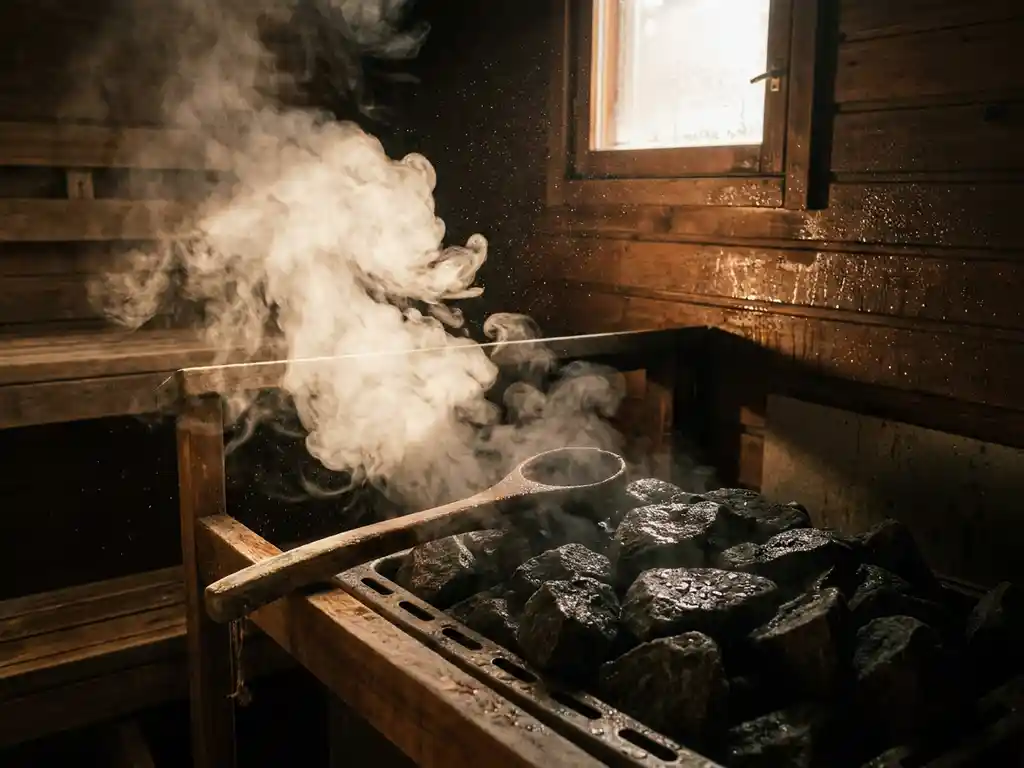
In a sauna without circulation, throwing water on the stones sends a surge of superheated steam straight to the ceiling. Anyone sitting near the top bench gets hit with an intense, sometimes uncomfortable spike in heat. With an air blending system, that spike is absorbed and smoothed out before the steam reaches the bathers. The löyly becomes milder in sensation but more thorough in coverage, which is why many people describe blended-air steam as feeling “rounder” or more traditional in the best Nordic sense.
How does air blending affect how often you can throw water?
Air blending allows you to throw water more frequently because the steam is used efficiently rather than wasted at the ceiling. In a conventional sauna, much of the löyly dissipates before it reaches bathers at bench height, which means you need to wait longer between throws for the humidity to feel meaningful again. With continuous air circulation, each throw has an immediate, full-cabin effect, so the sauna recovers its humidity faster and you can add water again sooner.
This creates a more dynamic and interactive sauna session. Rather than one or two dramatic throws followed by long waits, you can build humidity gradually and consistently throughout the session. The air stays moist, the temperature remains stable, and the experience feels more like a continuous ritual than a series of isolated events. For those who enjoy traditional Nordic sauna culture, this rhythm feels far more authentic.
What happens to oxygen levels when a sauna air blending system runs?
Oxygen levels at bench height increase when a sauna air blending system is running. In a static sauna, hot air rises and oxygen-depleted, steam-heavy air accumulates at the top while fresher air stays near the floor. Bathers sitting on upper benches are breathing the most oxygen-poor air in the room. Continuous air circulation breaks this stratification, pulling fresher air upward and mixing it with the heat, which raises the effective oxygen concentration where people are actually sitting and breathing.
This is one of the most significant but least discussed benefits of air circulation in a sauna. The suffocating feeling that some people experience in high-heat saunas is often less about the temperature itself and more about reduced oxygen availability. By constantly mixing the air, a blending system prevents oxygen from becoming stagnant at bench level, allowing for longer, more comfortable sessions without the lightheadedness that can cut a sauna visit short.
Is a blended-air sauna more humid than a traditional Finnish sauna?
A blended-air sauna is not necessarily more humid in absolute terms, but it delivers humidity more effectively than a traditional Finnish sauna. The total moisture content of the air depends on how much water is thrown and how powerful the heater is. What changes with air blending is how evenly that moisture is distributed. A traditional Finnish sauna can have high humidity near the ceiling and noticeably dry air near the floor, while a blended-air sauna maintains consistent humidity throughout the entire cabin.
For most bathers, this even distribution feels more humid because they are experiencing the full moisture content of the air rather than just the fraction that has drifted down to bench level. The sauna also retains its humidity longer between water throws, which means the overall session feels wetter and more satisfying without requiring more water or a higher-output heater. In this sense, a blended-air sauna is more efficient with humidity rather than simply more humid.
How Saunum helps you get the most from sauna humidity
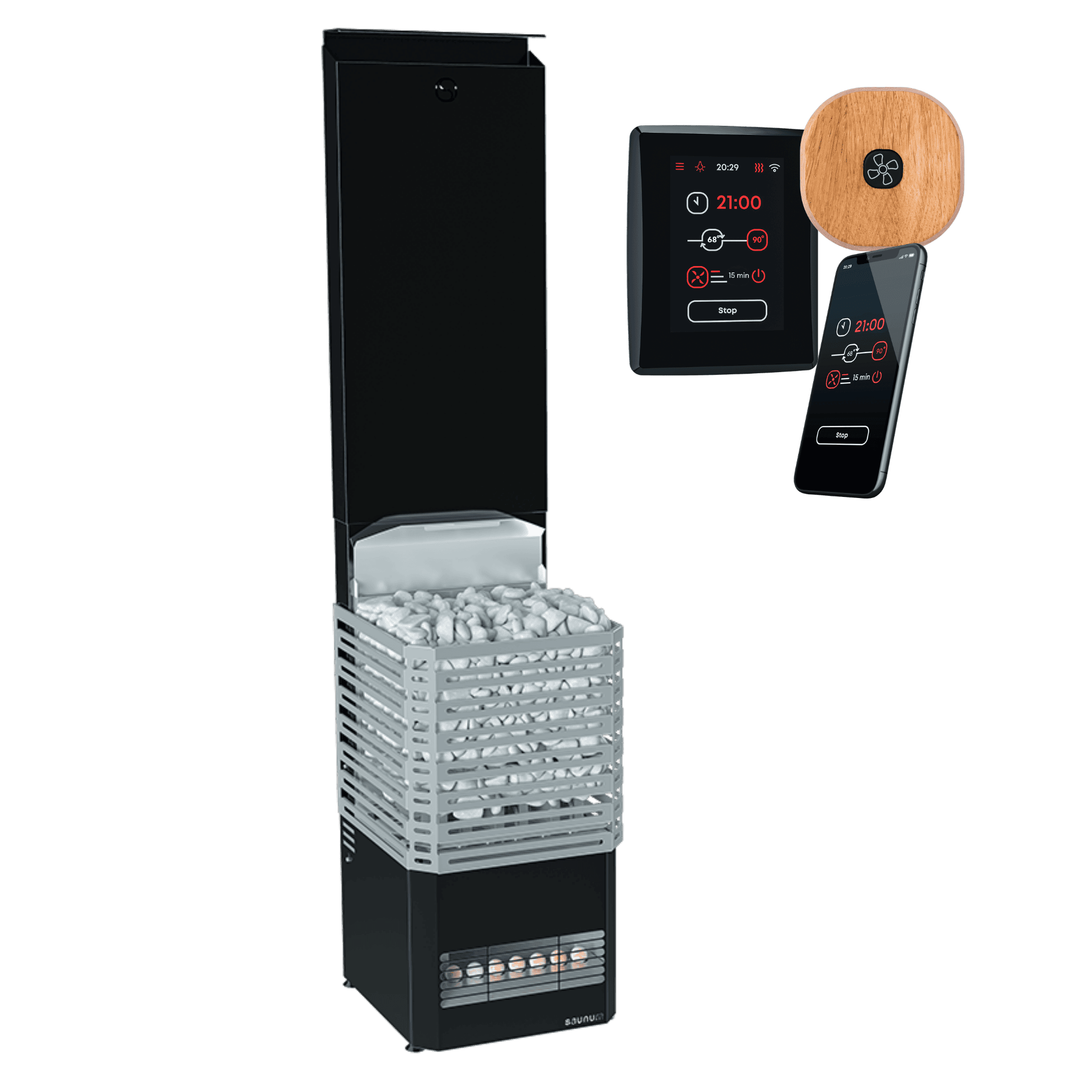
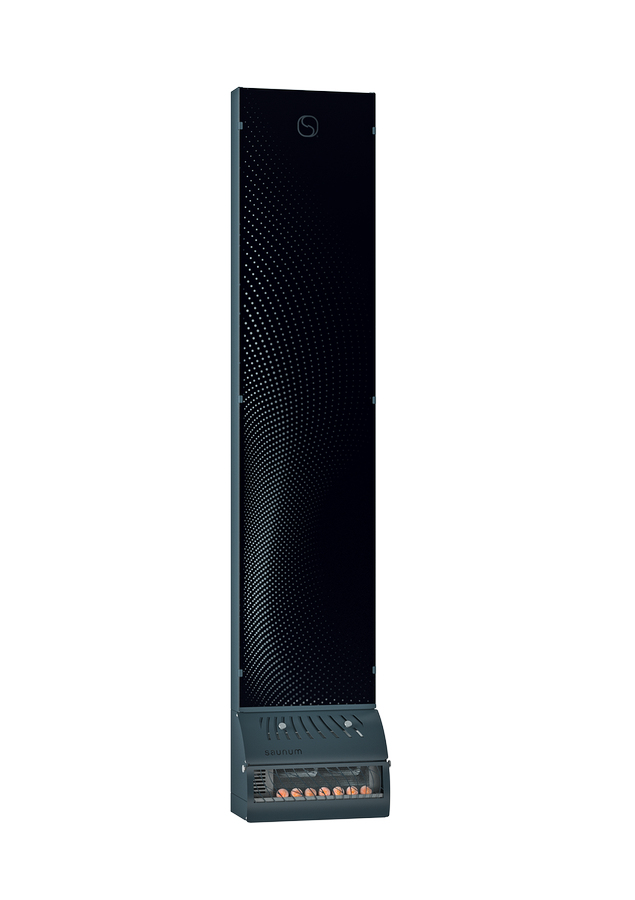
Saunum’s patented air blending technology was designed specifically to address the humidity distribution challenges described throughout this article. Every Saunum heater includes a built-in circulation system that captures superheated steam from the ceiling, mixes it with cooler floor-level air, and returns soft, even löyly to the entire cabin. If you are looking for a practical way to experience consistent sauna humidity, Saunum’s range of heaters and smart controls offer a well-developed solution worth exploring.
Here is what Saunum’s approach delivers in practice:
- Even temperature and humidity from floor to ceiling, eliminating hot spots and dry zones
- Higher oxygen levels at bench height for longer, more comfortable sessions
- More frequent and satisfying water throws with less water wasted at the ceiling
- Five sauna styles in one unit, including Salt Sauna and Aroma Sauna, each benefiting from the same air blending foundation
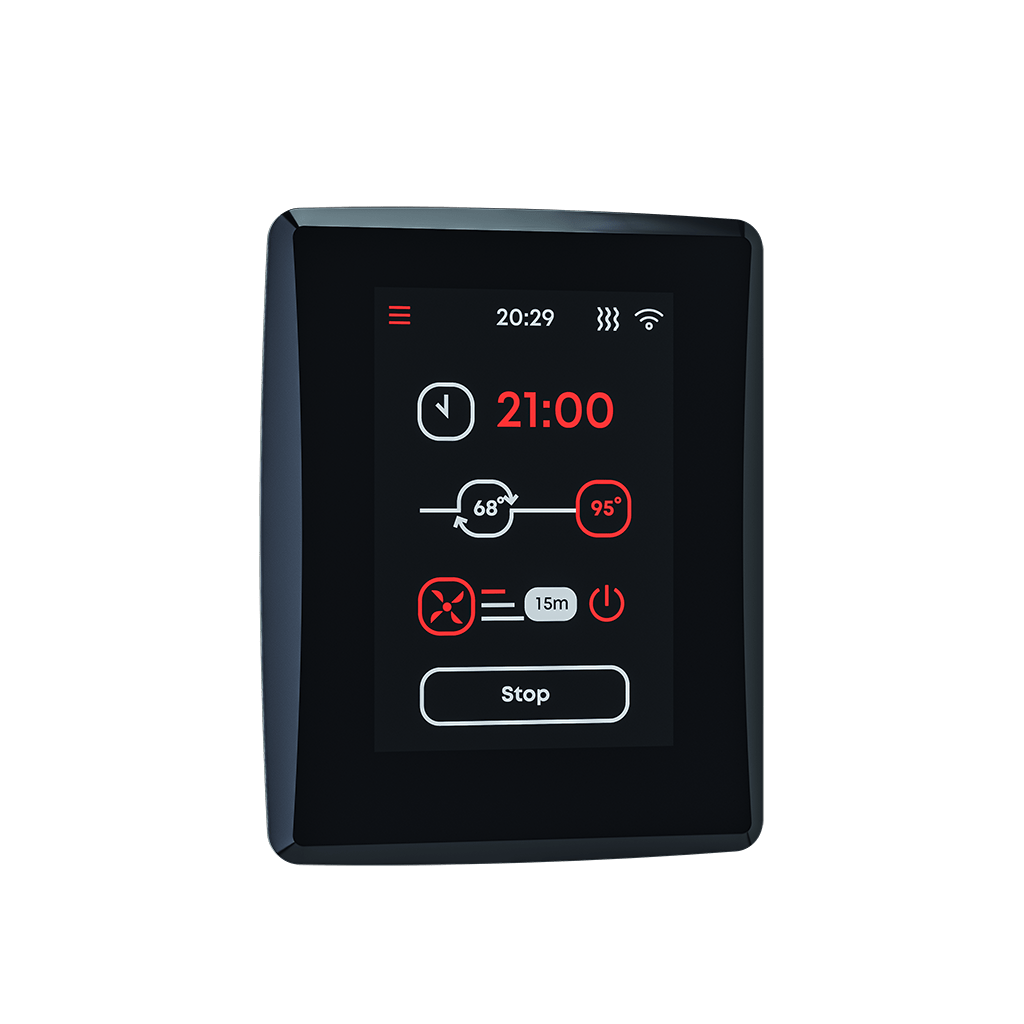
Saunum also offers smart automation through the Saunum Leil control unit, which lets you preset your preferred sauna style, adjust fan speed, and even automate water dosing with the AutoLeil feature. You can control everything remotely via the Saunum app before you even step into the cabin.
If you are ready to experience what consistent sauna humidity actually feels like, get in touch with Saunum or explore our heaters to find the right solution for your sauna.