


A sauna air blending system and a heat recovery ventilator (HRV) serve completely different purposes. An air blending system actively circulates and mixes the air already inside the sauna to create an even temperature from floor to ceiling, while an HRV exchanges stale indoor air with fresh outdoor air without losing heat. Both relate to sauna air quality, but they solve different problems.
Understanding the distinction matters because choosing the wrong system, or assuming one replaces the other, can leave you with a sauna that feels either suffocating or uncomfortably dry. The sections below walk through how each system works, where they differ, and which one has the greater impact on your actual sauna experience.
How does a sauna air blending system actually work?
A sauna air blending system works by capturing the superheated air that rises to the ceiling, mixing it with the cooler air near the floor, and redistributing that blended air evenly throughout the sauna room. The result is a consistent temperature at every level, from the bench down to the floor, rather than a harsh heat gradient that punishes anyone sitting lower.
In a conventional sauna without air blending, the hottest and driest air pools near the ceiling while the lower portion of the room stays noticeably cooler. When you throw water on the stones, the steam shoots upward and stays there, creating an intense and often uncomfortable burst of heat at head level. An air blending system interrupts this cycle by continuously pulling that ceiling air back into circulation.
The practical benefits go beyond comfort. Because the steam is redistributed rather than trapped at the top, the overall humidity level in the room becomes more stable. You can throw water more frequently, the air feels softer and easier to breathe, and the oxygen near bench height stays fresher throughout the session.
What does a heat recovery ventilator do in a sauna?
A heat recovery ventilator replaces the stale air inside the sauna with fresh air from outside, while recovering most of the heat from the outgoing air so the room does not cool down significantly. It is a ventilation solution, not a circulation solution. Its job is to bring in new air, not to redistribute the air that is already there.
In practice, an HRV pulls exhaust air out of the sauna through one duct and draws fresh outdoor air in through another. A heat exchanger core transfers thermal energy from the warm outgoing air to the cool incoming air before either stream reaches the room. This means you get fresh, oxygen-rich air without the energy penalty of heating cold outside air from scratch.
HRVs are particularly relevant in tightly sealed, modern sauna builds where natural air infiltration is minimal. Without some form of ventilation, carbon dioxide levels can rise and the air can feel heavy over a long session. An HRV addresses that specific problem, but it does not address the temperature stratification issue that an air blending system is designed to solve.
What is the key difference between the two systems?
The key difference is that a sauna air blending system manages the air inside the sauna room, while a heat recovery ventilator manages the exchange of air between the sauna and the outside. One is about circulation and temperature uniformity; the other is about ventilation and air renewal.
Think of it this way:
- An air blending system solves the problem of uneven heat and harsh steam by mixing what is already in the room.
- An HRV solves the problem of stale, oxygen-depleted air by replacing it with fresh air from outside.
The two systems are not competing alternatives. They address different aspects of sauna air quality and sauna comfort. Confusing them often leads people to install one expecting the benefits of the other, which is why the distinction is worth understanding clearly before making any purchasing decision.
Can a sauna have both an air blending system and an HRV?
Yes, a sauna can absolutely have both systems installed, and in many high-performance sauna builds, combining them makes good sense. The air blending system handles internal circulation and temperature consistency, while the HRV handles fresh air supply. They operate independently and do not interfere with each other.
In a well-designed sauna setup, the HRV ensures that the air being circulated by the blending system is regularly refreshed with oxygen-rich outdoor air. This combination delivers the best of both worlds: even heat distribution, soft steam, and consistently fresh air throughout the session. For commercial wellness environments or home saunas used frequently by multiple people, this pairing is especially worth considering.
Which system improves the sauna experience more?
For most sauna users, an air blending system has a more noticeable and immediate impact on the sauna experience than an HRV. Temperature uniformity, softer steam, and easier breathing are felt from the very first session. An HRV improves air freshness over time, but its effect is less dramatic in shorter or less frequent sessions.
That said, the answer depends on what problem you are trying to solve. If your sauna feels harsh, the steam is too intense, or the heat is unbearable at bench height, an air blending system addresses those issues directly. If your sauna feels stuffy or the air feels heavy after extended use, an HRV is the more targeted solution.
For users who want a genuinely premium experience, the air blending system tends to be the higher-priority upgrade because it changes the fundamental character of the heat and steam, making sessions longer, more comfortable, and more enjoyable.
Do all sauna heaters include an air blending system?
No, the vast majority of sauna heaters do not include an air blending system. Most electric sauna heaters simply heat the stones and the surrounding air, relying on natural convection to distribute warmth through the room. The temperature stratification problem is present in almost every conventional sauna heater on the market.
Air blending technology is a relatively recent innovation in sauna technology, and it is not yet standard across the industry. Some manufacturers offer it as an integrated feature within the heater unit itself, while others offer it as a separate add-on component. When evaluating a sauna heater, it is worth checking specifically whether air circulation is built in or whether the unit relies entirely on passive convection.
How Saunum helps with sauna air circulation
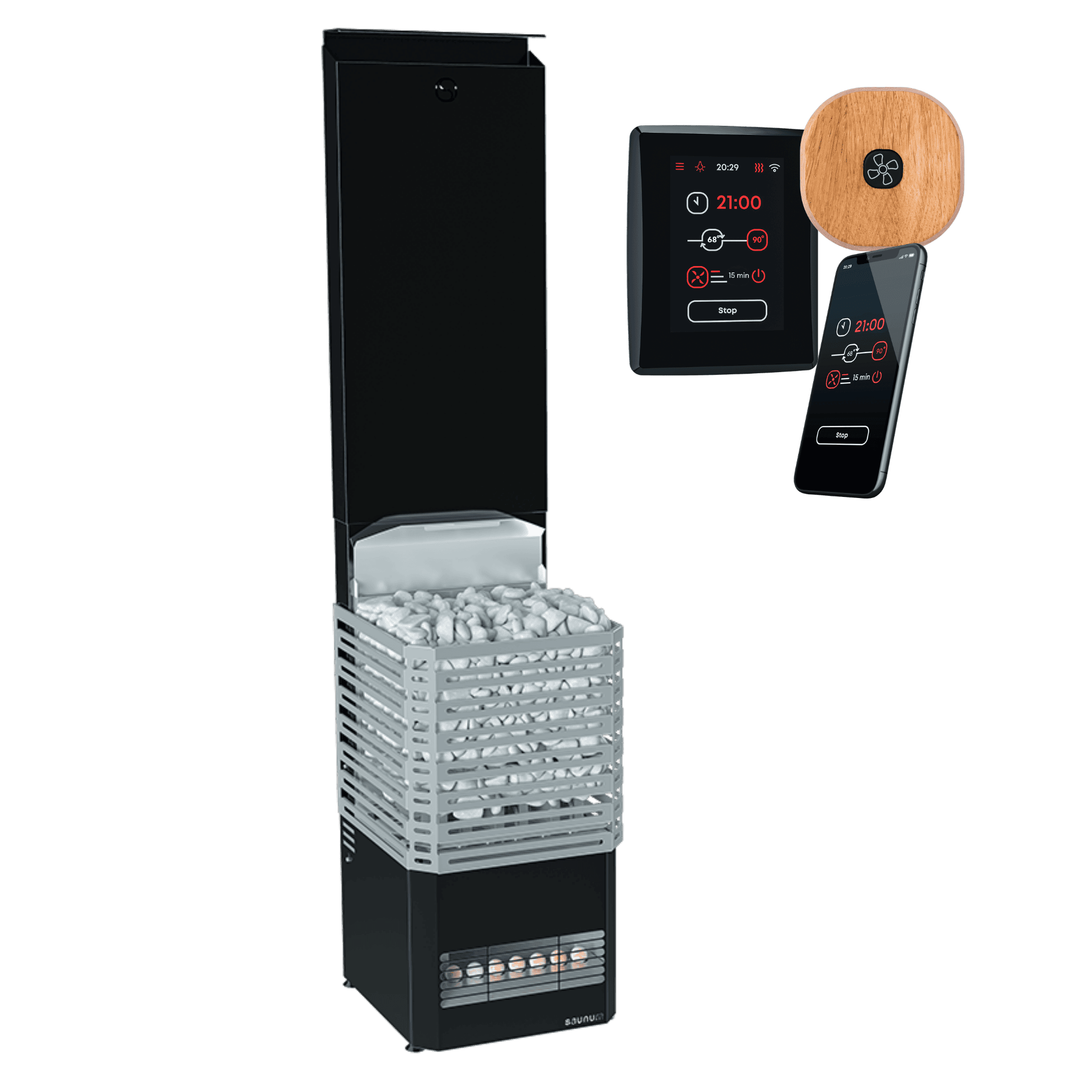
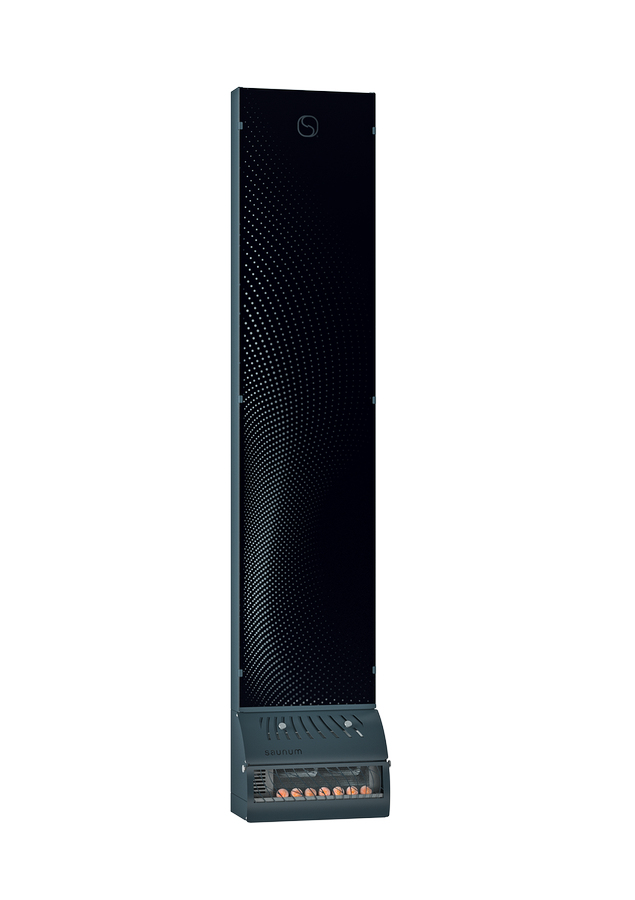
Saunum heaters include a patented air circulation system built directly into each unit, which captures the superheated air from the ceiling, blends it with cooler floor-level air, and returns soft, even steam back into the room. Rather than offering this as an optional add-on, Saunum integrates the technology into every heater they produce.
Here is what that means in practice for your sauna sessions:
- Even temperature from floor to ceiling, so every bench level feels comfortable rather than punishing.
- Softer, more breathable steam that allows you to stay in the sauna longer without discomfort.
- Higher oxygen levels at bench height, reducing the suffocating feeling common in high-heat saunas.
- The option to enrich the air with salt ions from Himalayan salt balls, adding a therapeutic dimension to every session.
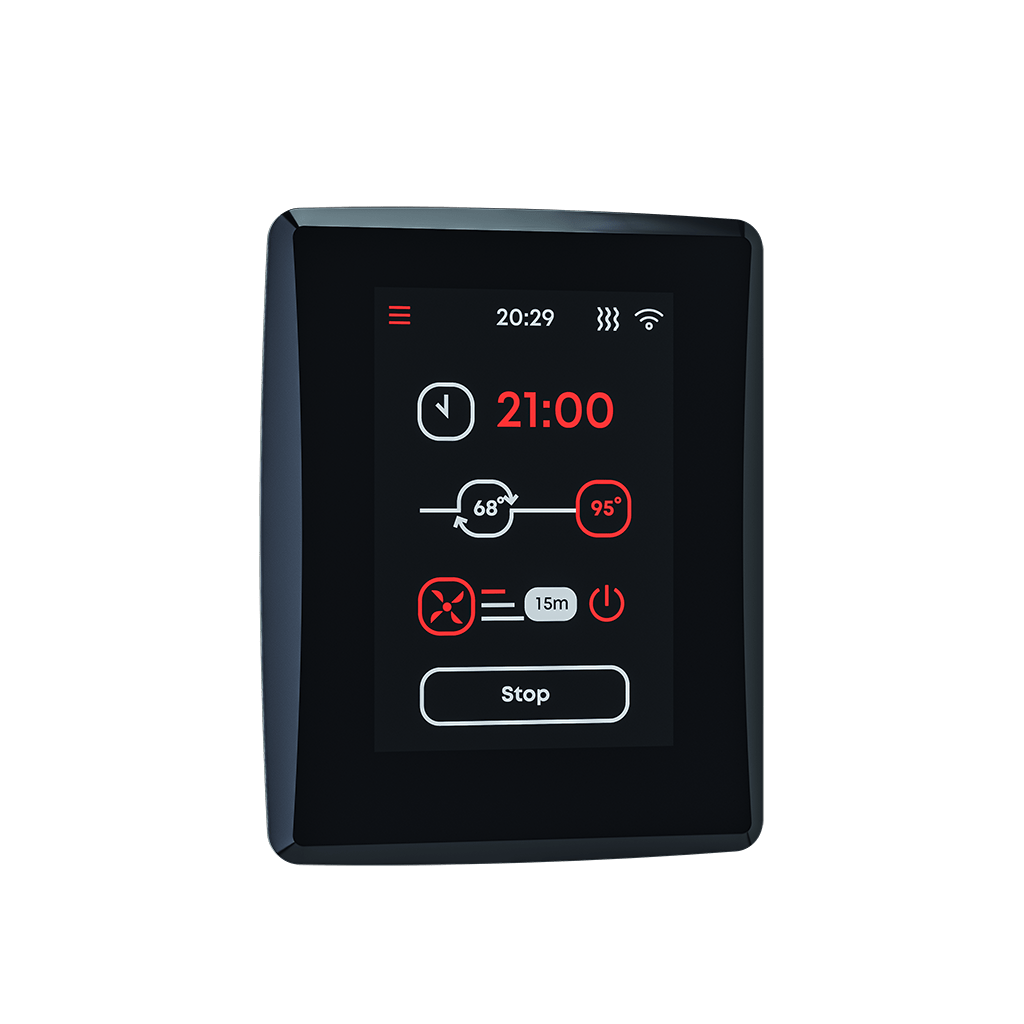
Beyond the heater itself, Saunum’s smart sauna technology includes the Saunum Leil control unit, which lets you pre-set three different sauna types and manage humidity automatically through the AutoLeil water dosing feature. You can pre-heat your sauna, adjust fan speed, and control the salt ionization feature remotely through the Saunum app.
If you are ready to experience the difference that genuine sauna air blending makes, Saunum offers a complete, integrated approach to sauna comfort whether you are building a home sauna or outfitting a commercial wellness space. Get in touch with Saunum or browse their full range to find the right heater for your setup.