


Yes, you can build a home sauna around a 240V electric heater without hiring a contractor for the entire project. The carpentry, insulation, benches, and finishing work are all well within reach of a confident DIYer. The one part that almost always requires a licensed electrician is the 240V electrical connection itself, but everything else is yours to tackle.
Understanding exactly where the line falls between DIY and licensed work saves you time, money, and the risk of a failed inspection. The sections below walk through each of the most common questions homeowners ask before starting an indoor sauna build.
What electrical work is actually required for a 240V sauna heater?
A 240V sauna heater requires a dedicated circuit run from your main electrical panel, a correctly sized breaker, appropriate gauge wiring, and a disconnect switch located within sight of the heater. This work involves live panel connections and must meet the National Electrical Code (NEC) in the US or equivalent standards elsewhere, which is why it almost universally requires a licensed electrician.
The heater itself connects to a dedicated double-pole breaker, typically ranging from 30A to 60A depending on the heater’s wattage. The wiring must be rated for the heat environment inside a sauna, and a disconnect switch must be installed within sight of the unit so the circuit can be safely isolated during maintenance. Most jurisdictions also require a ground fault circuit interrupter (GFCI) for wet or high-humidity environments.
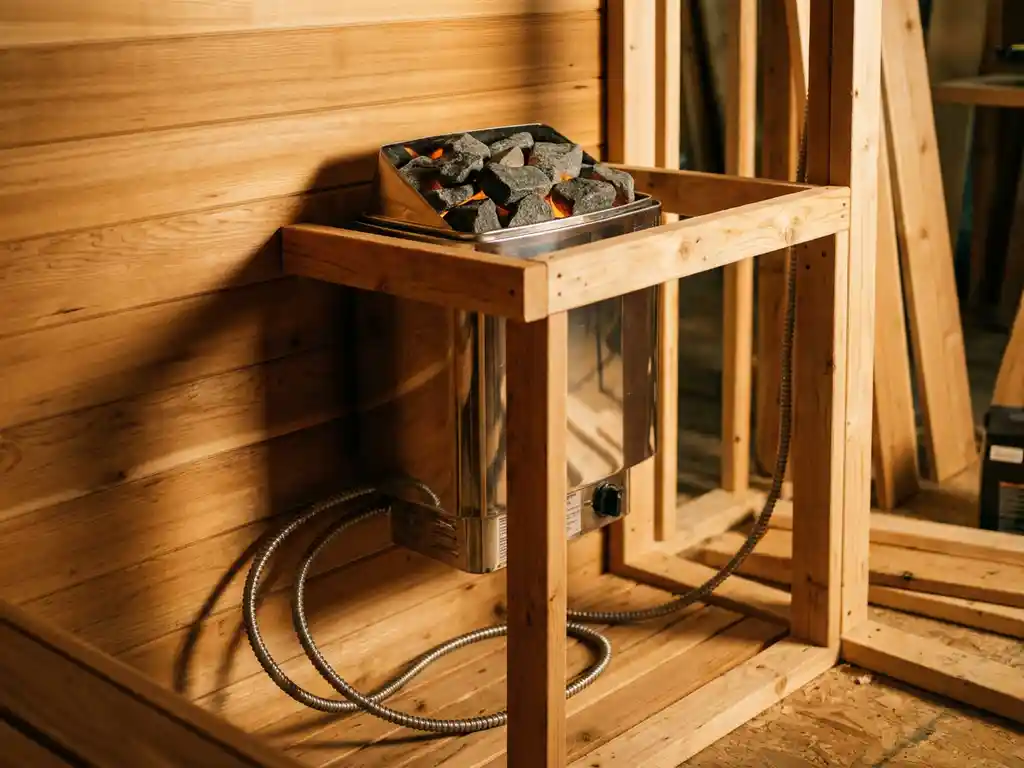
Once the circuit is in place and inspected, the homeowner can handle the physical mounting of the heater, loading the sauna stones, and connecting the control panel according to the manufacturer’s instructions. The electrical rough-in is the critical step that sets everything else up for success.
Which parts of a sauna build can a homeowner do without a licensed electrician?
Virtually everything except the 240V electrical connection can be done by a homeowner. Framing the sauna room, installing vapor barriers and insulation, fitting tongue-and-groove cedar or spruce paneling, building benches, hanging the sauna door, and mounting the heater bracket are all standard carpentry tasks that do not require a licensed trade.
Most homeowners are surprised by how much of the project falls squarely in DIY territory. A typical indoor sauna build breaks down like this:
- Framing, insulation, and vapor barrier installation
- Wall and ceiling paneling in heat-resistant wood
- Bench construction and finishing
- Heater mounting and stone loading (after the electrician completes the circuit)
The key is sequencing the work correctly. Frame and insulate first, then have your electrician rough in the circuit before you close the walls. Once the electrical inspection is passed, you can finish the paneling and complete the interior. Trying to add wiring after the walls are closed is far more expensive and disruptive.
Do local building codes require a permit for a home sauna installation?
In most jurisdictions, installing a home sauna with a 240V electric heater requires at least an electrical permit, and often a building permit as well if you are constructing a new room or making structural changes. Permit requirements vary by location, so checking with your local building department before starting is essential.
An electrical permit is almost always required when adding a new dedicated 240V circuit. If the sauna is being built inside an existing room with no structural changes, that may be the only permit needed. If you are framing a new room, adding ventilation penetrations, or modifying the building envelope, a building permit typically applies as well.
Skipping permits creates real problems. Unpermitted electrical work can void your homeowner’s insurance, create liability if something goes wrong, and complicate a future home sale. The permit process also gives you a licensed inspector who verifies the circuit is safe, which is genuinely valuable when working with high-voltage equipment in a hot, humid environment.
What size 240V heater does a home sauna actually need?
The standard rule of thumb for sizing a sauna heater is roughly 1 kilowatt (kW) per 45 cubic feet of sauna room volume. A small home sauna measuring 4 by 6 feet with a 7-foot ceiling has roughly 168 cubic feet of volume, which points to a heater in the 3 to 4 kW range. Larger rooms, rooms with exterior walls, or rooms with glass panels require additional capacity.
Several factors push the required heater size up beyond the basic volume calculation:
- Exterior walls or poorly insulated walls increase heat loss significantly
- Large glass panels or windows require extra wattage to compensate
- Concrete or tile floors absorb more heat than wood-lined rooms
- Rooms above or below unheated spaces need additional capacity
Undersizing a heater is one of the most common and frustrating mistakes in a home sauna build. A heater that is too small will struggle to reach target temperatures and will run continuously, shortening its lifespan. When in doubt, size up rather than down, since a larger heater reaching temperature quickly and cycling off is more efficient than a small heater running flat out.
How do smart sauna controls connect to a 240V electric heater?
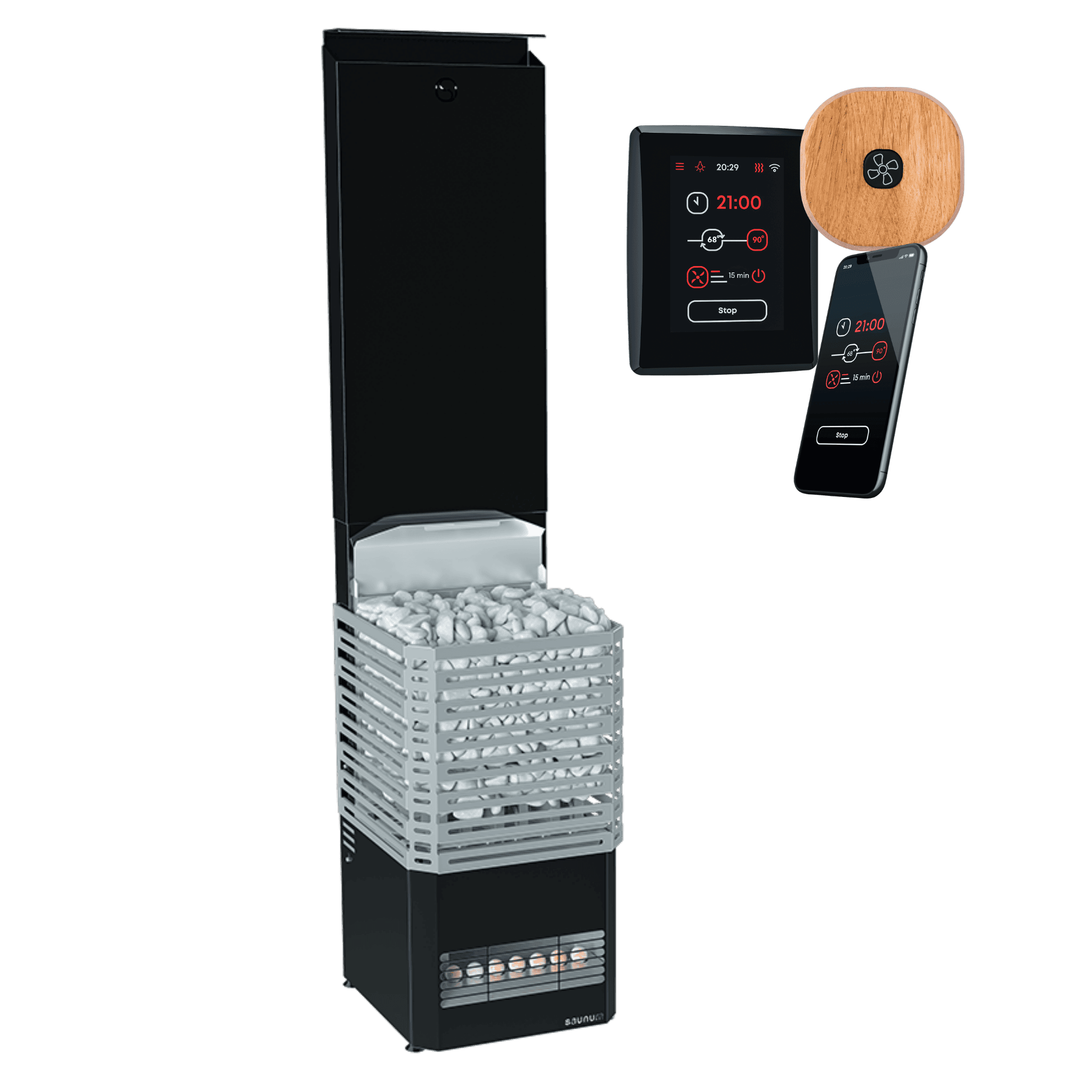
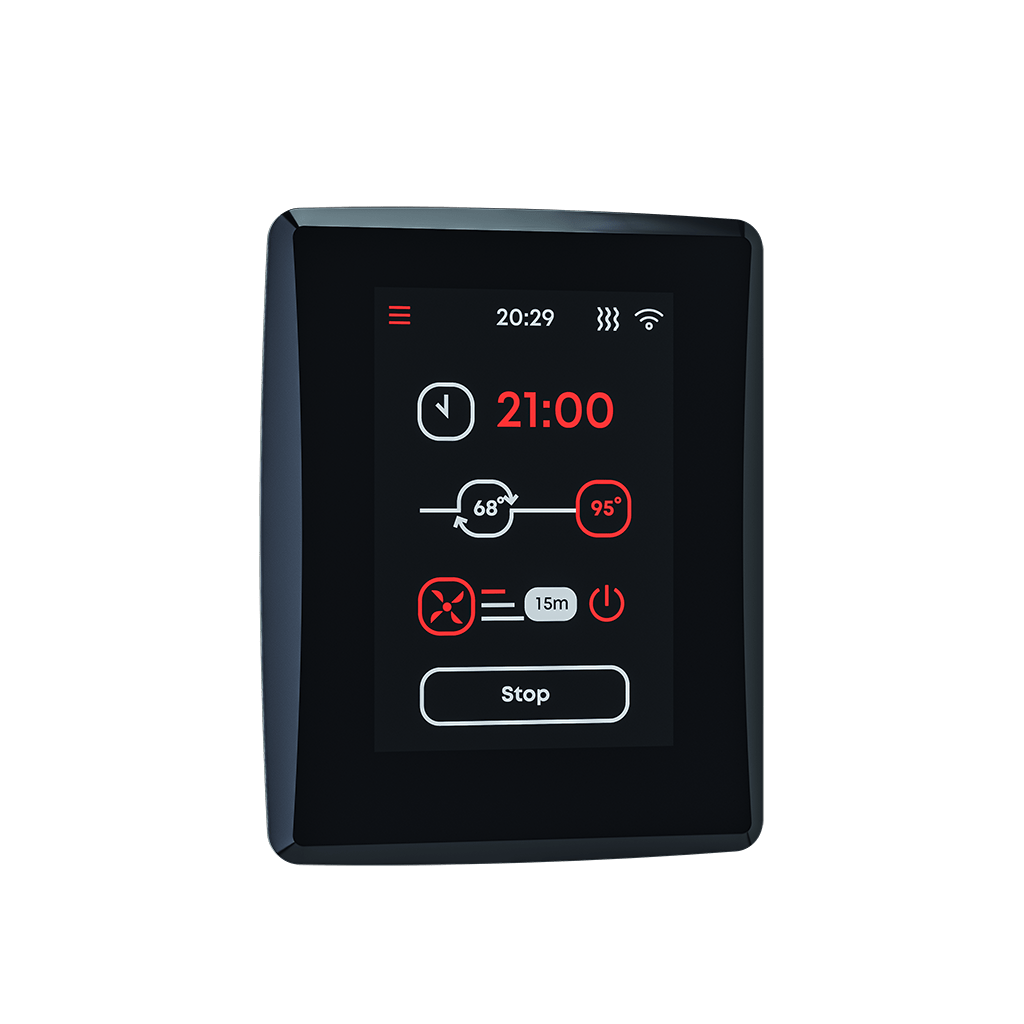
Smart sauna controls connect between the 240V power supply and the heater, acting as an intelligent relay that manages temperature, timing, and additional features like fan speed or steam output. The control unit receives power from the dedicated circuit and sends switched power to the heater based on your settings, either from a wall-mounted panel or a smartphone app.
Some modern smart controllers, such as the Saunum AirIQ WiFi controller, allow you to pre-heat your sauna remotely, adjust temperature and fan speed, and toggle additional features from your phone before you even leave the couch. The controller wires into the same dedicated circuit the electrician installs, so there is no separate wiring project required. Your electrician simply terminates the circuit at the control unit rather than directly at the heater.
The practical benefit is significant for a home sauna. You can set the sauna to reach temperature exactly when you want it, without running it unnecessarily. Most smart controllers also provide usage data and alerts, which help you monitor the heater’s performance over time.
What are the most common mistakes when installing a home sauna heater?
The most common mistakes when installing a home sauna heater are undersizing the heater for the room volume, placing the heater in the wrong location, failing to maintain required clearances from combustible materials, and skipping the electrical permit. Each of these mistakes is easy to avoid with a little planning but costly to fix after the fact.
Heater placement matters more than most first-time builders expect. The heater should be positioned on the wall opposite the benches, low enough to allow air circulation beneath it, and far enough from the benches to meet the manufacturer’s minimum clearance requirements. Placing a heater too close to a bench or in a corner with restricted airflow leads to uneven heating and potential safety hazards.
Poor insulation is another frequent issue. A sauna that is not properly insulated with a vapor barrier on the warm side of the wall assembly will lose heat rapidly, cause moisture damage to the surrounding structure, and never reach a satisfying temperature. The vapor barrier must be continuous and sealed at all penetrations, including the electrical conduit entry point.
Finally, many homeowners underestimate the importance of ventilation. A sauna needs a fresh air intake near the floor and an exhaust vent near the ceiling to allow air exchange during and after sessions. Without proper ventilation, the air becomes stale, oxygen levels drop, and the room takes much longer to dry out between uses, which accelerates wood degradation.
How Saunum helps with electric sauna heaters
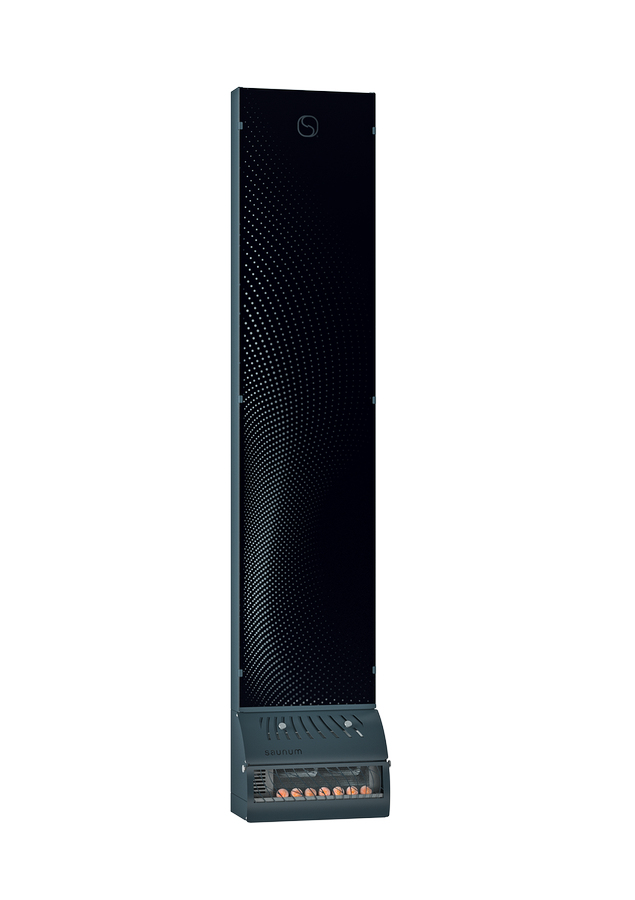
Saunum designs electric sauna heaters that address one of the most persistent problems in home sauna builds: uneven heat distribution. In a conventional sauna, scorching steam collects near the ceiling while the lower bench area stays noticeably cooler. Saunum’s patented air circulation system captures that hot steam from the ceiling, blends it with cooler air from the floor level, and redirects soft, even steam back throughout the room, resulting in a consistent temperature from floor to ceiling and steam that is genuinely easier to breathe.
For homeowners building an indoor sauna, Saunum heaters offer a practical combination of performance and flexibility:
- Five-in-one sauna modes including Finnish sauna, steam sauna, salt sauna, and aroma sauna from a single unit
- Smart WiFi control via the Saunum app for remote pre-heating and session management
- Patented salt ionization that circulates beneficial salt ions from Himalayan salt balls through the air during your session
- Consistent, breathable steam that allows for longer, more restorative sessions
Whether you are sizing a heater for a compact home sauna or a larger wellness room, Saunum has options built for both residential and commercial use. Browse their electric sauna heaters to find the right fit for your build, or get in touch with them if you have questions about which model suits your room dimensions and goals.