


Yes, electric sauna heaters require a dedicated circuit. Most residential electric sauna heaters draw between 30 and 60 amps at 240 volts, which means they need their own circuit breaker and wiring run directly from your electrical panel. Installation costs typically range from a few hundred to over a thousand dollars, depending on your setup and local labor rates.
The exact circuit size and installation cost depend on your heater’s wattage, the distance from your electrical panel, and whether your home’s existing electrical system needs upgrading. The sections below break down each part of the process so you know exactly what to expect before you start planning your home sauna or indoor sauna project.
What size dedicated circuit does an electric sauna heater need?
The circuit size an electric sauna heater needs depends on its wattage. Most residential heaters fall between 3 kW and 9 kW, which translates to roughly 15 to 40 amps on a 240-volt circuit. Larger commercial or high-output heaters can require 60 amps or more. Always check the manufacturer’s specifications and size the circuit to handle the heater’s full rated load.
As a practical guide, a 6 kW heater running on 240 volts draws about 25 amps, so a 30-amp breaker with appropriately rated wire is the minimum. Electricians typically recommend sizing up slightly, using a 40-amp breaker for a 6 kW unit, to give the circuit headroom and prevent nuisance tripping. Wire gauge must match the breaker rating, with 10 AWG wire for 30-amp circuits and 8 AWG for 40-amp circuits being common choices in North American installations.
Why can’t an electric sauna heater share a circuit?
An electric sauna heater cannot share a circuit because it draws a sustained, high-amperage load that would overload any circuit also serving other devices. Sharing a circuit risks tripping breakers repeatedly, overheating wiring, and creating a genuine fire hazard. Electrical codes in most countries explicitly require sauna heaters to have their own dedicated circuit for exactly this reason.
Unlike a lamp or a phone charger that draws minimal power intermittently, a sauna heater runs at near full capacity for extended periods, often 30 to 60 minutes during warm-up and continuously during a session. That sustained draw leaves no safe margin for any other load on the same circuit. Beyond safety, sharing a circuit can also cause voltage fluctuations that affect heater performance and shorten the unit’s lifespan.
How much does it cost to install an electric sauna heater?
Electric sauna heater installation typically costs between $200 and $1,500 for the electrical work alone, not including the heater itself. The wide range reflects differences in panel distance, local electrician rates, whether a new breaker slot is available, and whether any panel upgrades are needed. Simple installations close to the panel sit at the lower end; longer cable runs or panel upgrades push costs higher.
The main cost factors to budget for include:
- Electrician labor: Usually charged by the hour or as a flat project rate, varying significantly by region
- Wire and conduit: Longer runs from the panel to the sauna room add material and labor costs
- New circuit breaker: A double-pole breaker for a 240-volt circuit adds a modest but necessary cost
- Panel upgrade: If your panel is full or undersized, adding capacity can add several hundred dollars or more
Getting two or three quotes from licensed electricians before committing is always a smart move. Costs in 2026 have also been influenced by ongoing material price fluctuations, so current quotes from local contractors will give you the most accurate picture.
Do you need a permit to install a sauna heater?
In most jurisdictions, yes, you need an electrical permit to install a sauna heater. Any new dedicated circuit added to a home’s electrical panel is considered a significant electrical alteration and typically requires a permit and inspection under local building codes. Skipping the permit can create problems when selling your home and may void your homeowner’s insurance if an incident occurs.
Permit requirements vary by location, so check with your local building department before work begins. In many areas, only a licensed electrician can pull the permit on your behalf. The inspection process is straightforward and simply confirms that the wiring, breaker, and connections meet code, which is reassurance worth having for any high-draw appliance like a sauna heater.
Can you install an electric sauna heater yourself or do you need an electrician?
You need a licensed electrician for the electrical circuit work. Running new 240-volt wiring, installing a double-pole breaker, and making panel connections are tasks that require professional qualifications in virtually every jurisdiction. Attempting this work without a license is illegal in most places and genuinely dangerous. The physical mounting of the heater unit itself may be a DIY task, but the electrical connection must be done by a qualified professional.
Some experienced DIY sauna builders handle the carpentry, insulation, and bench work themselves, then bring in an electrician specifically for the circuit installation and final heater hookup. This hybrid approach can save money on overall project costs while keeping the electrical work safely in qualified hands. If you are building an indoor sauna from scratch, coordinating with an electrician early in the planning stage helps avoid costly rework later.
What other electrical components does a sauna heater installation require?
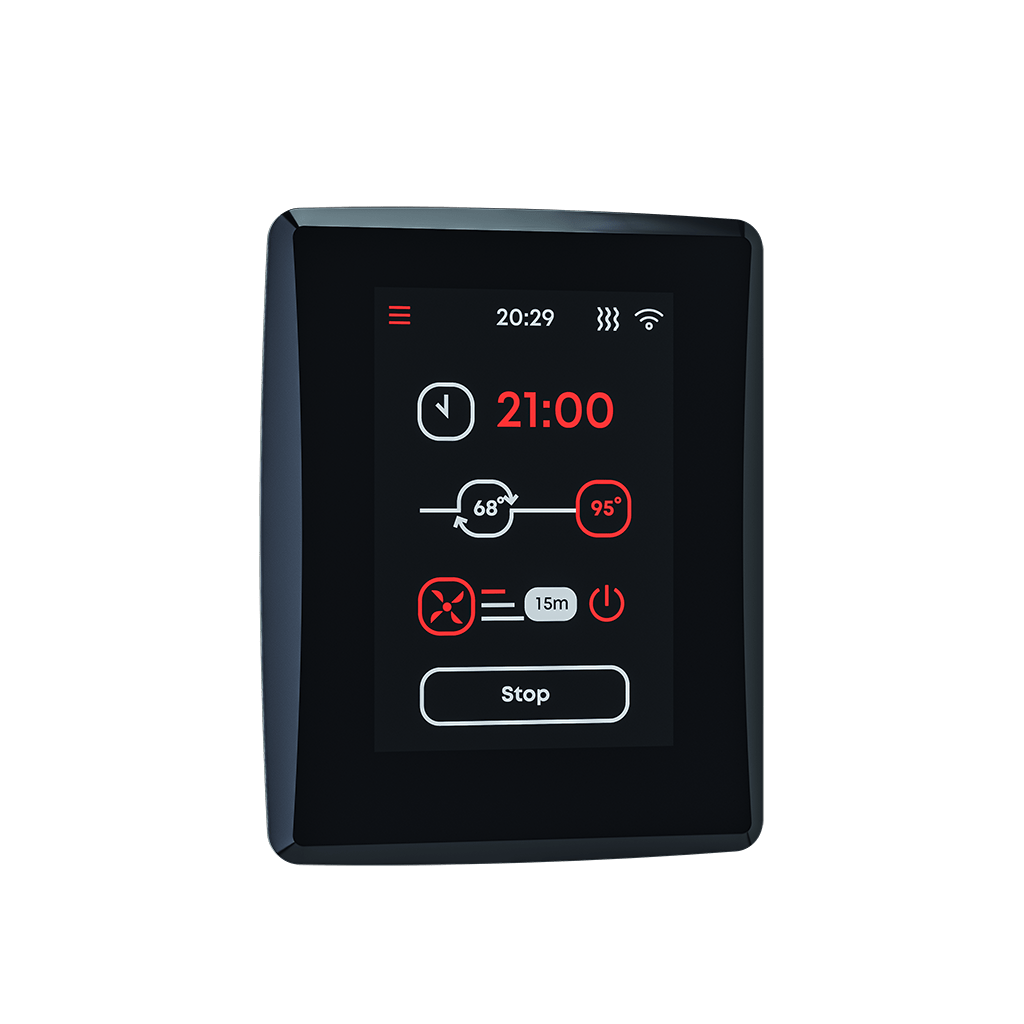
Beyond the dedicated circuit, a complete electric sauna heater installation typically requires a disconnect switch, a thermostat or control unit, and sometimes a timer. The disconnect switch must be located outside the sauna room so the power can be cut without entering the hot space. Most modern heaters also include or require a compatible control panel to manage temperature and session timing.
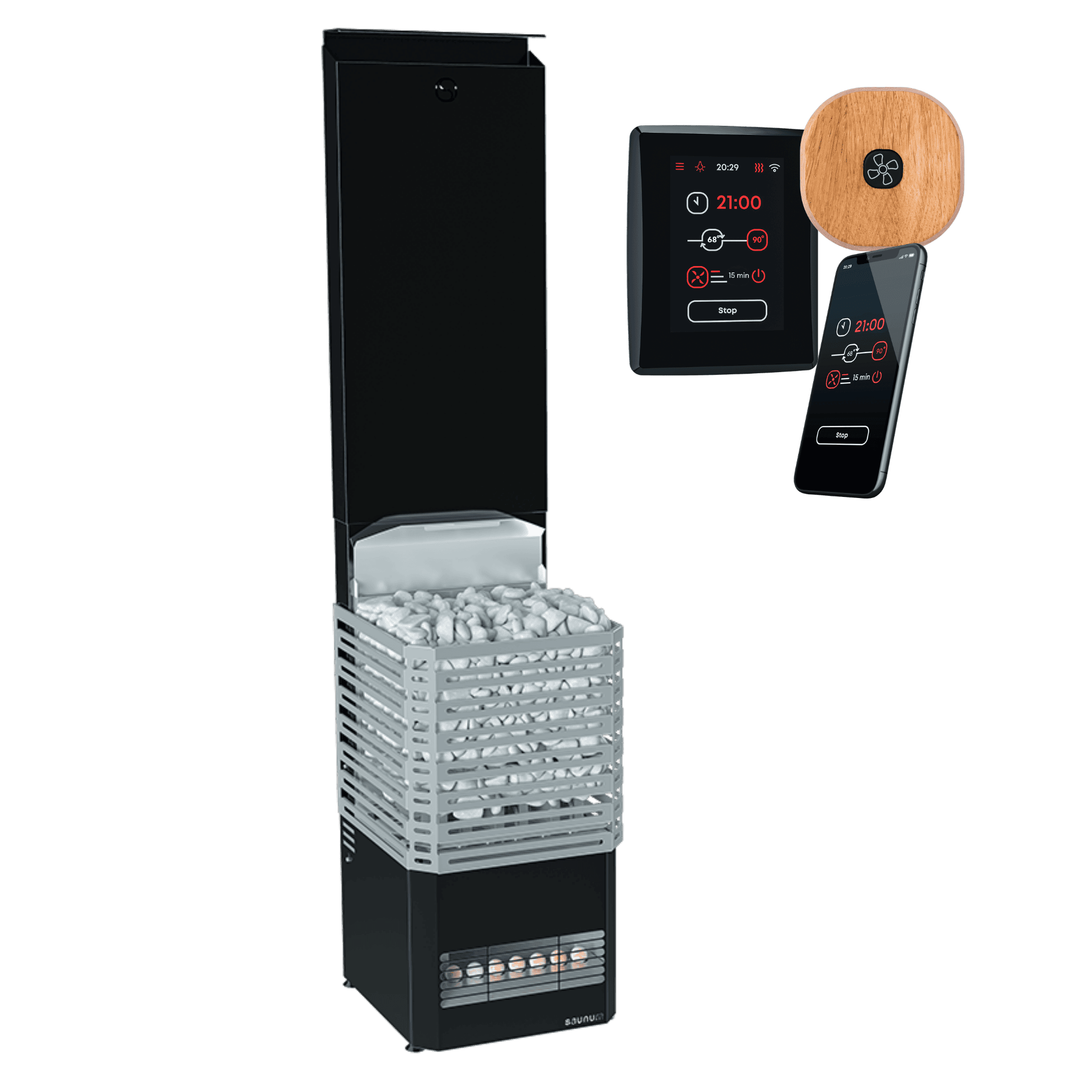
Depending on the heater model, you may also need a separate low-voltage control cable running between the heater and its wall-mounted controller. Some advanced systems integrate WiFi-enabled controls that allow remote pre-heating and session management through a smartphone app, which adds convenience but requires compatible wiring and a stable home network signal near the sauna room.
How Saunum helps with electric sauna heaters
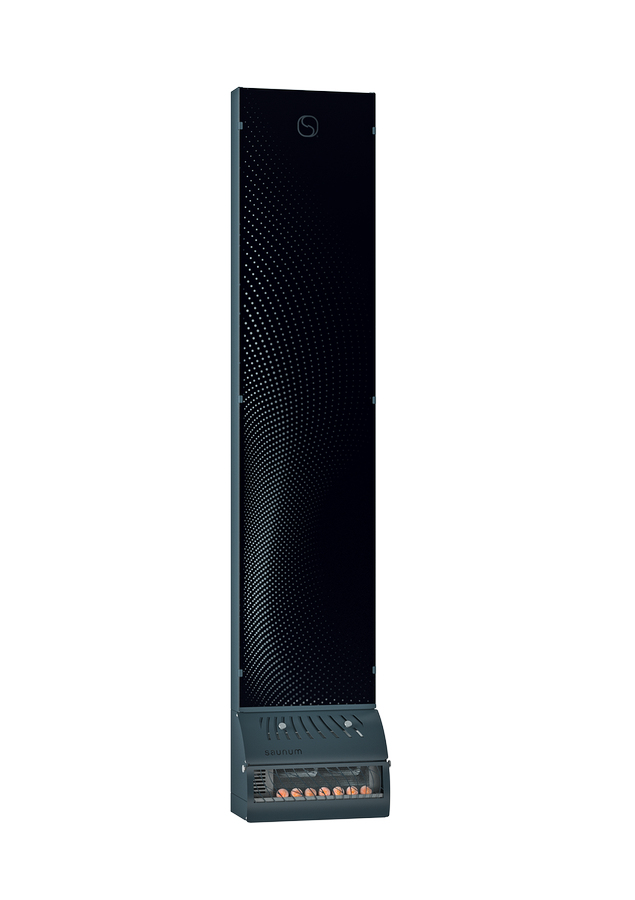
Saunum’s electric sauna heaters come with clear technical specifications so you and your electrician know exactly what circuit requirements to plan for from the start, helping to keep the installation process straightforward. Each model is also designed with a range of features that go beyond basic heating:
- Patented air circulation technology: Saunum heaters actively mix the hot air trapped near the ceiling with cooler floor-level air, creating an even temperature from floor to ceiling and softer, more breathable steam
- Five-in-one sauna modes: A single heater supports Finnish sauna, steam sauna, relaxation sauna, salt-ionized sauna, and aroma sauna, covering a full range of wellness experiences from one installation
- Smart control compatibility: Compatible with the Saunum Leil or AirIQ WiFi controller, allowing remote pre-heating and session adjustments via the Saunum app
- Detailed installation documentation: Technical specifications are provided to help your electrician size the circuit correctly the first time
Whether you are planning a new home sauna or upgrading an existing indoor sauna setup, Saunum offers a heater range built around genuine performance, thoughtful design, and a wellness experience that stands out from standard electric heaters. Get in touch with us to find the right model for your project or explore the full range on the Saunum shop.