

Adding steam to a traditional home sauna transforms a simple heat session into a full sensory experience. Whether you are building your first indoor sauna or upgrading an existing setup, understanding how steam works, where it comes from, and why it sometimes feels uncomfortable is the foundation for getting it right. This guide walks through every key question, from the basics of steam generation to choosing the right electric sauna heater for consistent, breathable steam.
The good news is that producing steam in a home sauna does not require complicated equipment. What it does require is an understanding of how heat, water, and airflow interact inside a sealed sauna room. Once you understand that, you can make smarter decisions about your setup and enjoy a far more satisfying experience every session.
What does it mean to add steam to a traditional sauna?
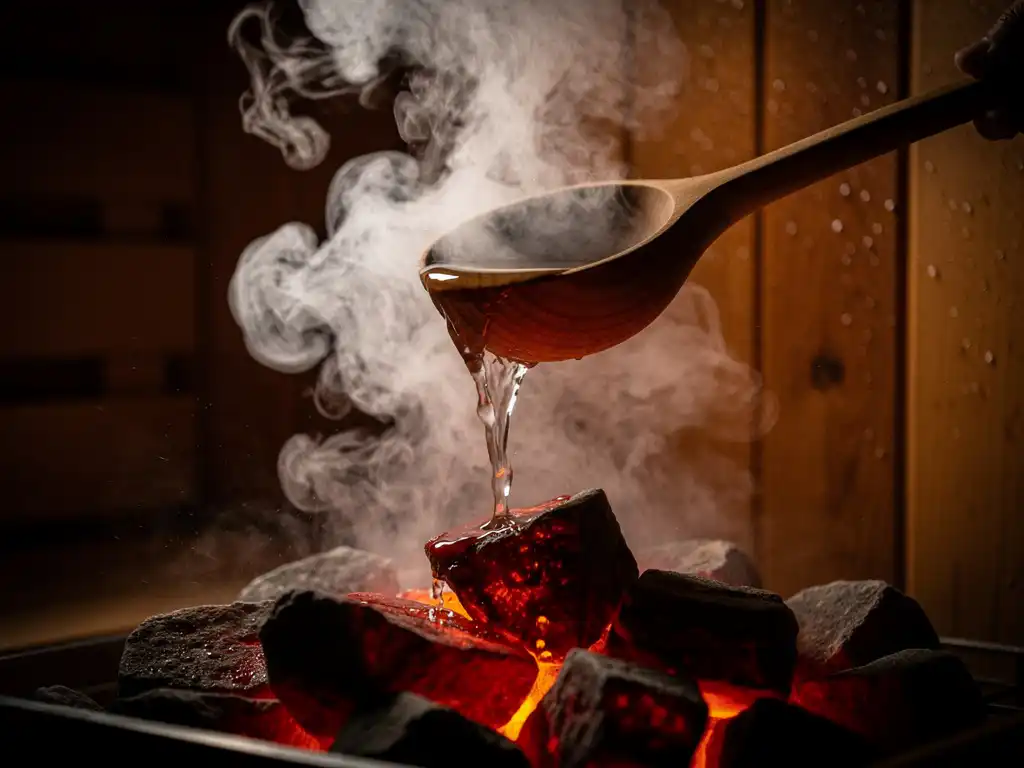
Adding steam to a traditional sauna means introducing moisture into the hot, dry air of the sauna room to create a softer, more humid heat experience. This is done by pouring water onto heated sauna stones, which instantly vaporizes and releases a burst of steam called löyly in Finnish tradition. The result is a temporary rise in perceived heat and humidity that encourages deeper sweating.
In a traditional sauna, the air is intentionally dry and hot, typically between 160 and 200 degrees Fahrenheit. Steam is not a permanent feature of the environment the way it is in a steam room. Instead, it is introduced in controlled bursts throughout the session. This ritual aspect of steam is central to Nordic sauna culture, and the quality of that steam—how soft it feels, how long it lingers, and how easy it is to breathe—defines the overall sauna experience.
A well-designed indoor sauna allows you to control how much steam you introduce and how it disperses through the room. Getting that balance right depends heavily on your heater, your stone load, and how your sauna manages airflow and climate technology.
How does throwing water on sauna rocks create steam?
When water contacts the hot sauna stones, it flash-vaporizes into steam almost instantly. The stones act as a thermal reservoir, storing enormous amounts of heat energy. When water hits that surface, the energy transfer happens so rapidly that the liquid turns directly into vapor, which then rises and fills the upper portion of the sauna room.
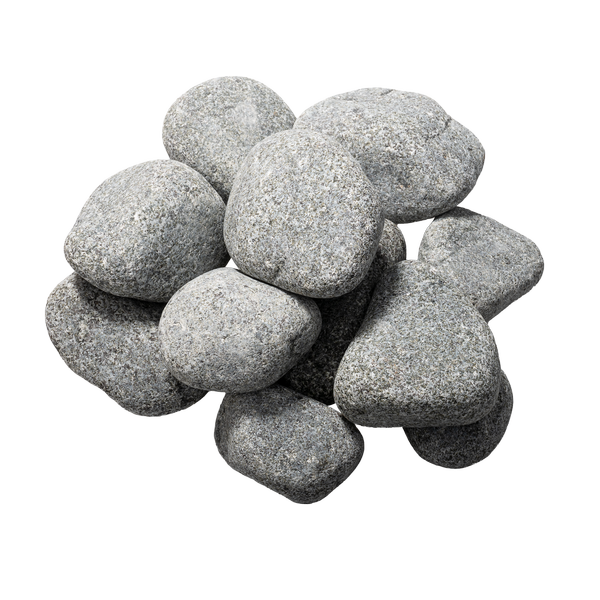
The quality of this steam depends on several factors. Stones that are properly sized, well stacked, and fully heated produce a soft, rolling steam rather than a sharp, scalding burst. The temperature of the stones matters too. Stones that are too hot produce aggressive, uncomfortable steam that can sting the skin and airways. Stones at the right temperature produce what sauna enthusiasts describe as a gentle, enveloping heat.
The amount of water you ladle also plays a role. A small pour produces a brief, intense burst. Repeated small pours over the course of a session build up humidity gradually, which is generally more comfortable than a single large pour. The design of your heater’s stone basket directly affects how the water distributes across the stones and how evenly the steam is released.
What’s the difference between a steam generator and a sauna heater?
A steam generator and a sauna heater serve fundamentally different purposes. A steam generator boils water continuously to fill a room with dense, wet steam, creating a steam room environment with humidity levels near 100%. A sauna heater heats a room to high temperatures with low humidity, and steam is introduced manually by ladling water onto hot stones.
The two systems produce very different experiences. A steam room operates at lower temperatures, typically between 100 and 120 degrees Fahrenheit, with near-saturated air. A traditional sauna operates at much higher temperatures with dry air, and the steam is a brief, intentional addition rather than a constant atmospheric condition.
For a home sauna, a sauna heater is the right choice if you want an authentic Nordic experience. Steam generators require sealed, waterproof enclosures and dedicated plumbing, making them more complex and expensive to install. A quality electric sauna heater with a good stone load gives you full control over steam intensity without the infrastructure demands of a steam generator.
Why does steam feel uneven or too harsh in a traditional sauna?
Steam can feel uneven or harsh in a traditional sauna because hot air and steam naturally rise to the ceiling, creating a sharp temperature difference between the upper and lower zones of the room. The steam near the ceiling can reach dangerously high temperatures while the air near the floor remains significantly cooler. When that concentrated, superheated steam reaches your face and airways, it can feel scalding and difficult to breathe.
This phenomenon is called temperature stratification, and it is one of the most common complaints among sauna users. In a room without active airflow management, the temperature near the ceiling can be dramatically higher than at bench level. The steam produced by ladling water is brief and intense, rising immediately to the hottest zone rather than distributing evenly through the room.
Low oxygen levels compound the problem. As steam rises and displaces the cooler, oxygen-richer air near the floor, the breathing environment near the upper benches deteriorates. This is why many people feel lightheaded or uncomfortable during steam sessions, particularly in poorly ventilated or poorly designed sauna rooms. The solution is not less steam, but better distribution of the steam that is already being produced.
How can an air circulation system improve sauna steam distribution?
An air circulation system improves sauna steam distribution by actively capturing the hot steam that accumulates near the ceiling and blending it with the cooler, oxygen-rich air near the floor. Instead of allowing heat and steam to stratify into harsh layers, the system redistributes the mixed air evenly throughout the room, creating a consistent temperature and humidity level from floor to ceiling.
This approach solves two problems at once. First, it eliminates the scorching concentration of steam at the top of the room that makes breathing uncomfortable. Second, it extends the life of each steam burst because the vapor is dispersed gradually rather than dissipating in a brief, intense wave near the ceiling. The result is a softer, longer-lasting steam that feels gentler on the skin and airways.
With proper air blending, you can ladle water more frequently without discomfort, which means a more humid, more immersive session overall. The air you breathe is also richer in oxygen, which makes extended sauna sessions feel less taxing. For anyone building or upgrading an indoor sauna, an integrated climate system is one of the most impactful improvements you can make to the steam experience.
What should you look for in an electric sauna heater for better steam?
For better steam in a home sauna, look for an electric sauna heater with a large stone capacity, even heat distribution across the stone bed, and an integrated or compatible air circulation system. These three factors determine how much steam you can produce, how soft that steam feels, and how evenly it is distributed throughout your sauna room.
Stone capacity is often underestimated. A larger stone load stores more thermal energy, which means the stones recover faster between water pours and maintain a more consistent temperature throughout the session. Heaters with small stone baskets tend to cool down quickly after ladling, producing weaker steam and requiring longer recovery times between pours.
Power sizing relative to your sauna room volume is equally important. An underpowered heater struggles to maintain temperature, especially when moisture is introduced. Always size your heater to match your room’s cubic footage, and account for non-insulated surfaces like glass doors or concrete walls, which require additional heating capacity.
How Saunum helps you get better steam in your electric sauna
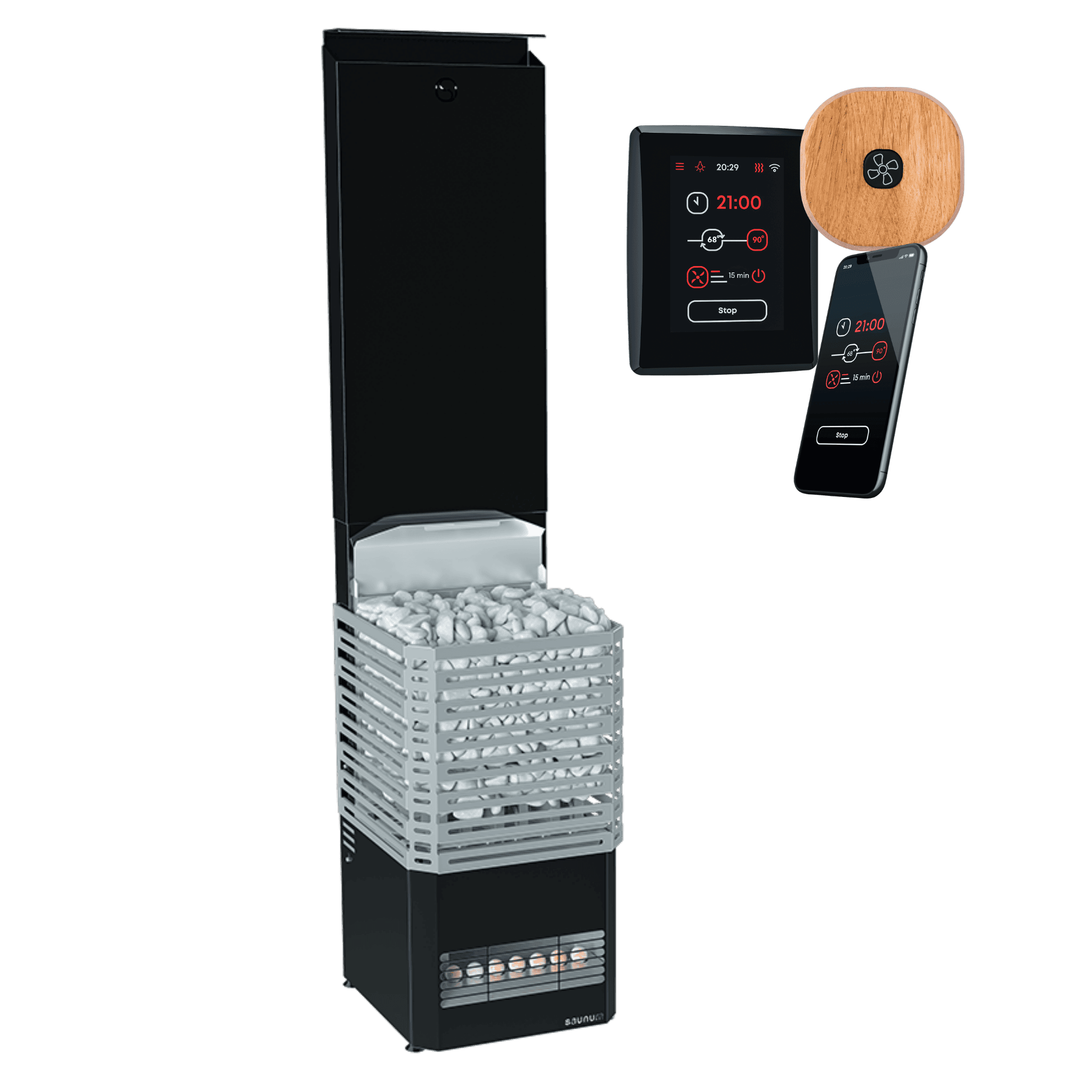
We designed our entire product lineup around solving the core problems that make steam in a traditional sauna uncomfortable: temperature stratification, harsh steam bursts, and poor breathability. Every Saunum heater and climate device uses our patented air-blending system to capture superheated steam near the ceiling, mix it with cooler, oxygen-rich air from the floor, and redistribute it evenly throughout the sauna room. The steam becomes softer, lasts longer, and is genuinely easier to breathe.
Here is what that means in practice for your home sauna build:
- The Saunum Experience is our entry-level, all-in-one heater for home saunas, available from 3.6 kW to 9 kW, covering sauna volumes from 2 to 10 cubic meters, with an adjustable height that fits most domestic ceiling heights.
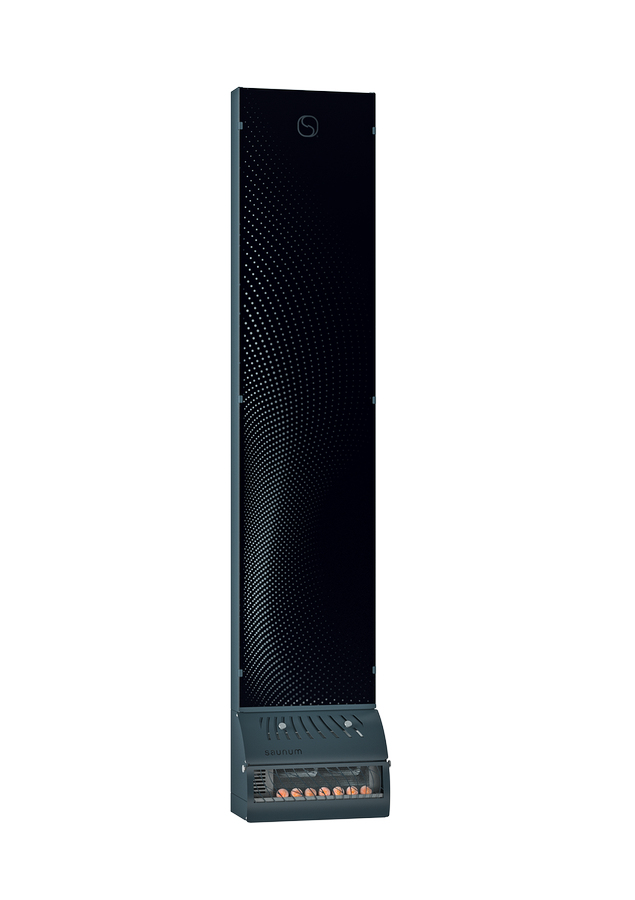
- The Saunum Base is a standalone climate device that adds our air-blending technology to any existing wood-burning or electric heater, making it a practical upgrade if you are not ready to replace your current heater.
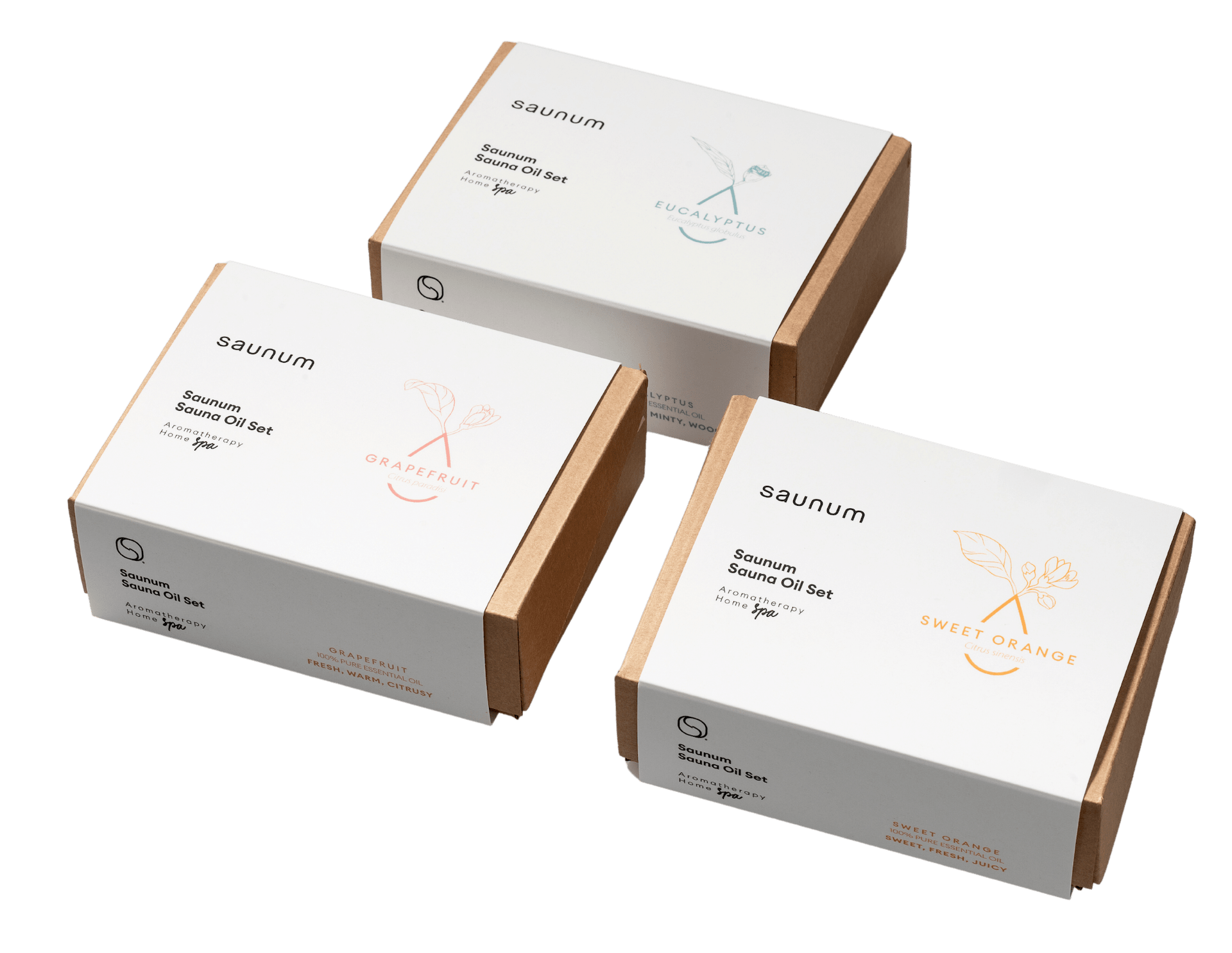
- The Saunum Spa Session integrates the air-blending system directly into the heater body for a streamlined, minimalist look and supports our full 5-in-1 experience, including salt ion therapy and aromatherapy.
- The Saunum AutoLeil accessory automates water dispensing onto the stones, maintaining consistent humidity without manual ladling, with both automatic humidity control and manual timing modes.
Every one of these solutions supports five distinct sauna experiences in a single unit: classic Nordic sauna, humid, steam-rich sauna, mild, relaxing sauna, salt ion sauna, and aroma sauna. You do not need multiple rooms or multiple systems to access all of them.
If you are planning a home sauna build or looking to upgrade your existing setup, Saunum is ready to help you find the right heater for your room dimensions, ceiling height, and steam goals. Visit our contact page to explore our full product range and use our sauna heater calculator to find the perfect fit for your space.
If you’re interested in getting started with Sauna, check out our full range today.