

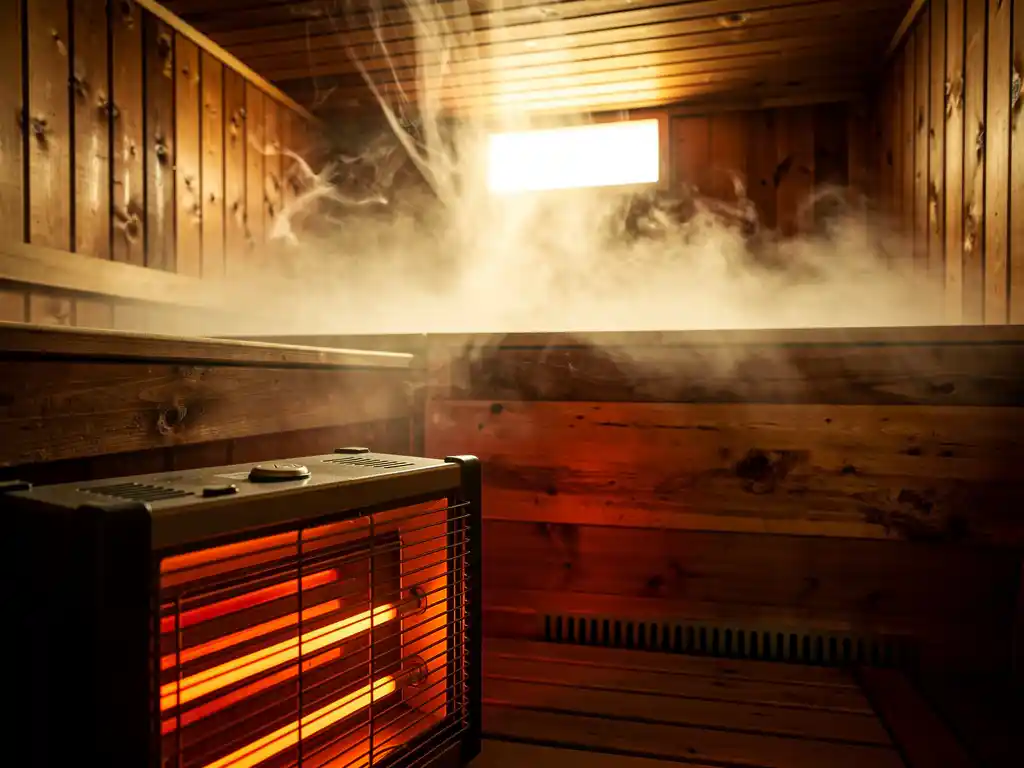
If you have ever stepped into a sauna and felt a wave of scorching heat hit your face while your feet stayed cool, you have experienced the effects of poor sauna ventilation firsthand. Ventilation in a sauna is not simply about moving air from one place to another. It is a carefully balanced system that simultaneously controls temperature, humidity, oxygen levels, and steam distribution. Understanding the difference between sauna ventilation and regular room ventilation is essential for anyone building, installing, or upgrading a sauna.
For DIY builders and contractors, getting the sauna ventilation system right from the start is one of the most impactful decisions you can make. The wrong approach leads to uncomfortable sessions, wasted energy, and a sauna that simply does not perform as it should. This guide answers the most common questions about sauna ventilation, explains the science behind proper sauna indoor climate control, and shows how modern technology solves problems that traditional designs have struggled with for decades.
What is sauna ventilation and why does it matter?
Sauna ventilation is the controlled movement of air within a sauna to regulate temperature, humidity, oxygen levels, and steam distribution. Unlike general ventilation, it must maintain a specific climate that supports both physical comfort and health benefits. Without it, heat stratifies, oxygen levels drop, and the sauna experience becomes unpleasant—or even unsafe.
A well-ventilated sauna allows fresh oxygen to enter the room, stale air to exit, and steam to distribute evenly throughout the space. This matters because the human body responds very differently to dry, oxygen-poor air than to soft, oxygen-rich steam. When ventilation is poor, bathers often feel suffocated, dizzy, or fatigued after a session. These are not signs of a good sauna. They are signs of a ventilation problem.
Ventilation also affects how well the sauna maintains the right temperature after the heater reaches its target. A room that loses heat due to poor airflow planning will require more energy to maintain, driving up running costs over time. For contractors and builders, understanding ventilation is not just about comfort. It is about delivering a product that performs reliably, session after session.
How does regular room ventilation work compared to sauna ventilation?
Regular room ventilation is designed to replace stale indoor air with fresh outdoor air, typically aiming to maintain a comfortable temperature between 18 and 24 degrees Celsius and to remove pollutants. Sauna ventilation, by contrast, must manage extreme temperatures, high humidity, and the controlled movement of steam while retaining heat energy within the room.
In a standard living space, ventilation systems prioritize air exchange rate and air quality. They bring in cooler fresh air and expel warm, stale air without concern for rapid heat loss. In a sauna, losing heat too quickly defeats the entire purpose. The goal is to introduce just enough fresh air to keep oxygen levels healthy while preserving the thermal energy that took significant power to generate.
Another key difference is humidity management. Regular ventilation systems are often designed to reduce humidity and prevent condensation. Sauna ventilation must handle high humidity, particularly in steam-rich sessions, without causing structural damage to walls and benches. The materials, placement of vents, and airflow direction all need to account for moisture in ways that standard HVAC design simply does not. To learn more about how advanced engineering addresses these challenges, visit our technology page.
Why is temperature stratification a problem in traditional saunas?
Temperature stratification in a traditional sauna occurs when hot air and steam rise and accumulate near the ceiling while cooler air settles near the floor. The temperature difference between ceiling and floor can be dramatic, with the upper zone reaching well above 80 degrees Celsius while the lower zone remains significantly cooler. This creates an uneven, uncomfortable, and inefficient sauna environment.
The physics behind stratification are straightforward. Hot air is less dense than cool air, so it rises. In a conventional sauna without active air circulation, steam from the heater stones shoots upward and stays there. Bathers sitting on the upper bench get blasted with intense heat, while those lower down barely feel warm. Neither experience is ideal, and neither reflects what a well-designed sauna should deliver.
Beyond comfort, stratification affects breathing. The oxygen-depleted, steam-saturated air near the ceiling is harder to breathe, particularly during the most intense part of a session, when bathers throw water on the stones. This is why many people feel the need to leave a sauna prematurely. The problem is not the heat itself. It is the uneven distribution of that heat combined with reduced oxygen in the breathing zone.
Stratification also reduces efficiency. When the hottest air pools at the ceiling, where no one is sitting, the heater must work harder to keep the occupied zone at a comfortable temperature. This translates directly into higher electricity consumption and longer heat-up times.
What are the main types of sauna ventilation systems?
There are three main types of sauna ventilation systems: passive gravity ventilation, mechanical exhaust ventilation, and active air-blending systems. Each works differently and suits different sauna types and performance expectations.
Passive gravity ventilation relies on natural convection. A low inlet vent near the heater allows cool, fresh air to enter, while a high outlet vent near the ceiling allows hot, stale air to escape. This is the traditional approach and works reasonably well for basic sauna use, but it does nothing to address temperature stratification.
Mechanical exhaust ventilation adds a fan to actively pull air out of the sauna, increasing the rate of air exchange. This improves oxygen levels and reduces overheating, but it also removes the steam and heat that make a sauna enjoyable. Poorly calibrated mechanical exhaust can dry out the sauna air and significantly reduce the quality of the löyly experience.
Active air-blending systems represent the most advanced approach. Rather than simply moving air in and out, these systems capture hot steam from the ceiling zone and mechanically mix it with the cooler, oxygen-rich air near the floor, then redistribute the blended air evenly throughout the room. This eliminates stratification without sacrificing heat or humidity.
How does air circulation technology improve sauna climate control?
Active air circulation technology improves sauna climate control by eliminating temperature stratification, enriching the breathing zone with oxygen, and creating softer, longer-lasting steam. The result is a more comfortable, healthier, and more energy-efficient sauna session than passive or mechanical exhaust systems provide.
The core mechanism involves capturing the scorching steam that accumulates near the ceiling and blending it with the cooler, fresher air near the floor. Once mixed, this balanced air is redistributed evenly throughout the room. Bathers on every bench level experience a consistent temperature, and the steam is gentler because it has been diluted with oxygen-rich air rather than remaining a concentrated, intense burst near the ceiling.
This approach also changes how water behaves when thrown on the heater stones. Because the steam is distributed more evenly and the air is already at a balanced humidity level, bathers can add water more frequently without the session becoming unbearable. The löyly lasts longer, sweating is more intense, and post-session recovery is noticeably easier. Many users report no headaches or fatigue after sessions in a sauna with proper air circulation, which is a common complaint with traditional setups.
From a technical standpoint, the air-blending sauna system concept also supports multiple session styles. By adjusting fan speed and vent position, the same climate system can produce a dry Nordic sauna, a humid, steam-rich session, or a mild relaxation environment. This flexibility is something passive ventilation systems simply cannot offer.
How Saunum helps with sauna ventilation and climate control
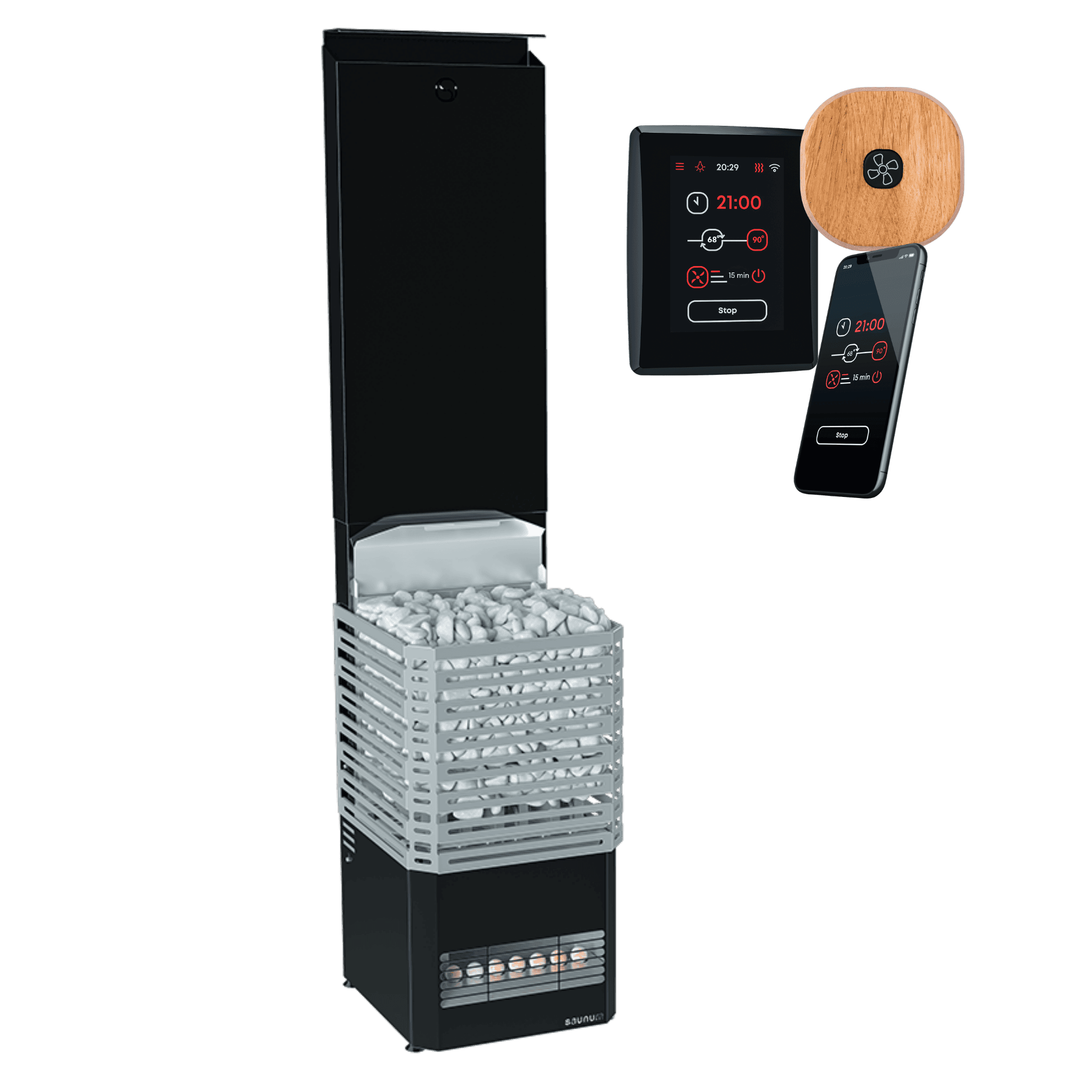
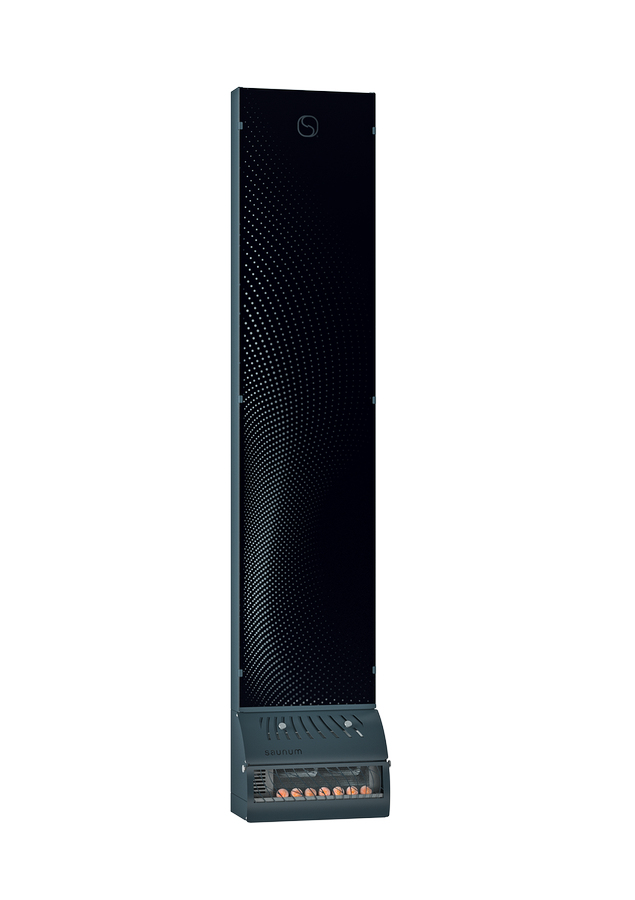
We developed our entire product line to solve the ventilation and stratification problems that traditional saunas have long struggled with. Our patented air-blending system is built into every Saunum heater and climate device, turning a common frustration into a standout feature of every session.
Here is what our technology delivers in practical terms:
- Even temperature from floor to ceiling, eliminating the uncomfortable hot-ceiling, cold-floor problem
- Oxygen-enriched, softer steam that is easier to breathe and allows more frequent water ladling
- Five selectable sauna modes, including classic Nordic, humid steam, relaxation, salt ion, and aroma sessions
- A retrofit option with the Saunum Base climate device, which adds air-blending to any existing heater without a full replacement
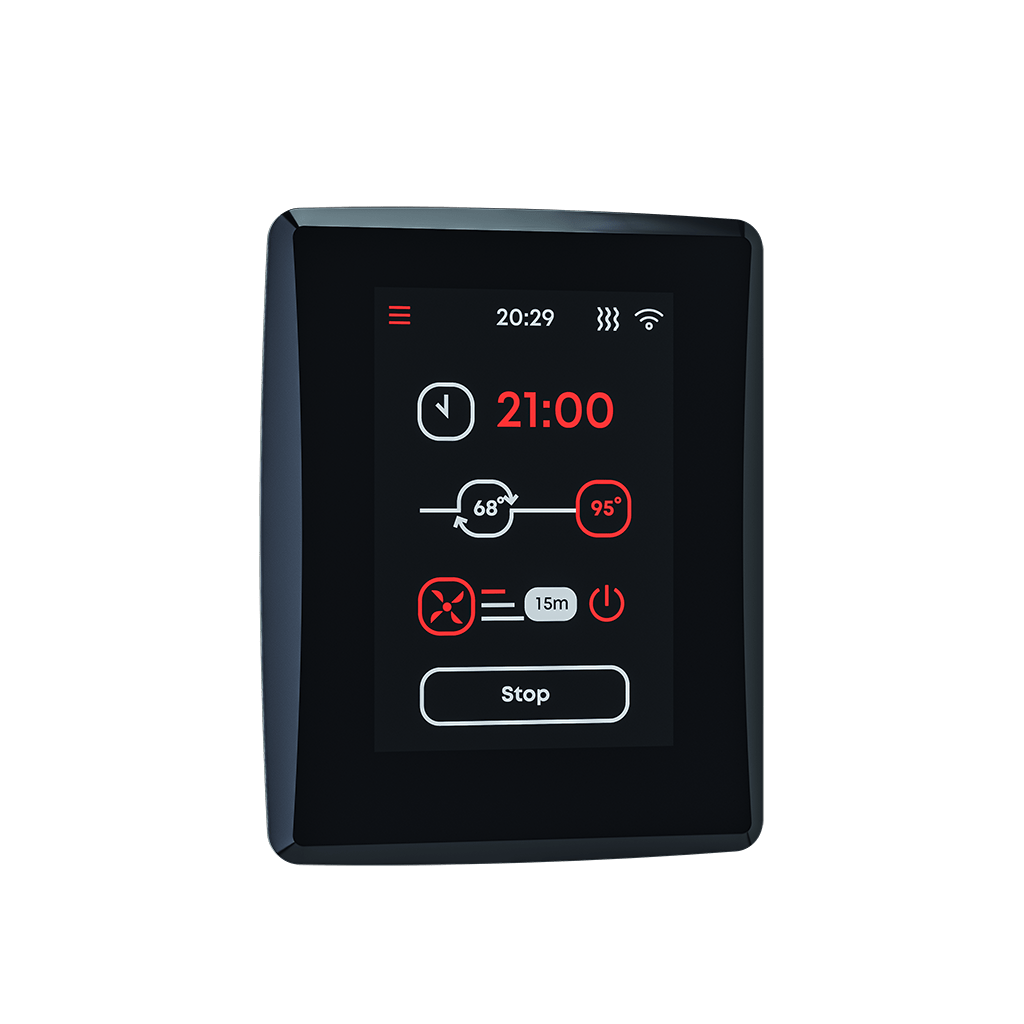
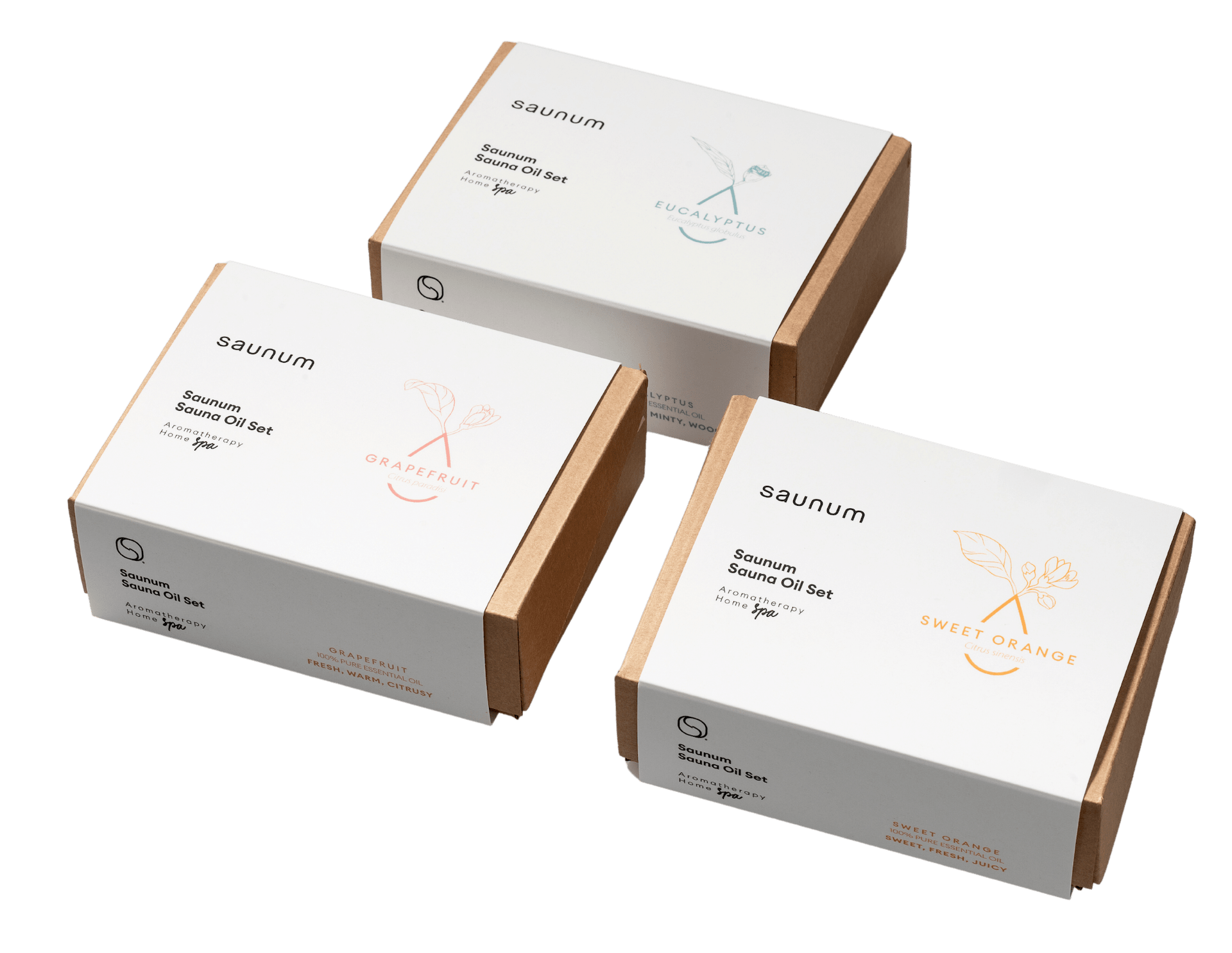
Whether you are building a new sauna from scratch, upgrading an existing installation, or specifying equipment for a boutique spa, Saunum has a product designed for that environment. Our range spans from the compact Experience model for home apartments to the high-capacity Luxury heater for large commercial spaces. Every unit includes Himalayan salt spheres and integrates with our smart Leil control system for precise climate management. Browse our full range in the shop to find the right fit for your project.
If you want the installation handled professionally, our installation service covers everything from transporting the equipment to your site and making all electrical connections to laying the heater stones and walking you through how to get the most out of the system. Reach out to Saunum today to find the right solution for your sauna project.
What ventilation mistakes should sauna builders avoid?
The most common sauna ventilation mistakes include placing the exhaust vent too low, sizing the intake vent incorrectly, relying entirely on passive convection in larger rooms, and neglecting the relationship between heater placement and airflow direction. Each of these errors undermines the sauna climate and can be difficult to correct after construction is complete.
Incorrect vent placement
Placing the exhaust vent at the same height as the intake vent creates short-circuit airflow, where fresh air travels directly to the exhaust without circulating through the room. The exhaust vent should always be positioned higher than the intake, ideally near the ceiling, to allow hot, stale air to escape naturally. The intake vent should sit close to the floor near the heater so incoming fresh air warms up before entering the bathers’ zone.
Ignoring heater position in airflow planning
The heater is the engine of the sauna climate. Placing it in a corner without considering how air will flow around it can create dead zones where heat and steam accumulate without circulating. Builders should plan the airflow path from intake to exhaust before finalizing the heater position, ensuring the two work together rather than against each other.
Over-ventilating the room
More ventilation is not always better. Excessive air exchange removes the steam and heat that define a quality sauna experience. The goal is to introduce enough fresh air to keep oxygen levels comfortable while retaining the thermal energy that makes the session effective. Active air-blending technology addresses this balance far more precisely than oversized exhaust fans, which tend to dry out the room and frustrate bathers trying to enjoy a steam-rich session.
Getting the ventilation right from the planning stage is always easier than retrofitting a fix after the walls are up. For builders and contractors who want a system that handles these challenges automatically, integrating an active sauna indoor climate device into the design from the start is the most reliable path to a sauna that performs consistently across every session type.