
If you have ever stepped into a sauna and felt like your head was being cooked while your feet stayed cold, you have experienced one of the most common problems in sauna design. Temperature stratification—where scorching air pools near the ceiling and cooler air sits at floor level—makes sessions uncomfortable and can even feel unsafe. A sauna air-blending system is the engineering solution to this exact problem, and understanding how it works can completely change how you design, build, or upgrade a sauna.
Whether you are a contractor planning a commercial installation or a DIY builder working on a home sauna, knowing the difference between a basic electric heater and one with an integrated indoor climate device will help you make a smarter, longer-lasting decision. This guide answers the most common questions builders and installers ask about air-blending technology.
What is a sauna air blending system and how does it work?
A sauna air-blending system is a climate device that actively circulates air within the sauna room, drawing superheated air from near the ceiling, mixing it with cooler air from floor level, and redistributing the blended steam evenly throughout the space. The result is a consistent, breathable temperature from floor to ceiling rather than extreme layering.
In practical terms, the system uses a fan mechanism to pull the hot, dry air that accumulates at ceiling height back into the circulation cycle. That air is then blended with oxygen-rich air from lower in the room before being directed back into the sauna as soft, even steam. This process happens continuously during a session, which means every corner of the sauna maintains a stable climate rather than creating a dangerously hot zone at head height and a cold zone at bench level.
The technology also has a meaningful impact on breathability. When steam is mixed with oxygen-rich air and distributed evenly, users find it significantly easier to breathe throughout a session. Rather than feeling a sharp, suffocating blast of heat when water hits the stones, the blended steam envelops the room gently and consistently.
Why do traditional saunas overheat near the ceiling?
Traditional saunas overheat near the ceiling because hot air is less dense than cool air and naturally rises. When a heater generates heat, it immediately climbs toward the highest point in the room. Without any mechanism to redistribute it, the ceiling zone can reach temperatures far exceeding what is comfortable or safe, while the lower half of the room remains significantly cooler.
This is not a flaw in the heater itself. It is simply physics. In a sealed room with a single heat source, convection creates a strong vertical temperature gradient. Industry experience shows that the difference between ceiling-level and floor-level temperatures in a conventional sauna can be dramatic enough to make the upper bench feel overwhelming while the lower bench feels underwhelming.
The problem compounds when water is thrown on the stones. The burst of steam shoots upward, adding another surge of heat to the already overheated ceiling zone. Users sitting on upper benches bear the full force of that spike, which is why many people describe traditional saunas as harsh or difficult to breathe in. The ventilation system in a standard build simply does not address this vertical imbalance.
How does air blending prevent dangerous temperature spikes?
Air blending prevents dangerous temperature spikes by intercepting superheated air before it accumulates at ceiling level and immediately reintroducing it into the lower circulation cycle. This continuous mixing keeps the temperature differential between floor and ceiling narrow, so there is no sudden spike when steam is generated.
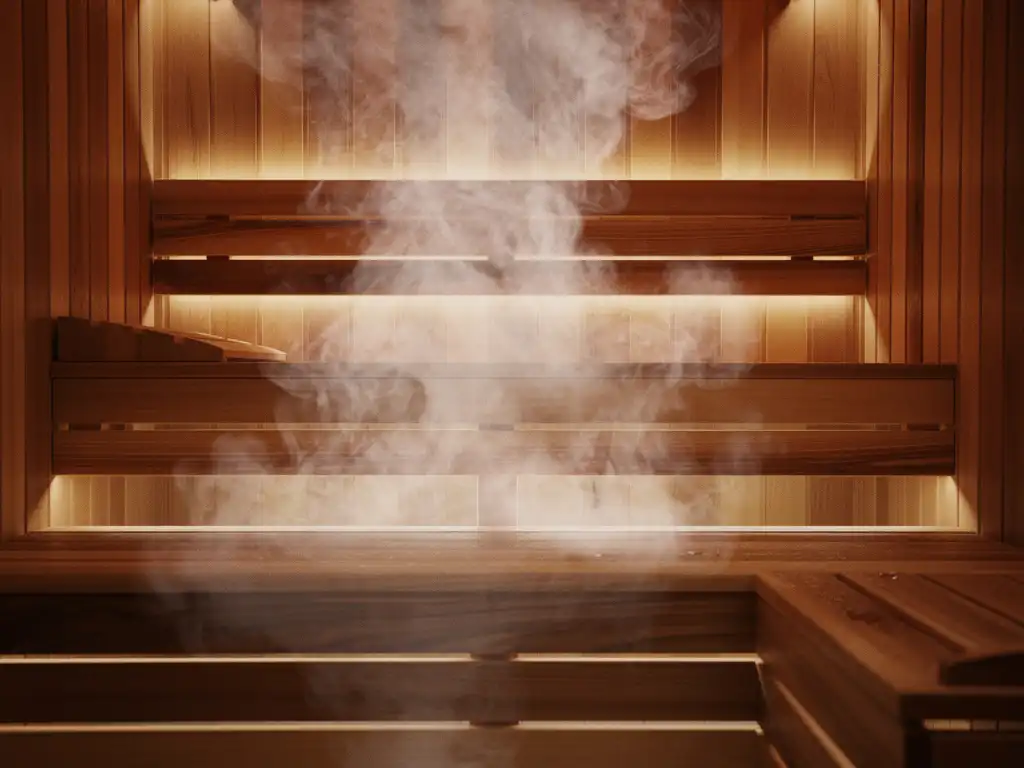
When you throw water on the stones in a sauna equipped with an air-blending system, the resulting steam is captured and redistributed rather than surging upward unchecked. The fan draws that steam into the blending cycle, mixes it with cooler, oxygen-rich air, and sends it back into the room as a softer, more even wave of warmth. The experience feels noticeably gentler, and users can throw water more frequently without the session becoming unbearable.
There is also a safety dimension worth noting for contractors and builders. An indoor climate device that actively manages temperature distribution reduces the risk of localized overheating near the ceiling, which, in extreme cases, can stress wood joints, affect sensor accuracy, and create an environment that discourages users from staying long enough to benefit from the session. Consistent temperature management is as much a structural and safety consideration as it is a comfort one.
What’s the difference between a standard heater and one with air blending?
A standard electric sauna heater generates heat by warming stones and relies entirely on passive convection to distribute that heat around the room. A heater with an integrated air-blending system adds an active fan and circulation mechanism that continuously moves and redistributes air, producing an even temperature throughout the sauna rather than a stratified one.
The practical differences for builders and installers are significant. A standard heater is simpler to install and lower in upfront cost, but the sauna it produces will have predictable limitations: uneven temperatures, harsher steam, and a narrower window of comfortable operation. A heater with an integrated sauna air-blending system delivers a more controlled environment that is easier to adjust and more consistent across different session types. You can explore the full range of available units in the Saunum shop to compare integrated and standalone options side by side.
Single unit versus separate add-on
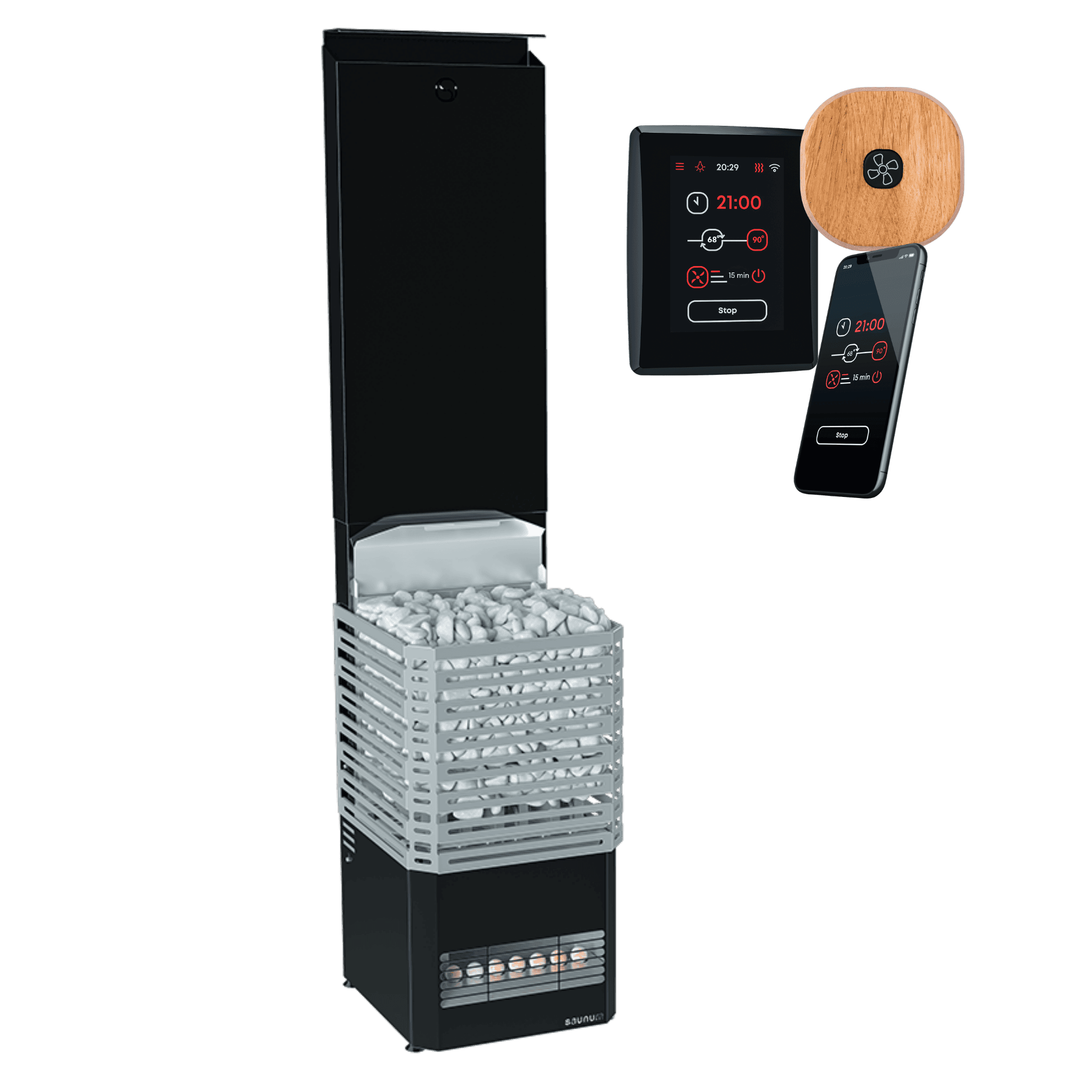
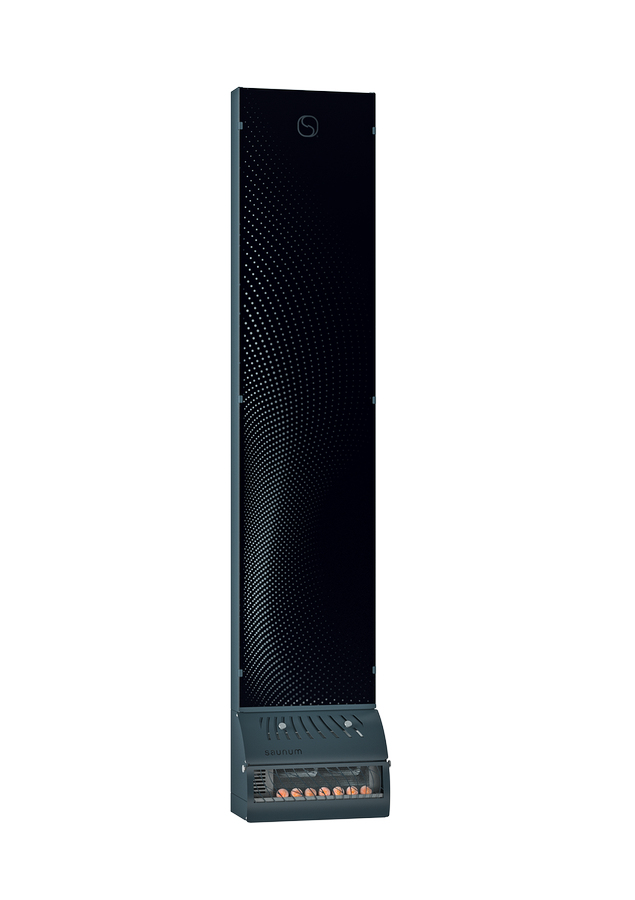
Air-blending technology is available in two configurations. The first is a fully integrated unit in which the climate device is built directly into the heater body, as with the Saunum Experience or the Saunum Spa Session. The second is a standalone climate device, like the Saunum Base, which can be added to any existing wood-burning or electric heater without replacing it. For new builds, an integrated unit simplifies wiring and installation. For retrofits, a standalone add-on offers a practical upgrade path without a full heater replacement.
Can an air blending system work in any sauna size or build?
Yes, an air-blending system can work in virtually any sauna size or build, from compact apartment saunas to large commercial spa facilities. The key is matching the heater power and climate device capacity to the specific room volume, ceiling height, and wall construction of the sauna being built or upgraded.
For smaller domestic saunas, an integrated unit in the 3.6 to 9 kW range covers most room volumes from 2 to 10 cubic metres. Larger private saunas and boutique public facilities require higher-capacity heaters with correspondingly powerful climate devices. When walls are uninsulated—such as glass panels, glass block, or concrete—builders should add extra volume to their calculations when sizing the heater, because uninsulated surfaces increase the effective thermal load.
Ceiling height is another factor that affects compatibility. Most integrated units with air blending require a minimum ceiling height to function correctly, since the system needs sufficient vertical space to draw air from the upper zone and redistribute it downward. Adjustable-height units offer flexibility for rooms with non-standard ceiling heights, which is particularly useful in retrofit installations where the builder cannot modify the structure.
What should you look for when choosing a sauna heater with air blending?
When choosing a sauna heater with an air-blending system, the most important factors are power sizing for your room volume, integration quality between the heater and climate device, control system flexibility, and the safety features built into the unit. A heater that is undersized will never reach the right temperature; one that is oversized will cycle inefficiently and waste energy.
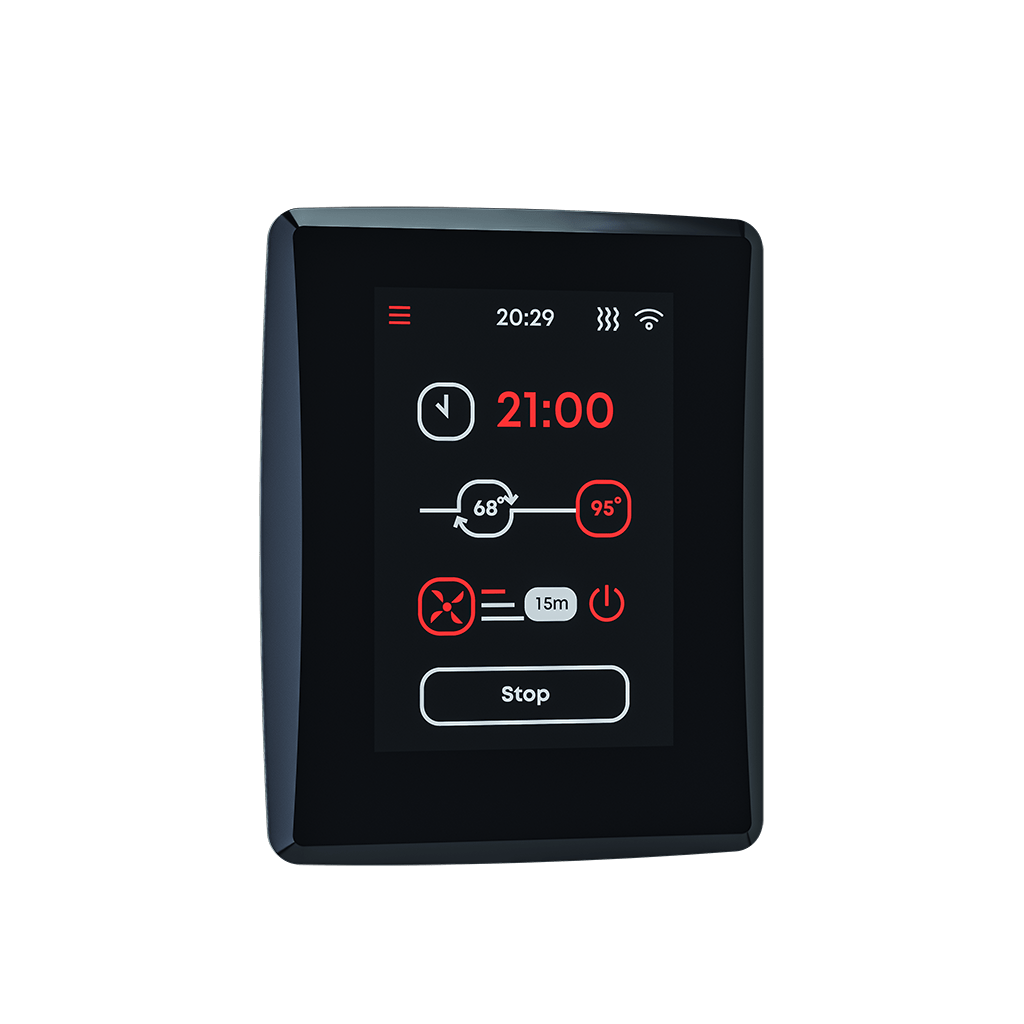
Beyond raw power, look at how the climate device is controlled. A smart control system that lets you adjust fan speed, set target temperatures, and schedule sessions remotely adds real convenience for both home users and commercial operators. Safety features such as thermal cut-off protection, overheating sensors, and door interlocks are non-negotiable in any professional installation.
- Power sizing matched to your exact room volume and wall construction type
- Adjustable fan speeds to support different session styles, from dry Nordic to humid, steam-rich sessions
- Built-in thermal protection with both primary and secondary cut-off systems
- Smart control compatibility for scheduling, remote access, and smart home integration
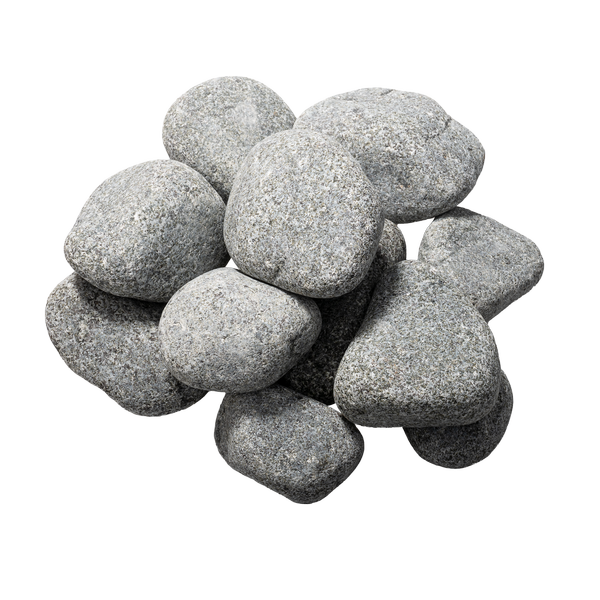
Stone capacity is also worth considering. A larger stone basket retains heat longer, improves energy efficiency, and distributes water more evenly across the stones, which reduces thermal shock to the heating elements over time. For commercial or high-frequency use, this directly affects maintenance intervals and long-term running costs.
How Saunum helps with sauna air blending technology
We have built our entire product range around solving the temperature stratification problem that makes conventional saunas harsh and uncomfortable. Every Saunum heater and climate device uses our patented air-blending system to capture ceiling-level heat, mix it with oxygen-rich air from the lower part of the room, and redistribute it as soft, even steam. The result is a sauna that is genuinely easier to breathe in, more comfortable across the full height of the room, and more flexible in terms of the experiences it can deliver.
Here is what our approach to air-blending technology offers builders and installers in practical terms:
- Integrated units like the Saunum Experience and Saunum Spa Session combine the heater and climate device in a single body, simplifying installation and wiring
- The Saunum Base add-on brings air blending to any existing heater without a full replacement, making it a cost-effective upgrade for retrofit projects
- The Saunum Leil smart control system manages heater operation, fan speed, and AutoLeil water dispensing from a single touch panel or smartphone app
Every Saunum product also supports five distinct sauna experiences, from classic Nordic to humid, steam-rich sessions, mild relaxation, salt ion therapy, and aromatherapy, all selectable by adjusting temperature, fan speed, and vent valve position. This versatility makes our heaters a strong choice for both private home builds and boutique commercial installations where the client expects more than a single fixed experience.
If you are planning a new sauna build or upgrading an existing one, Saunum offers professional installation services covering transport, electrical connection, device setup, stone laying, and hands-on usage guidance. Get in touch with Saunum to discuss the right air-blending solution for your specific sauna dimensions and project requirements.