



The main difference between a dry sauna and a steam room lies in humidity and temperature levels. Dry saunas operate at higher temperatures (70–100°C) with low humidity (5–10%), while steam rooms maintain lower temperatures (40–50°C) with nearly 100% humidity. Both offer health benefits, but the dry heat versus wet heat creates distinctly different experiences and physiological effects on your body.
What exactly is a dry sauna and how does it work?
A dry sauna creates its therapeutic environment through high temperatures and minimal moisture, typically reaching 70–100°C with humidity levels between 5–10%. The key operational elements include:
- Heat generation: Electric heaters or traditional wood-burning stoves warm the air and wooden surfaces throughout the sauna room
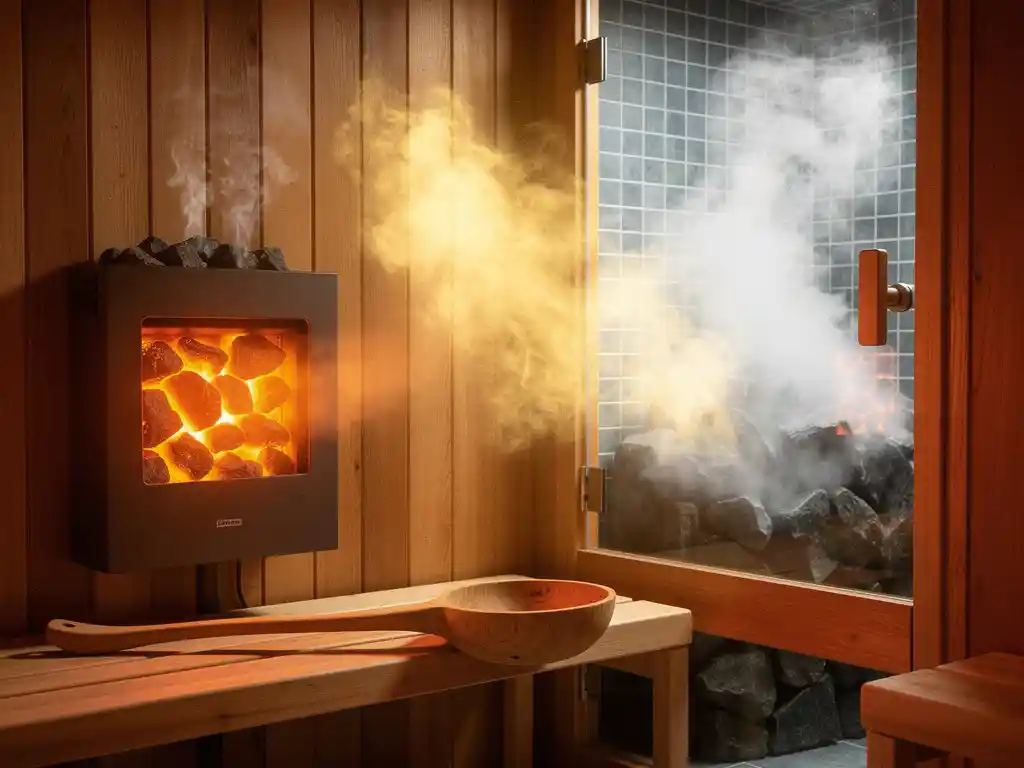
- Löyly ritual: Water poured onto hot stones creates bursts of steam, temporarily increasing humidity while maintaining the overall dry environment
- Air circulation: Modern systems distribute heat evenly from floor to ceiling, preventing uncomfortable hot spots
- Sweat evaporation: Low humidity allows perspiration to evaporate quickly from your skin, making high temperatures more tolerable
This combination of elements creates the authentic Finnish sauna experience, where your body works to cool itself through profuse sweating while the dry environment ensures comfort even at extreme temperatures. The rapid evaporation process is what makes dry saunas uniquely effective for heat therapy and temperature regulation training.
How does a steam room create its humid environment?
Steam rooms generate their therapeutic environment through steam generators that produce nearly 100% humidity at lower temperatures of 40–50°C. The essential components work together to create this moist heat experience:
- Steam generation: Specialized equipment heats water to create vapor that fills the enclosed space with thick, misty atmosphere
- Non-porous surfaces: Walls made from tile or stone prevent moisture absorption and inhibit mold growth
- Humidity maintenance: The sealed environment retains moisture levels near 100% throughout your session
- Reduced evaporation: High humidity prevents sweat from evaporating effectively, keeping moisture on your skin surface
This creates a fundamentally different heating experience where your body continues producing sweat that remains on your skin rather than evaporating. The result is gentler warming that many find more comfortable than intense dry heat, making steam rooms particularly appealing for those sensitive to extreme temperatures.
What are the main health differences between dry and wet heat?
Dry sauna heat and steam room humidity create distinct physiological responses that affect various body systems differently:
- Temperature regulation: Dry saunas allow efficient sweat evaporation for better body cooling, while steam rooms prevent evaporation, creating continuous skin moisture
- Respiratory impact: Steam rooms may benefit certain respiratory conditions by opening airways with moist air, but can challenge those with asthma or breathing sensitivities
- Cardiovascular response: Dry saunas create dramatic temperature changes that invigorate circulation, while steam rooms offer gentler, gradual warming
- Session tolerance: Low humidity in dry saunas enables longer sessions for most people, while high humidity in steam rooms may limit session duration
- Skin effects: Dry heat can feel refreshing through quick evaporation, while moist heat provides continuous hydration but may feel overwhelming
Both environments improve circulation and promote relaxation, but they achieve these benefits through different mechanisms. Understanding these physiological differences helps you choose the environment that best supports your body’s needs and comfort preferences, whether you’re seeking intense heat therapy or gentle, moisturizing warmth.
Which option works better for different health goals and preferences?
Your choice between a dry sauna and a steam room should align with your specific wellness objectives, physical sensitivities, and personal preferences:
- Respiratory sensitivity: Steam rooms suit those with certain breathing conditions due to moisturizing air, while dry saunas benefit people who find humid air challenging
- Heat tolerance: Dry saunas work well for building heat tolerance and enjoying intense therapy, while steam rooms offer gentler experiences for heat-sensitive individuals
- Skin conditions: Steam rooms provide moisturizing benefits for dry skin, while dry saunas may be preferable for those who find excessive moisture uncomfortable
- Athletic recovery: Both improve circulation, but dry saunas offer intense heat therapy preferred by some athletes, while steam rooms provide gentler post-workout relaxation
- Session preferences: Dry saunas accommodate shorter, intense sessions, while steam rooms support longer, more leisurely relaxation periods
The optimal choice depends on matching these environmental characteristics with your individual needs and goals. Many wellness enthusiasts find value in alternating between both types to experience their unique benefits, while others develop a clear preference based on their body’s response and comfort level.
Whether you choose the intense dry heat of a traditional sauna or the enveloping moisture of a steam room, both offer valuable wellness benefits. The key is understanding how each environment affects your body and choosing based on your comfort level and health goals. At Saunum, we focus on creating advanced sauna experiences that optimize the dry heat environment through innovative air circulation technology, ensuring you get the most comfortable and effective sauna session possible.
If you’re interested in getting started with Sauna, check out our full range today.