

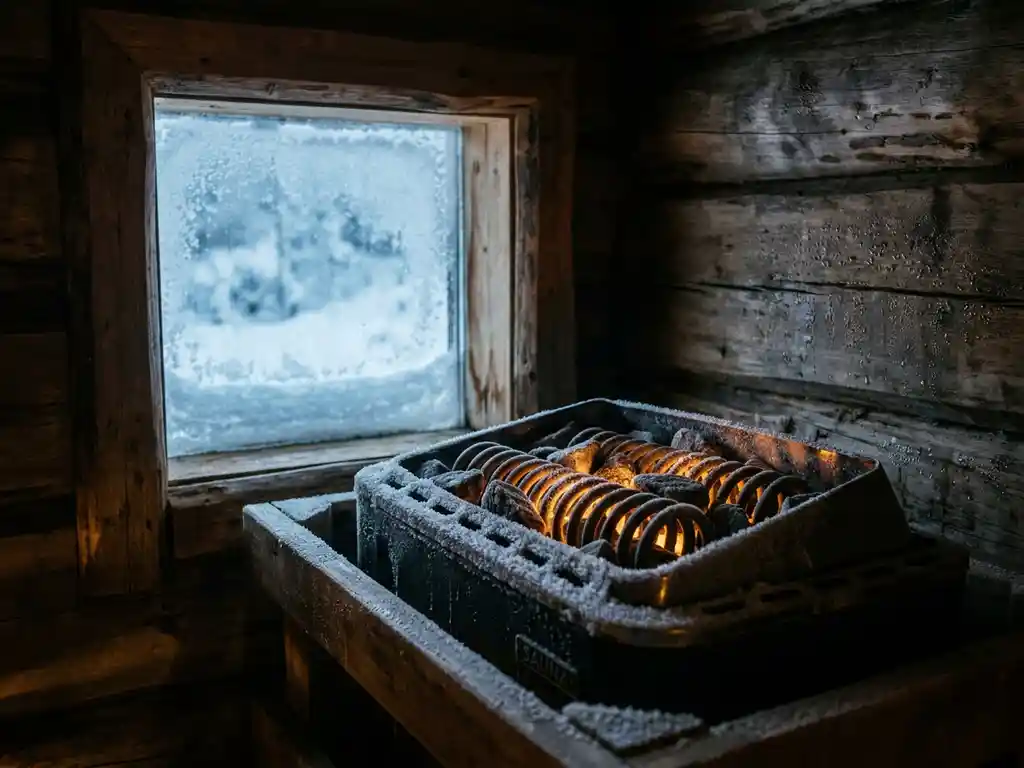
Electric sauna heaters take longer to heat up in winter primarily because the ambient temperature surrounding the sauna is much colder, which means the heater must work harder and longer to overcome the greater temperature difference between the starting point and your target sauna temperature. This effect is most noticeable in outdoor saunas, garage installations, or any indoor sauna that shares space with an unheated room. The sections below break down every factor that contributes to slow winter heating and what you can do about it.
What makes cold ambient temperatures affect sauna heating time?
Cold ambient temperatures slow sauna heating because the heater must bridge a much larger temperature gap before the room reaches bathing temperature. In summer, a sauna room might start at 20°C. In winter, that same room could start at 0°C or below, meaning the heater is doing significantly more work before you even step inside.
Every electric heater has a rated output measured in kilowatts, and that output is calculated against a standard set of conditions. When the surrounding environment is colder than those conditions assume, the heater operates closer to its maximum capacity for a longer stretch of time. The walls, bench, and stones all absorb heat before the air temperature climbs, and in cold weather those surfaces start from a much lower baseline. The result is a noticeably extended warm-up period that can frustrate even experienced sauna users.
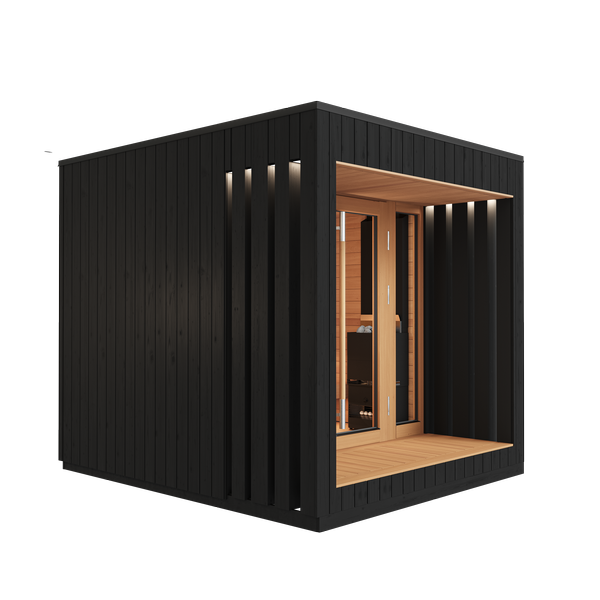
This is especially relevant for home sauna setups located in basements, garages, or outbuildings where winter temperatures can drop dramatically. An indoor sauna in a heated home is less affected, but it is still not immune if the room is poorly insulated or positioned against an exterior wall.
Does the size and insulation of the sauna room matter in winter?
Yes, both room size and insulation quality have a direct impact on how quickly your sauna heats up in winter. A larger room contains more air volume that needs to be heated, and poor insulation allows that heat to escape almost as fast as the heater produces it. Together, these two factors can turn a manageable warm-up time into a frustrating wait.
Insulation is particularly critical in cold weather. A well-insulated sauna room retains heat efficiently, so the heater only needs to generate enough energy to raise the temperature rather than constantly replacing heat lost through walls, floors, and ceilings. In winter, any gaps in insulation, poorly fitted doors, or thin wall panels become much more costly in terms of heating time and energy consumption.
Room size also determines the correct heater output. As a general rule, the heater’s kilowatt rating should match the cubic volume of the sauna room. If your heater was sized for average conditions and your winters are harsh, you may find that the heater is simply underpowered for the coldest months of the year. Checking whether your current heater is correctly sized for your room is one of the first things worth doing if winter performance is consistently disappointing.
How does uneven air distribution slow down the heating process?
Uneven air distribution slows sauna heating because hot air naturally rises and pools near the ceiling while cooler air stays low near the floor. This stratification means the upper part of the room reaches target temperature long before the benches and lower areas do, effectively making the heater work longer than necessary to bring the entire room up to a comfortable level.
In winter, this problem is amplified. Cold floors and walls create stronger temperature gradients, pulling heat downward and making the stratification more pronounced. A sauna where the ceiling is scorching hot but the bench level is still lukewarm is a common winter complaint, and it is almost always a sign that air is not circulating properly through the room.
This is where the design of the heater itself makes a real difference. Heaters that actively circulate air rather than simply radiating heat upward can dramatically reduce the time it takes for the entire room to reach an even, comfortable temperature. When air is mixed consistently from floor to ceiling, the heater does not need to overheat the top of the room just to bring the lower half up to temperature.
Can the heater itself be the cause of slow winter performance?
Yes, the heater can absolutely be the cause of slow winter performance, particularly if it is undersized for the room, aging, or lacks any form of active air management. An electric sauna heater that was adequate in milder conditions may simply not have enough output to compensate for the additional thermal load that cold weather creates.
Aging heating elements are another common culprit. Over time, electric heating elements can degrade and lose efficiency, meaning the heater draws the same amount of power but delivers less usable heat. If your sauna used to heat up quickly in winter but has gradually become slower over the years, worn elements are worth investigating.
Beyond raw output, the design philosophy of the heater matters. Traditional heaters that rely purely on convection and radiation push heat upward without managing where it goes. In cold weather, this means a lot of energy is spent heating the ceiling zone rather than the area where people actually sit. A heater with a built-in air circulation system addresses this directly by redistributing that ceiling heat back down to bench level, making the heating process faster and more efficient regardless of the season.
What can you do to speed up sauna heating in cold weather?
There are several practical steps you can take to reduce winter warm-up times without replacing your heater entirely. The most impactful changes combine better heat retention with smarter use of the heater you already have.
- Pre-heat for longer: In winter, add 15 to 30 minutes to your usual pre-heat time to account for the colder starting temperature of walls, stones, and benches.
- Seal air leaks: Check door seals, ventilation gaps, and wall joints for drafts. Even small gaps become significant heat losses in cold weather.
- Insulate the floor: Cold floors act as a constant heat sink. Adding insulation beneath the sauna floor or using a thick wooden floor structure reduces this effect noticeably.
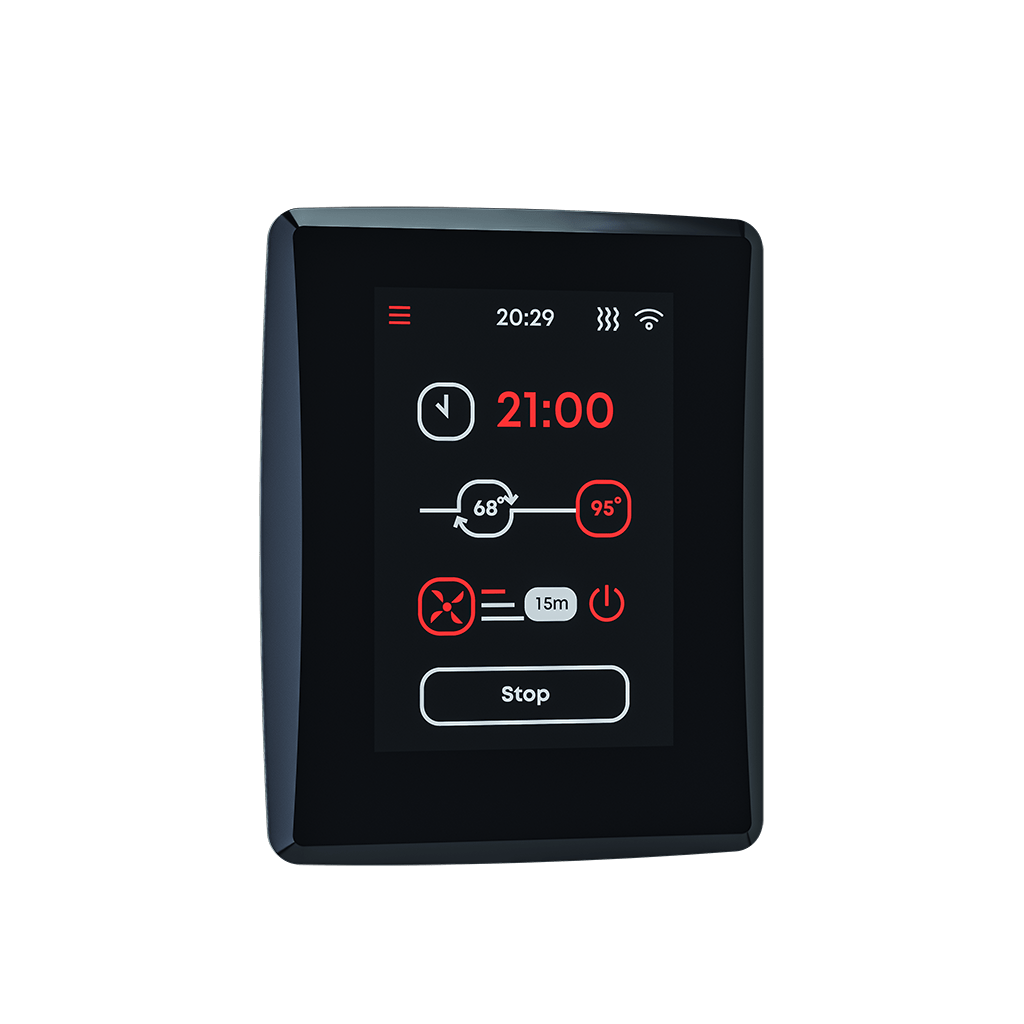
- Use a timer or smart controller: Scheduling the heater to start before you arrive means the room has already begun warming up before you factor in the cold ambient temperature.
If your sauna is in an unheated outbuilding, consider whether the space around the sauna can be partially heated or insulated. Even raising the ambient temperature of the surrounding room by a few degrees can meaningfully reduce the heater’s workload and cut warm-up time.
Should you upgrade your heater if winter performance is consistently poor?
If your sauna consistently takes an unreasonably long time to heat up every winter despite good insulation and correct room sizing, upgrading the heater is a worthwhile investment. A heater that struggles every cold season is working at or beyond its limits, which increases energy consumption, reduces component lifespan, and delivers a less enjoyable experience.
When evaluating an upgrade, look beyond raw kilowatt output. A higher-output heater will heat faster, but a heater that also manages air distribution will heat more efficiently. The difference matters in winter because efficient air circulation means the entire room reaches target temperature at the same time, rather than the ceiling overheating while the bench level lags behind.
For indoor sauna and sauna steam room installations where consistent year-round performance is a priority, the technology built into the heater is just as important as its power rating. Smart controls that allow you to pre-heat remotely are also worth factoring in, since starting the warm-up cycle before you arrive is one of the simplest ways to eliminate the frustration of waiting in the cold.
How air circulation technology addresses winter heating challenges
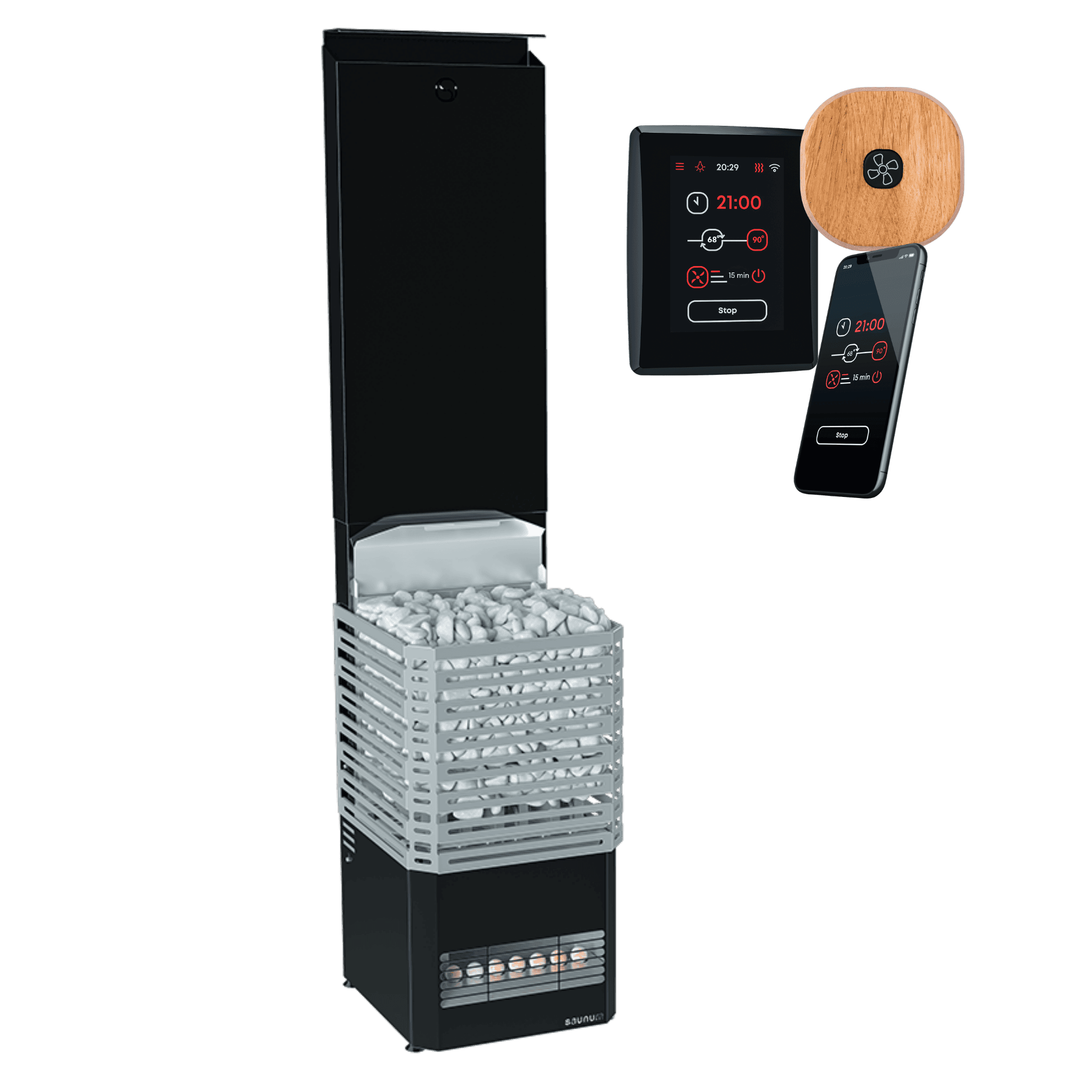
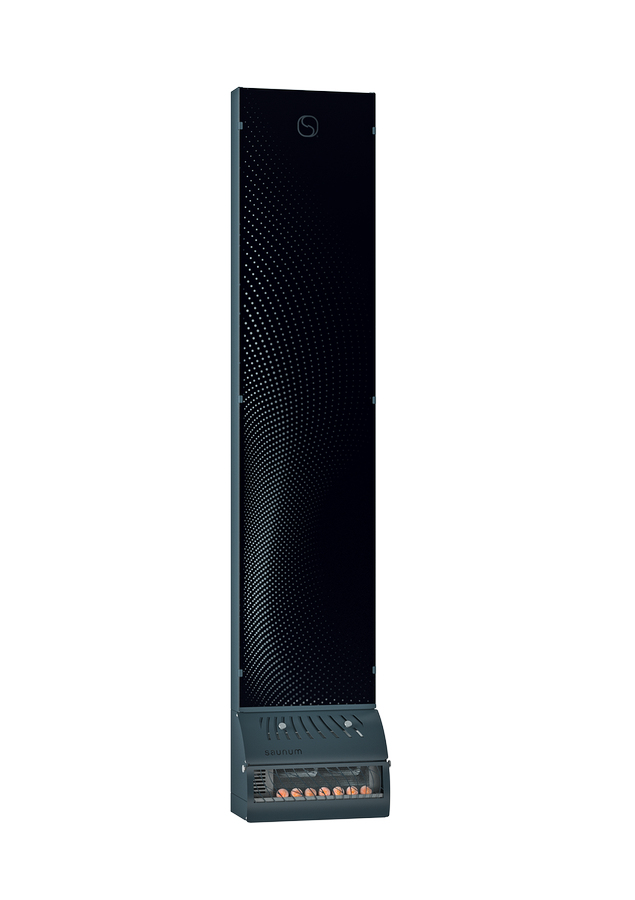
Some electric sauna heaters are built around active air circulation systems that directly tackle the core reasons why saunas heat slowly in cold weather. Instead of allowing hot air to pool at the ceiling while the bench level stays cool, these heaters capture ceiling heat, mix it with cooler floor-level air, and redistribute it evenly throughout the room. This means the whole sauna reaches your target temperature faster and more consistently, regardless of how cold it is outside.
Key features to look for in a heater designed for reliable winter performance include:
- Active air circulation: Continuously mixes air from floor to ceiling, eliminating temperature stratification and reducing effective warm-up time.
- Smart remote control: Pre-heat your sauna from your phone so it is ready when you arrive, even on the coldest mornings.
- Consistent steam quality: An air mixing system keeps steam soft and breathable rather than harsh, so even a winter session feels comfortable and restorative.
- Durability under demanding conditions: Heaters engineered for intensive use hold up better through repeated cold-weather cycles, making them a sound long-term investment for both home and commercial sauna environments.
If winter heating performance has been a persistent frustration, Saunum offers a compelling solution worth considering. Their patented air circulation technology is specifically engineered to solve the stratification and efficiency problems that cold weather exposes, rather than simply adding more kilowatts. Explore the Saunum electric sauna heater range to find the right fit for your room size and usage, or visit their technology page to understand how the air circulation system works in practice. If you have questions about which model suits your setup, their team is available through the Saunum contact page.