

Electric sauna heater elements typically last between 5 and 15 years, depending on how often the sauna is used, how well it is maintained, and the quality of the heating element itself. Heavy daily use, hard water deposits, and poor ventilation all shorten that lifespan considerably. The sections below walk through every key question around sauna heating element longevity, from early warning signs to deciding whether a repair or full replacement makes more sense.
What affects how long electric sauna heater elements last?
The lifespan of an electric sauna heating element is shaped by four main factors: usage frequency, water quality, stone load management, and the quality of the heater itself. A home sauna used two or three times a week under good conditions will outlast a poorly maintained unit used daily by a wide margin.
Usage frequency is the most straightforward factor. Every heating cycle puts thermal stress on the element, and that stress accumulates over time. A home sauna used occasionally will naturally preserve its elements longer than a commercial or intensively used indoor sauna.
Water quality matters more than most people expect. If you pour water with high mineral content over the stones repeatedly, scale and mineral deposits build up on and around the heating elements. Over time, this insulates the element unevenly, causes hot spots, and accelerates failure. Using clean, low-mineral water for steam generation makes a real difference.
Stone management is another underappreciated factor. Sauna stones absorb and release heat thousands of times. When stones crack, crumble, or are packed too tightly, fragments can fall onto the heating elements and cause damage or short circuits. Checking and replacing stones every few years protects the elements beneath them.
What is the average lifespan of a sauna heating element?
The average sauna heating element lasts between 5 and 15 years in a well-maintained home sauna. Commercial saunas or indoor sauna steam room environments with heavy daily use may see elements wear out closer to the 5-year mark, while a lightly used home sauna with good water quality can last well past 10 years.
Higher-quality heaters built with durable materials and better engineering tend to sit at the upper end of that range. Cheaper units with thinner elements or lower-grade steel often fail earlier, especially when exposed to the repeated thermal cycling of regular sauna sessions. Investing in a well-built heater from the start is one of the most reliable ways to extend the time between replacements.
What are the warning signs that a sauna heating element is failing?
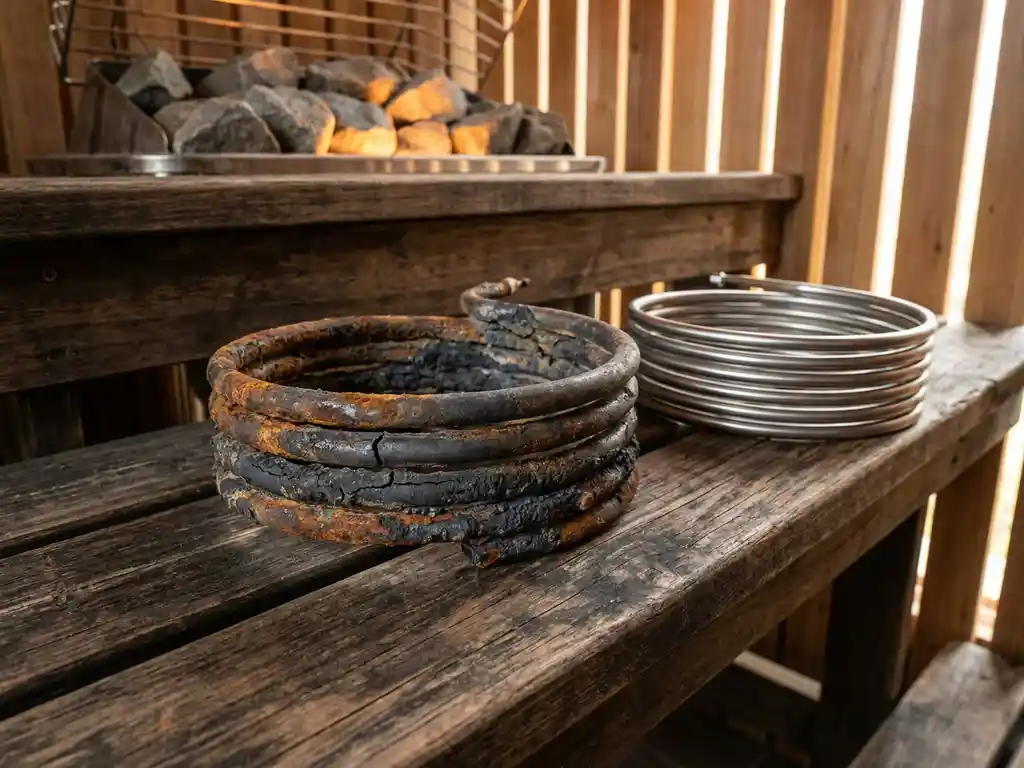
The most common warning signs of a failing sauna heating element include the sauna taking significantly longer to reach temperature, uneven heat distribution, visible corrosion or discoloration on the element, a burning or metallic smell during heating, and the heater tripping its circuit breaker repeatedly.
- Longer heat-up times: If your sauna now takes twice as long to reach the same temperature, one or more elements may have partially failed.
- Uneven heat: Cold spots in the sauna or noticeably cooler air near the floor can indicate reduced heating output.
- Unusual smells: A burning, metallic, or acrid odor during a session often points to an element overheating or mineral deposits burning off damaged coils.
- Tripped breakers: Repeated circuit breaker trips suggest an electrical fault in the element, which should be investigated immediately.
Visible rust, pitting, or white mineral buildup on the element itself is also a strong visual indicator that the element is nearing the end of its useful life. Do not ignore these signs, as a failing element can become a safety hazard if left unaddressed.
How do you test a sauna heating element to confirm it has failed?
You can test a sauna heating element using a multimeter set to measure resistance (ohms). A healthy element will show a resistance reading within the range specified by the manufacturer. A reading of zero (short circuit) or infinite resistance (open circuit) confirms the element has failed and needs replacing.
Before testing, always disconnect the heater from its power supply completely and allow it to cool down fully. Remove the stones and access the element terminals. Place the multimeter probes on each terminal of the element. If the reading falls far outside the expected resistance range, the element is faulty. If you are unsure of the expected values, the heater’s documentation or the manufacturer’s support team can provide the correct specification.
If you are not comfortable working with electrical components, it is always safer to have a qualified electrician or sauna technician carry out this test. Sauna heaters operate at high voltages, and safety should come first.
Should you replace just the element or the whole sauna heater?
If the heater is less than 8 to 10 years old, the housing is in good condition, and only one element has failed, replacing just the element is usually the more cost-effective choice. If the heater is older, multiple elements are failing, or replacement parts are no longer available, replacing the whole unit makes more sense.
There are a few practical considerations worth weighing. Replacement elements for older or discontinued models can be difficult to source, and fitting a non-original element carries some risk if the specifications do not match precisely. If your heater is approaching the end of its expected lifespan anyway, putting money into a new element only delays the inevitable.
On the other hand, a full heater replacement is also an opportunity to upgrade. Modern electric sauna heaters have advanced considerably in terms of energy efficiency, smart controls, and the quality of the sauna experience they deliver. If your current heater is aging, this is a natural moment to consider whether a more capable unit would serve you better in the long run.
How can you extend the life of your sauna heater elements?
The most effective ways to extend the life of sauna heating elements are using clean, low-mineral water for steam, maintaining the stone load correctly, ensuring adequate ventilation, and allowing the heater to cool down fully between sessions rather than running it continuously for extended periods.
Regular maintenance also plays a significant role. Inspect the stones at least once a year and remove any that have cracked or crumbled. Broken stone fragments sitting on or near the elements cause uneven heat distribution and physical damage. Replace the full stone load every three to five years depending on how heavily the sauna is used.
Avoid pouring excessive water over the stones in rapid succession. Repeated thermal shock from large amounts of cold water hitting a very hot element stresses the metal over time. Pouring smaller amounts more gradually is gentler on both the stones and the elements beneath them.
Finally, follow the manufacturer’s guidelines on maximum continuous operating time. Running a sauna heater beyond its rated cycle without a cooldown period generates heat buildup that shortens element life. Treating your heater with care pays off in years of reliable performance.
Looking for a new electric sauna heater?
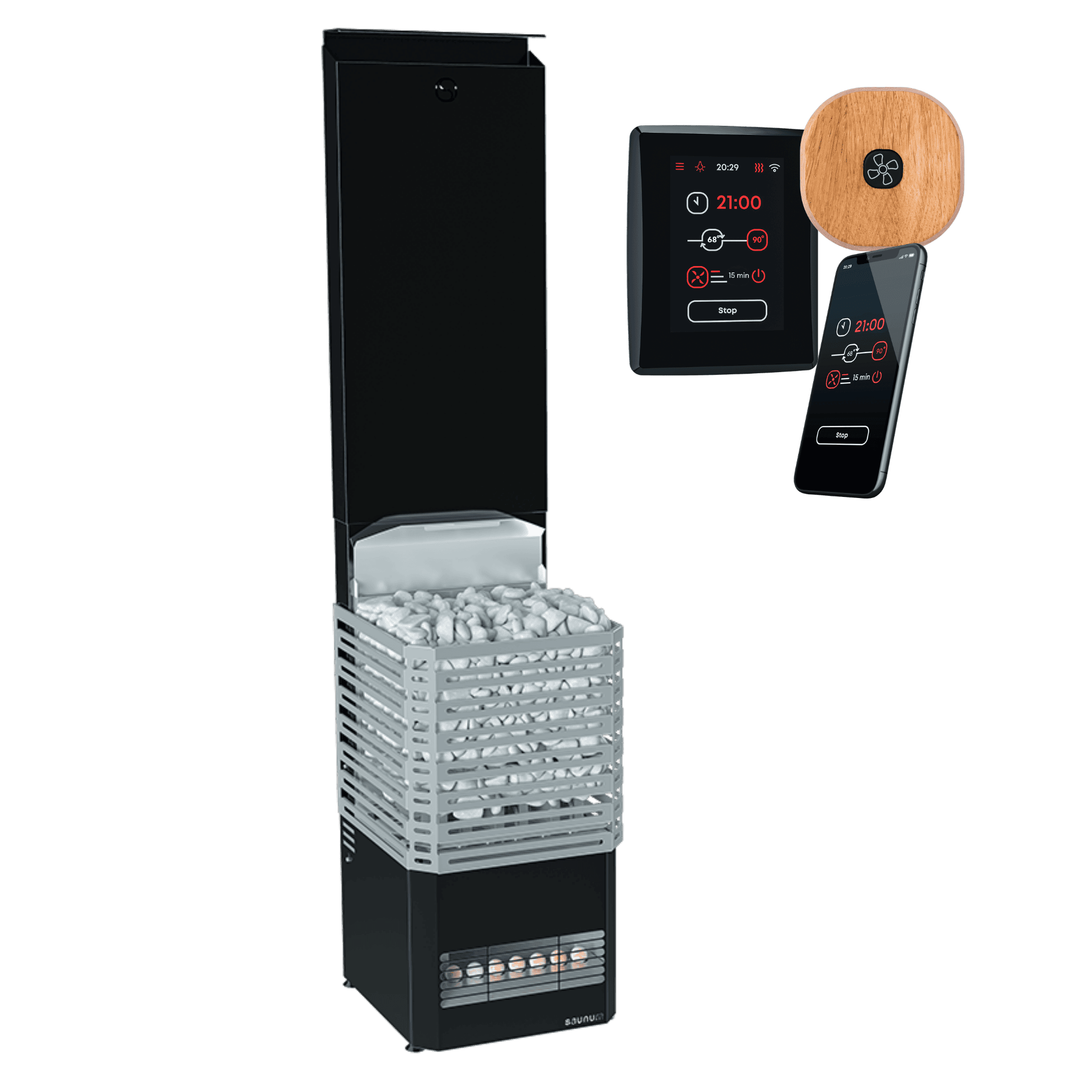
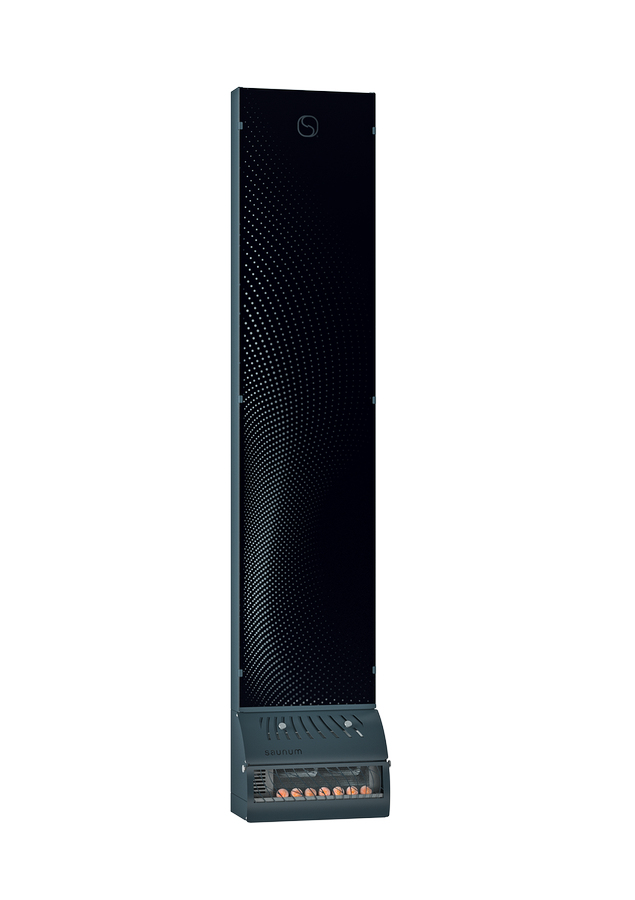
If you have reached the point where a full heater replacement makes sense, it is worth considering what modern units bring to the table. Saunum’s electric sauna heaters are one option worth exploring, particularly if even heat distribution and element longevity are priorities. Their patented air circulation system continuously mixes the air in the sauna room, drawing hot steam down from the ceiling and blending it with cooler air near the floor. This reduces thermal stratification, which in turn means the heating elements are not working harder than necessary to compensate for uneven conditions.
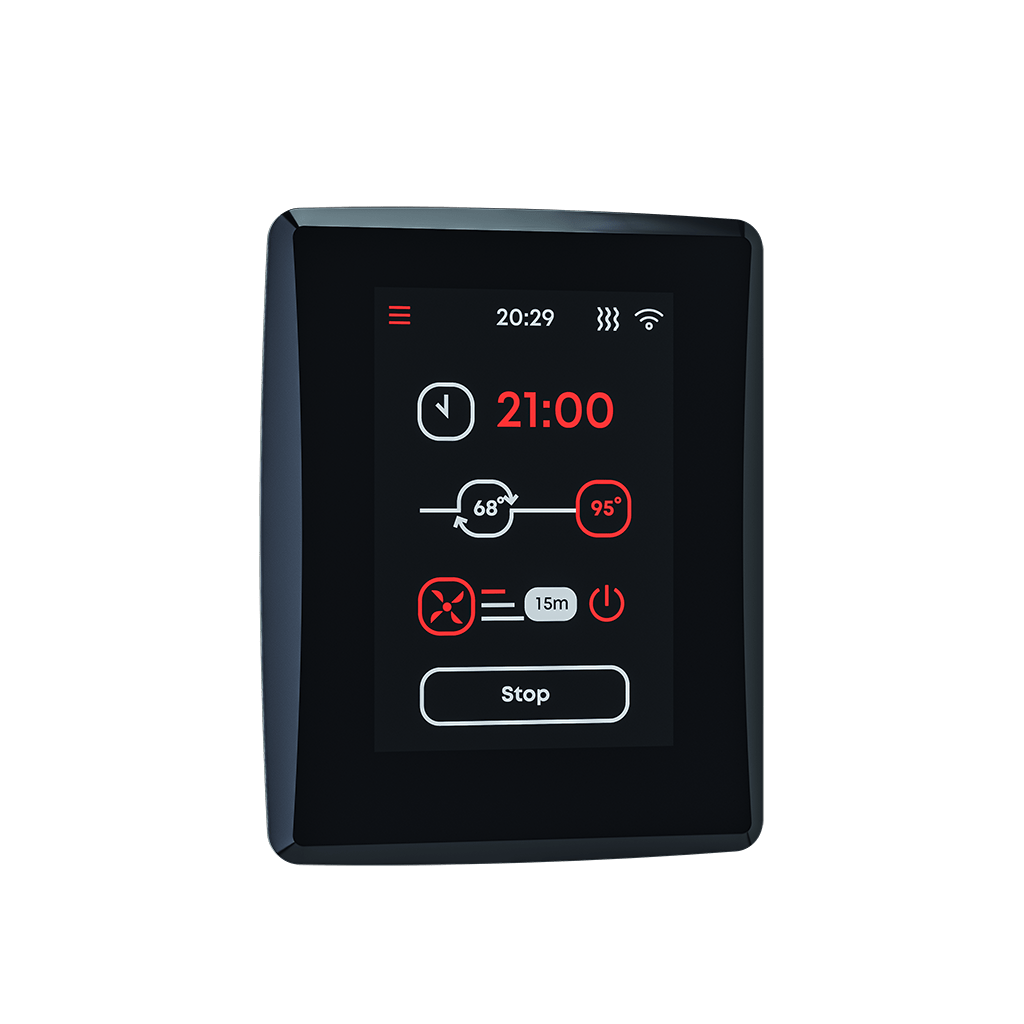
Beyond element care, Saunum heaters offer a range of features that make them a compelling choice for anyone building or upgrading a home sauna. Five sauna modes — including classic Finnish, salt-ionized, and aroma sauna — are covered by a single unit, and smart app controls let you pre-heat remotely and manage sessions from your phone so the heater is never running longer than it needs to. Whether you are replacing an aging unit or starting from scratch, get in touch with the Saunum team to find the right fit for your setup, or explore their air circulation technology to understand how it works in practice.