
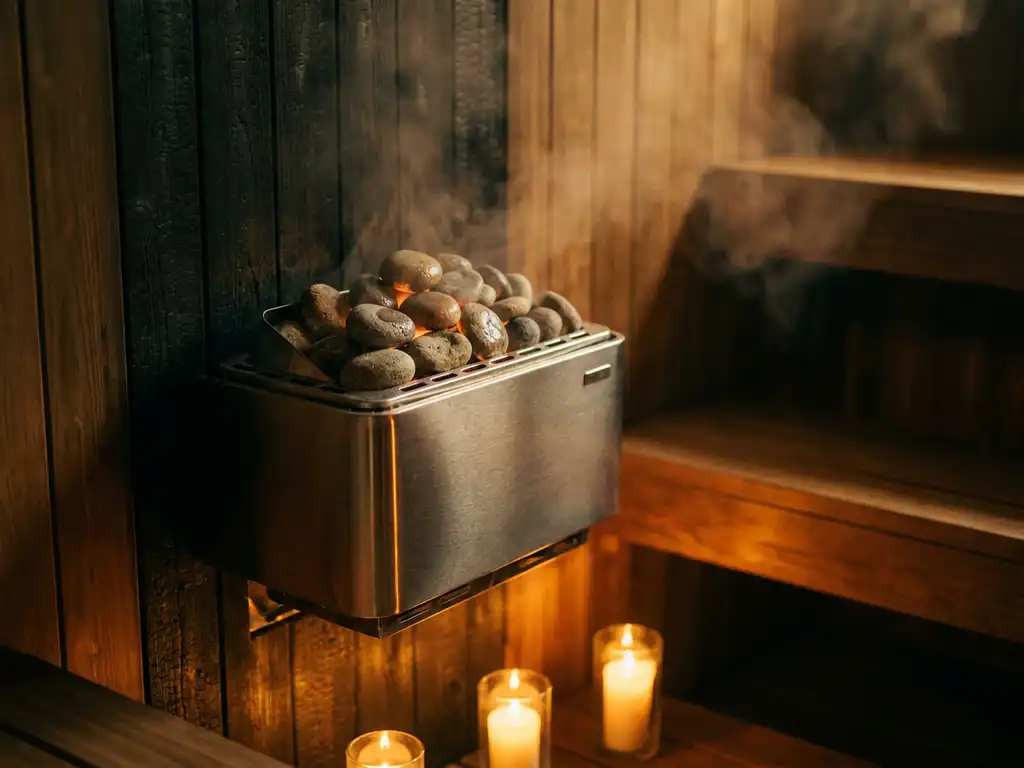
The real difference between a 6 kW and a 9 kW electric sauna heater comes down to the size of the space you need to heat. A 6 kW heater suits smaller home saunas up to roughly 8 to 10 cubic metres, while a 9 kW heater is built for larger rooms or spaces with poor insulation. Choosing the wrong size means either a sauna that never reaches temperature or one that wastes energy by heating a room far faster than you need.
The sections below walk through how to calculate the right size, what the practical differences feel like, and what else influences heater performance beyond the kW number on the spec sheet.
How do you calculate the right kW size for a home sauna?
The standard starting point for sizing an electric sauna heater is roughly 1 kW per cubic metre of sauna volume. Measure the length, width, and height of your sauna room, multiply them together to get the cubic metres, and that number gives you a baseline kW requirement. Most home saunas fall between 4 and 15 cubic metres, which is why 6 kW and 9 kW heaters are the two most common choices for residential use.
That baseline, however, is just a starting point. Several factors push the required kW higher:
- Exterior walls or concrete walls that absorb heat rather than reflect it
- Glass panels or large windows inside the sauna
- Rooms with high ceilings where heat pools far above the benches
- Poorly insulated or unheated spaces like garages or outbuildings
If your sauna has any of these features, add 20 to 30 percent to your baseline calculation before choosing a heater. A room that measures 8 cubic metres but sits in an uninsulated garden cabin may genuinely need a 9 kW heater to reach and hold sauna temperature comfortably.
What’s the real difference between a 6 kW and a 9 kW heater in practice?
In practice, the most noticeable difference is heat-up time and the heater’s ability to recover temperature after you throw water on the stones. A 9 kW heater brings a larger room to sauna temperature faster and bounces back more quickly after each round of steam. In a correctly sized room, a 6 kW heater performs just as well as a 9 kW unit because it is not working against a space that is too large for it.
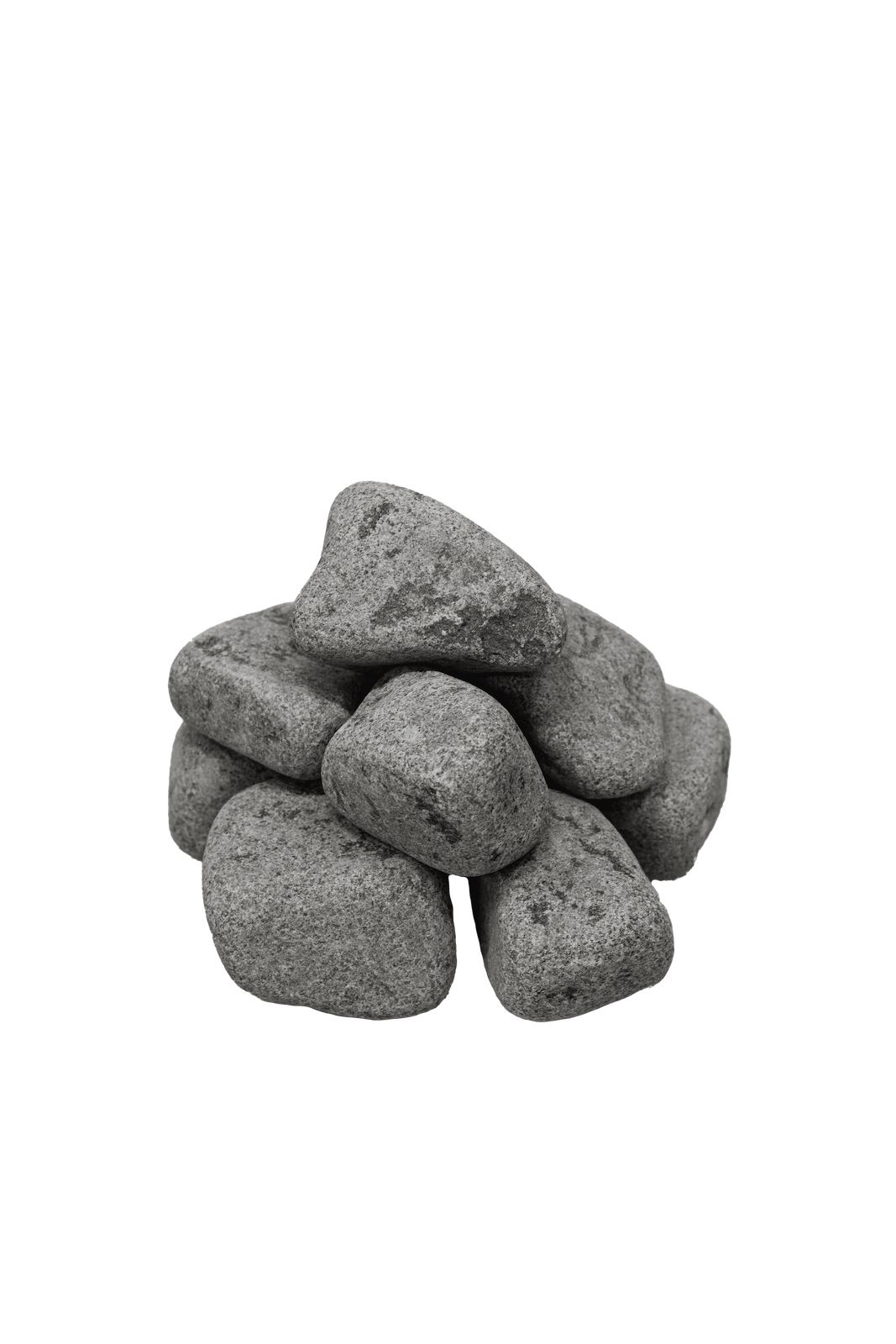
The physical size of the heater also differs. A 9 kW unit typically holds more stones, which matters for steam quality. More stone mass stores more thermal energy, so the steam produced when you pour water is softer and more sustained rather than sharp and fleeting. For sauna enthusiasts who enjoy frequent steam rounds, this is a tangible, felt difference rather than just a number on a data sheet.
Wiring requirements also separate the two. A 9 kW heater almost always requires a dedicated three-phase electrical connection, while many 6 kW models can run on a standard single-phase supply. This is worth checking with an electrician before you buy, because retrofitting a three-phase connection adds cost and time to any installation.
When is a 6 kW heater enough for a home sauna?
A 6 kW heater is the right choice for a well-insulated indoor sauna up to about 8 cubic metres. If your sauna is built inside a heated home, uses quality insulation, has no large glass surfaces, and has a ceiling height of around 2 metres, a 6 kW heater will heat the room efficiently and maintain temperature without straining. This covers the majority of compact home saunas built into bathrooms, basements, or dedicated wellness rooms.
For a two-person home sauna used by a family a few times per week, a 6 kW heater is often the smarter choice. It costs less to purchase, is simpler to wire, and uses less electricity per session. When the room is sized correctly, there is no performance gap between a 6 kW and a 9 kW unit. The 6 kW heater simply does not need to work as hard.
When does a home sauna actually need a 9 kW heater?
A home sauna needs a 9 kW heater when the room exceeds 8 to 10 cubic metres, has structural features that increase heat loss, or sits in an unheated or outdoor structure. Larger family saunas, saunas with full glass walls or doors, and rooms built into garages or garden buildings all benefit from the extra output a 9 kW heater provides.
A 9 kW heater is also worth considering if you sauna frequently and value fast heat-up times. If you want to step into a ready sauna within 30 to 40 minutes of switching the heater on, a more powerful unit in a mid-sized room will consistently deliver that. The extra stone mass also means you can throw water more frequently without the temperature dropping noticeably, which is important for anyone who enjoys an active, steam-forward sauna session.
Does a higher kW heater use significantly more electricity?
A 9 kW heater does consume more electricity than a 6 kW heater, but the difference in real running costs is smaller than most people expect. The key factor is that a correctly sized heater reaches target temperature and then cycles on and off to maintain it. A 9 kW heater in a large room and a 6 kW heater in a small room both work at a similar duty cycle, so the actual energy consumed per session is closer than the raw kW numbers suggest.
Where electricity costs diverge is when a heater is oversized for the room. A 9 kW heater in a 5 cubic metre sauna will heat the space very quickly but will still draw 9 kW during that initial heat-up phase. For most home sauna users, the difference in monthly electricity cost between a correctly sized 6 kW and a correctly sized 9 kW heater amounts to a modest sum rather than a significant bill increase.
What else affects sauna heater performance beyond kW rating?
The kW rating tells you about heating capacity, but several other factors determine how enjoyable and effective your sauna sessions actually are. Stone quality and stone mass are among the most important. Heaters loaded with dense, heat-retaining stones produce softer, more sustained steam compared to heaters with minimal stone volume, regardless of kW output.
Air circulation is another major factor that the kW number does not capture at all. In a conventional sauna, hot air rises to the ceiling and cooler air stays near the floor, creating an uneven temperature gradient. You can be sitting in a 90°C sauna while your feet remain at 60°C. This uneven layering also means the steam from a water pour rises sharply and dissipates quickly rather than spreading evenly through the room.
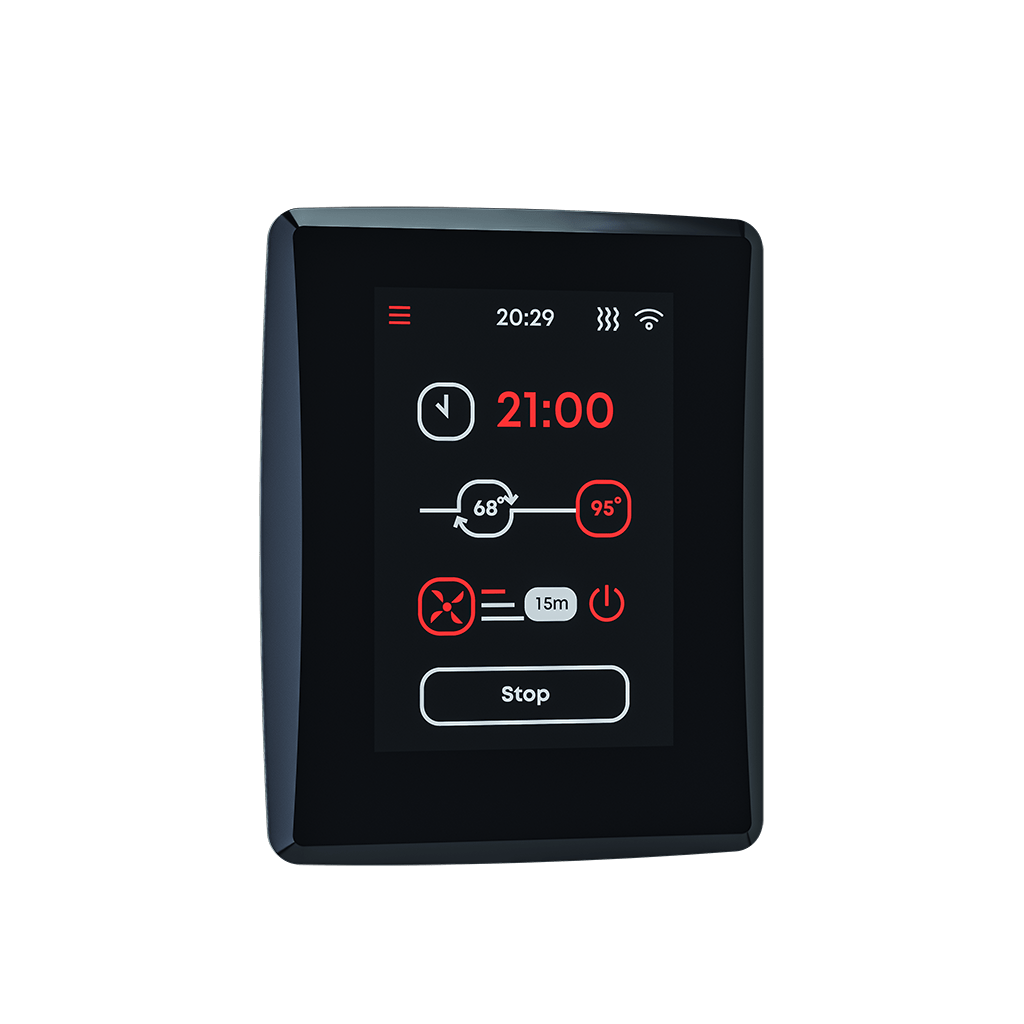
Control systems also shape the experience. Smart controllers that let you pre-heat the sauna remotely, adjust fan speed, or activate additional features add genuine convenience and allow you to personalise each session without being physically present at the heater.
Finding the right electric sauna heater for your space
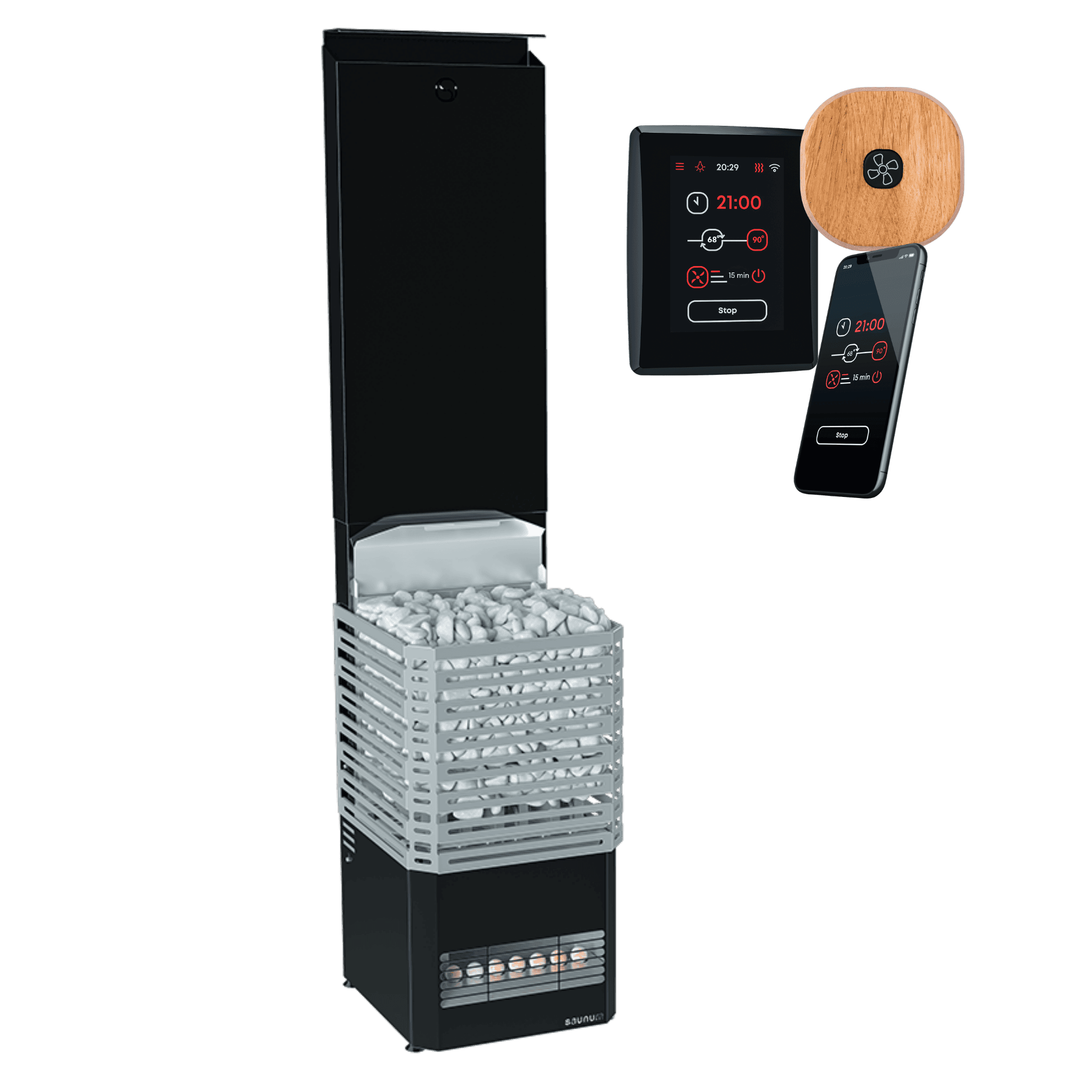
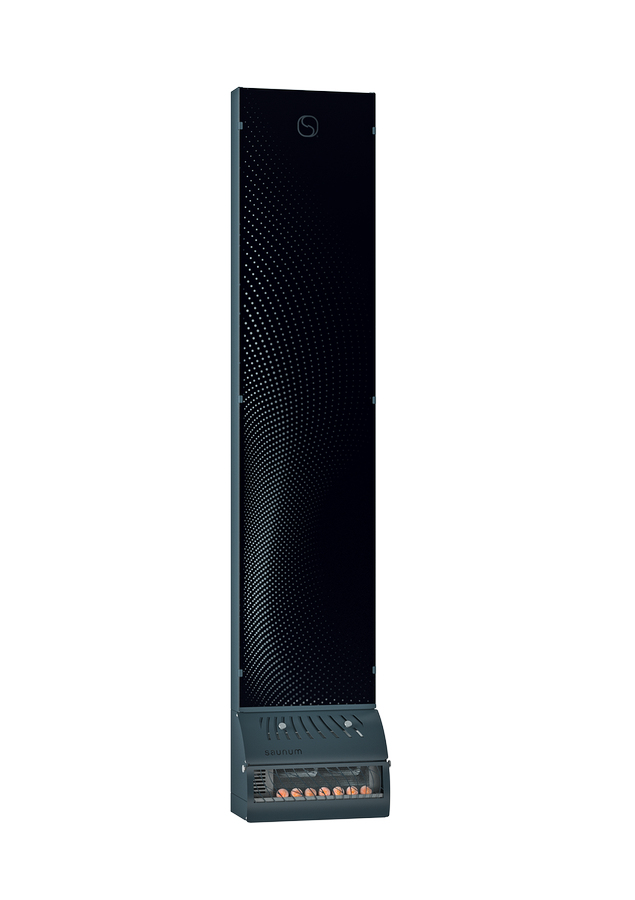
Getting the kW rating right is the foundation of a good sauna, but the best sessions come from heaters that address the full picture — stone mass, air circulation, and control. Saunum’s electric sauna heaters are built around exactly these principles. Their patented air circulation system draws the scorching steam that collects near the ceiling, mixes it with cooler air from floor level, and returns soft, even heat throughout the room, solving the temperature layering problem that affects conventional heaters of any size. Combined with five-in-one sauna styles, salt ionisation using Himalayan salt balls, and smart remote control via the Saunum app, their heaters are designed to make every session genuinely better — not just hotter.
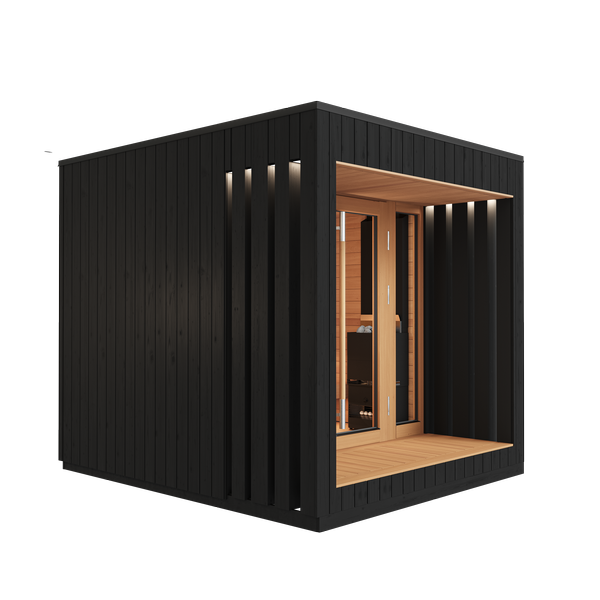
Whether you are deciding between a 6 kW and a 9 kW model or building a home sauna from scratch, Saunum has a heater sized and specified for your space. Browse our electric sauna heaters to find the right fit, or get in touch with us and we will help you choose the correct output for your room.