

Getting the humidity balance right is one of the most important factors in creating a genuinely enjoyable home sauna experience. Too dry, and the heat feels harsh and difficult to breathe; too humid, and the air becomes heavy and suffocating. Whether you are building an indoor sauna from scratch or upgrading an existing setup, understanding how humidity works in a sauna or steam room will help you get the most out of every session.
The ideal humidity level in a sauna depends on the type of sauna you are using, but in a traditional Finnish-style home sauna, relative humidity typically ranges between 10% and 20% at peak temperature, rising to 40% or higher during steam bursts when water is ladled onto the stones. Steam rooms, by contrast, operate at near-saturation levels. Knowing the difference—and knowing how to control it—is what separates a comfortable sauna from an uncomfortable one.
Why does humidity matter for your sauna experience?
Humidity directly determines how your body responds to heat in a sauna. At the right moisture level, your skin absorbs warmth evenly, sweating becomes more efficient, and breathing stays comfortable. Too little humidity makes the air feel abrasive and drying, while too much creates a heavy, oxygen-depleted environment that causes discomfort and shortness of breath.
The relationship between temperature and humidity in a sauna is closely linked. As temperature rises, the air can hold more moisture, which is why the brief steam burst from ladling water feels intense but not overwhelming in a properly heated room. When humidity and heat are balanced, the body heats up more evenly, perspiration increases, and the overall session feels restorative rather than exhausting. Many experienced sauna users describe well-balanced steam as soft and enveloping rather than sharp or suffocating.
Breathing comfort is another reason humidity matters. In a conventional sauna, scorching steam rises and concentrates near the ceiling, leaving the lower breathing zone drier and the upper zone dangerously hot. This uneven distribution makes the air harder to breathe and limits how long you can comfortably stay inside. An evenly distributed, oxygen-enriched steam environment changes that experience significantly.
What’s the difference between a sauna and a steam room?
The key difference between a sauna and a steam room is temperature and humidity. A traditional sauna operates at high temperatures, typically between 70°C and 100°C, with a low relative humidity of 10% to 30%. A steam room operates at lower temperatures, usually 40°C to 50°C, but with near-100% relative humidity, creating a fully saturated, fog-like environment.
Traditional sauna characteristics
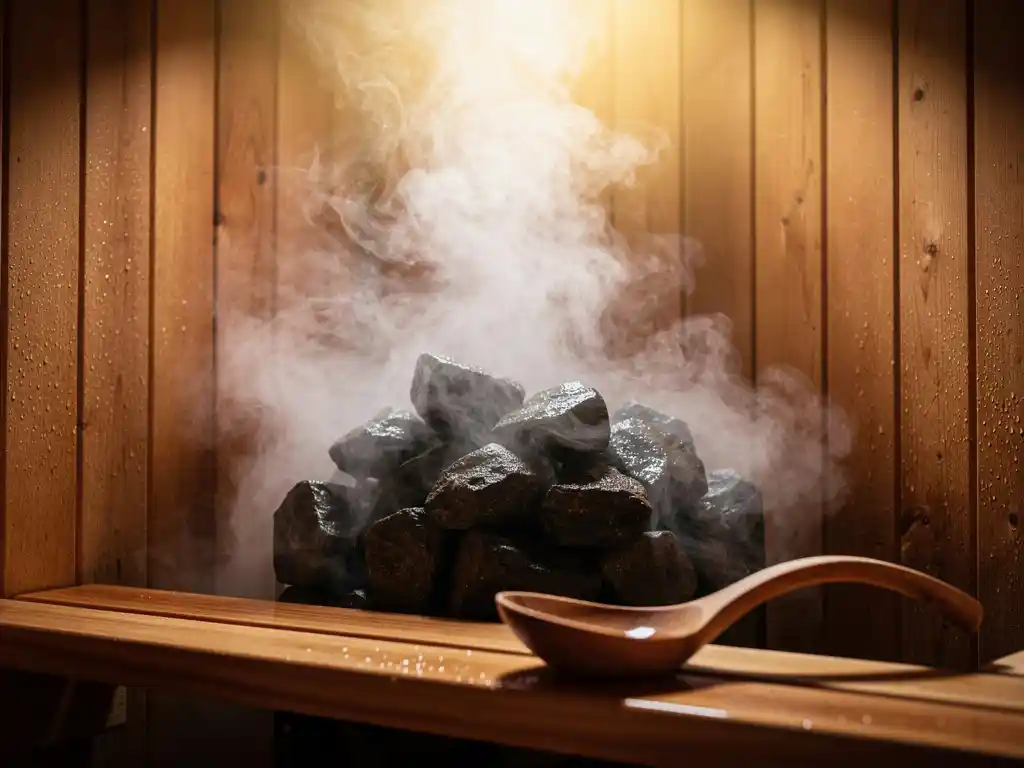
In a traditional Finnish sauna or Nordic-style indoor sauna, dry heat is the dominant feature. Humidity is introduced in controlled bursts by ladling water over heated stones, a practice known as Aufguss. The steam produced is intense and brief, and the room returns to a drier state quickly. This cycle of dry heat and steam bursts is central to the traditional sauna experience and is what makes stone capacity and heater quality so important.
Steam room characteristics
A steam room uses a dedicated steam generator to continuously pump moisture into a fully enclosed, non-porous space. The air is saturated at all times, which means the experience feels warmer than the actual temperature suggests. Steam rooms are often preferred by people who find dry sauna heat too intense, or by those seeking respiratory benefits from prolonged exposure to moist, warm air.
Interestingly, modern sauna technology is beginning to blur this distinction. Five-in-one sauna climate technology allows users to move between a classic Nordic sauna, a moist steam sauna, a relaxation sauna, a salt ion sauna, and an aromatherapy sauna, all from a single heater unit. This flexibility means you no longer need to choose between a sauna and a steam room when designing your home sauna setup.
How does a sauna heater control humidity levels?
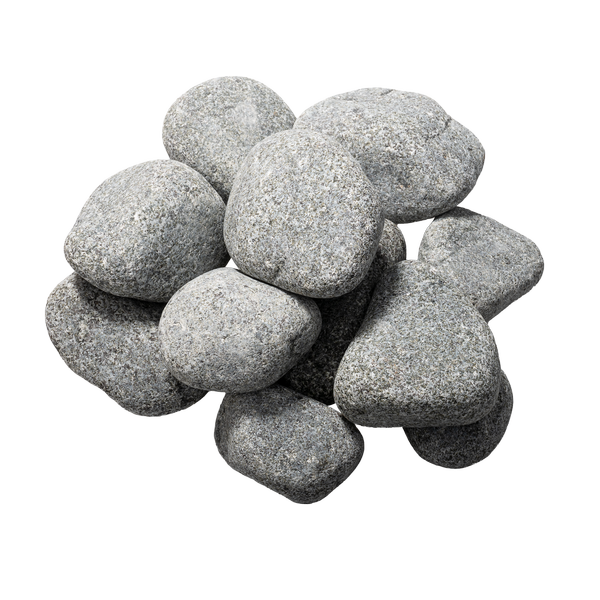
A sauna heater controls humidity primarily through its stone mass and the way water interacts with those stones. When water is poured onto hot stones, it flash-evaporates into steam, temporarily raising humidity. The volume of stones, their temperature, and how evenly heat is distributed across them all determine how much steam is produced and how long it lasts.
The design of the heater plays a significant role in steam quality. A heater with a large stone capacity retains heat longer and produces more consistent steam with each ladle of water. Heaters with a dual-level stone basket, for example, distribute water across the top layer of stones first, which reduces thermal shock to the heating elements and produces smoother, more sustained steam rather than a sharp burst.
Beyond the stones themselves, how steam moves through the room after it is produced matters just as much. In a standard sauna, hot steam rises immediately to the ceiling and stays there, creating a brief, intense humidity spike near the top of the room while the lower zone remains drier. This is why sitting at bench height often feels very different from the conditions near the ceiling. A climate device that actively circulates air throughout the room can transform how humidity is experienced across the entire space.
What causes humidity levels to drop too low in a sauna?
Humidity drops too low in a sauna when there is insufficient stone mass to retain heat, when the room is poorly sealed and moisture escapes too quickly, or when water is not being added to the stones frequently enough. In many home saunas, temperature stratification is the hidden culprit: steam rises and escapes through gaps or is lost near the ceiling before it can distribute throughout the room.
Poor insulation is one of the most common structural causes of low humidity. Walls made of uninsulated brick, concrete, or glass absorb moisture and heat rapidly, pulling humidity out of the air. This is why heater-sizing guides often require you to add extra effective volume for each square metre of uninsulated surface in the room. A room with a glass door, for instance, needs a proportionally more powerful heater to compensate for heat and moisture loss through the glass.
Ventilation, while necessary for oxygen replenishment, can also reduce humidity if it is poorly positioned or set to too high a flow rate. Ventilation that draws air from near the floor and exhausts it near the ceiling can strip moisture from the room before it has a chance to circulate. Balancing ventilation with humidity retention is one of the more nuanced challenges in home sauna design, and it is one reason integrated climate control systems have become increasingly popular among serious sauna builders.
How do you maintain the right humidity level when building a sauna?
Maintaining the right humidity level in a home sauna starts with proper room construction and the right heater for your specific sauna volume. Key factors include adequate insulation, correct heater sizing, a sufficient stone load, and a way to introduce water to the stones consistently, whether manually or automatically.
- Insulate all walls, the ceiling, and the floor properly to prevent heat and moisture loss
- Size your heater accurately based on the room volume, accounting for any uninsulated surfaces such as glass or concrete
- Use a heater with enough stone capacity to produce sustained, even steam rather than sharp, brief bursts
- Consider an automatic water-dispensing system to maintain consistent humidity without constant manual attention
The ceiling height of your sauna also affects humidity distribution. Taller rooms allow more steam to accumulate near the top without reaching bench level, which can make the humidity feel lower than it actually is. This is why minimum ceiling-height recommendations exist for different heater power levels, and why active air circulation becomes more valuable in rooms with higher ceilings.
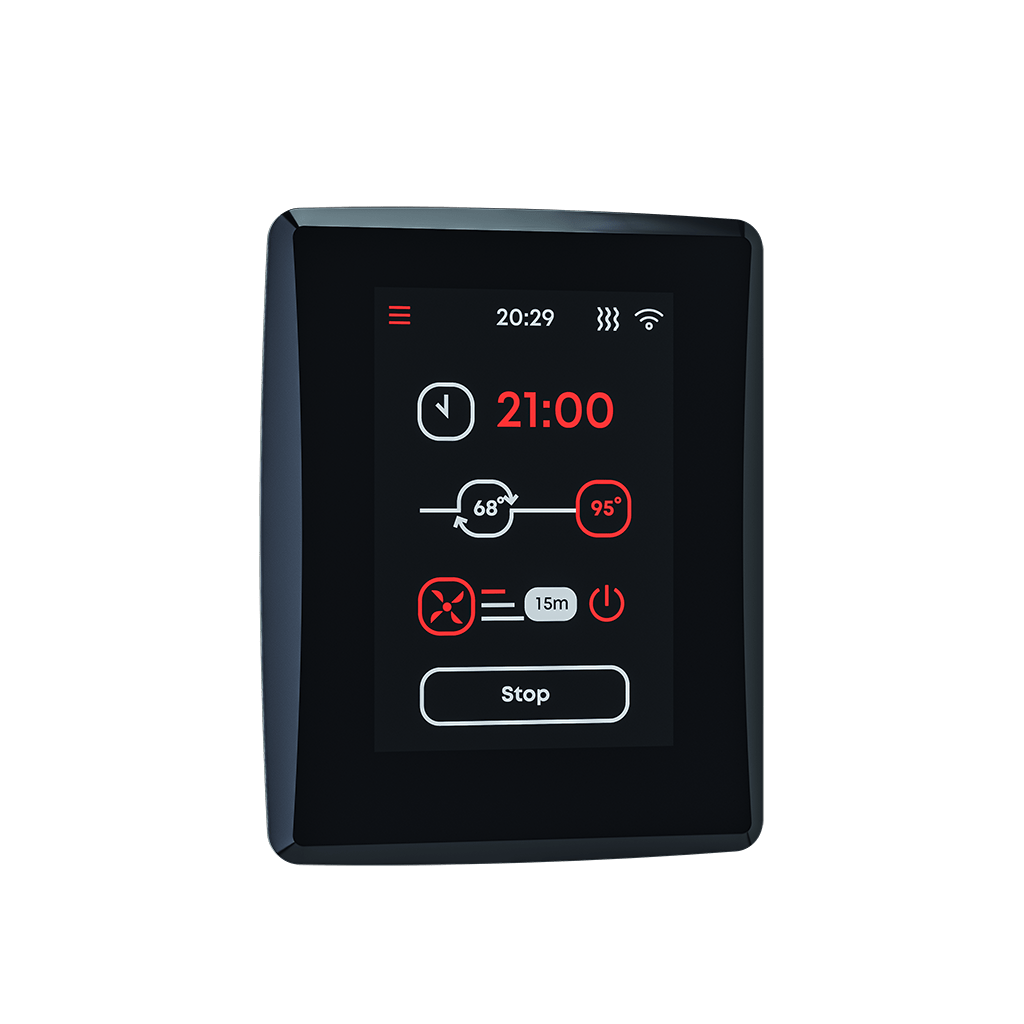
For builders who want precise control, smart control systems now allow you to set a target relative humidity alongside a target temperature. Such systems can automatically dispense water at set intervals or respond to real-time humidity readings, removing the guesswork entirely and ensuring every session starts with the room already at the right moisture level.
How Saunum helps you achieve the ideal humidity in your home sauna
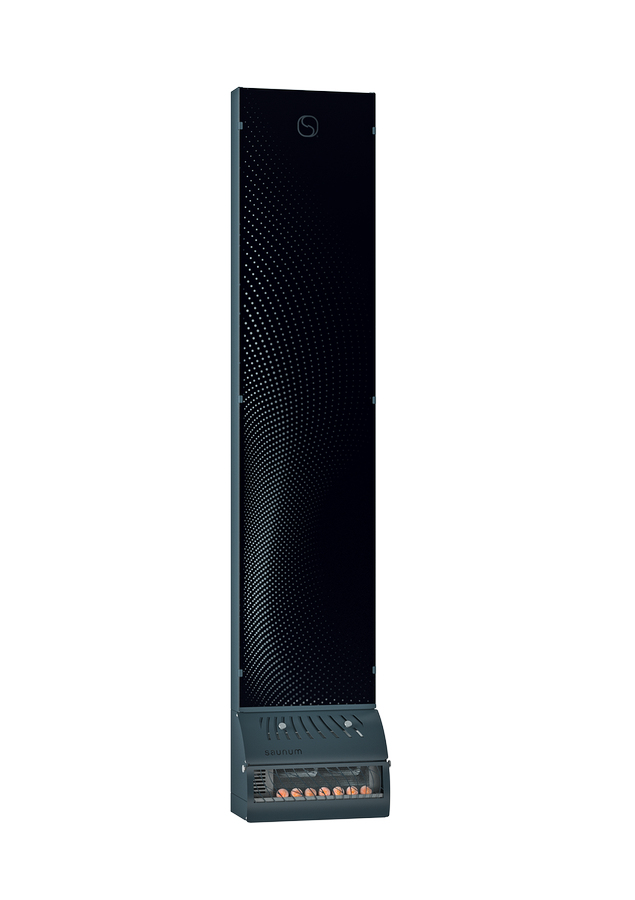
Uneven humidity is one of the most frustrating problems in a home sauna or indoor sauna, and it is the exact problem we built our technology to solve. Our patented air-blending system captures the hot, humid steam that accumulates near the ceiling and mixes it with the cooler, oxygen-rich air near the floor, then redistributes it evenly throughout the room. The result is softer, longer-lasting steam that you can actually feel at bench level, not just near the ceiling.
Here is what our approach delivers in practical terms:
- Even humidity from floor to ceiling, eliminating the harsh hot zone at the top and the dry zone at bench level
- Oxygen-enriched steam that is easier to breathe, so you can stay in longer and ladle water more frequently
- Automatic humidity control through the AutoLeil water-dispensing system, which maintains your preferred moisture level without manual ladling
- A five-in-one experience, including classic sauna, steam sauna, relaxation sauna, salt ion therapy, and aromatherapy, all from a single unit
Whether you are building a new indoor sauna or retrofitting an existing one, Saunum home sauna solutions has a solution that fits. From the compact Experience heater for home apartments to the Luxury model for larger private or commercial spaces, and the standalone Base climate device for saunas that simply need better air circulation, our range is designed to give you complete control over your sauna climate.
If you’re interested in getting started with Sauna, check out our full range today.