
Getting the temperature right in your indoor sauna can mean the difference between a genuinely restorative session and an uncomfortable, frustrating one. Whether you’re building a home sauna from scratch or upgrading an existing setup, understanding how heat behaves in a sauna gives you a real advantage. This guide answers the most common questions contractors, DIY builders, and sauna enthusiasts ask about temperature control, so you can make confident decisions from the start.
From choosing the right heater size to understanding why heat stratification happens, each section below provides a direct, practical answer. If you’ve ever wondered why your sauna feels scorching near the ceiling but barely warm at bench level, you’re not alone—there’s a clear explanation and a solution.
What is the ideal temperature for an indoor sauna?
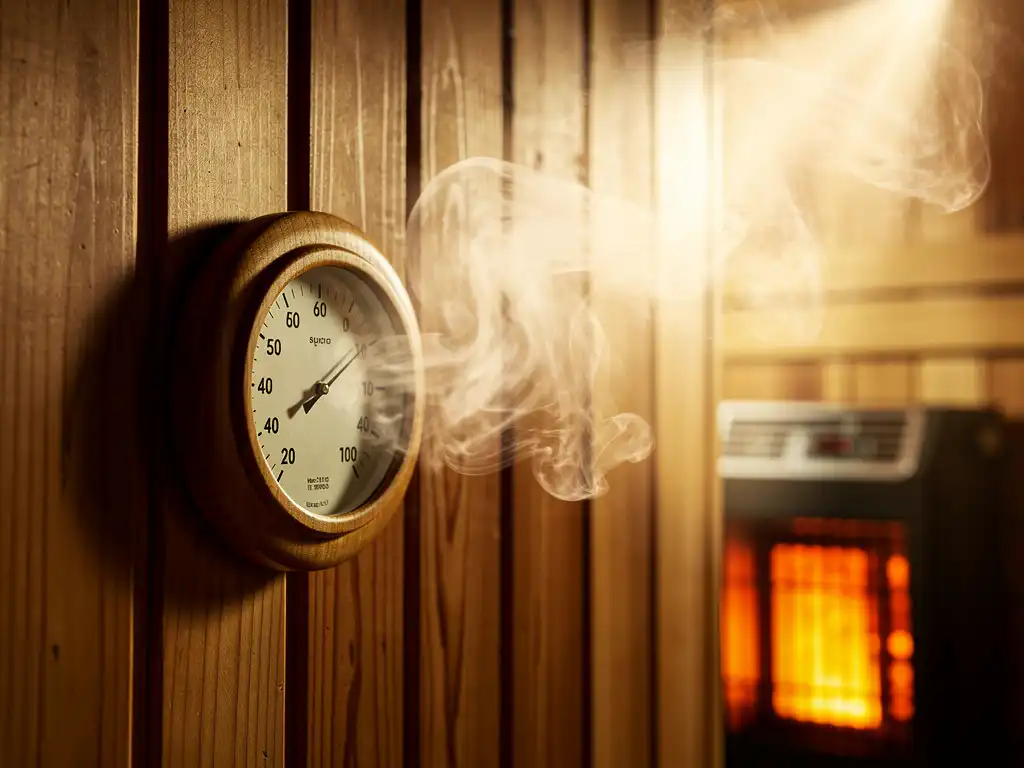
The ideal temperature for a home sauna is typically between 70°C and 90°C (158°F to 194°F) at bench level. For most users, 80°C (176°F) is the sweet spot that delivers genuine therapeutic heat without becoming overwhelming. The right temperature depends on personal preference, sauna type, and how humidity interacts with heat.
A traditional Finnish sauna runs on the higher end of that range, around 80°C to 90°C, with low humidity. A gentler steam sauna or relaxation session is more comfortable at 60°C to 75°C, with higher moisture in the air. When humidity rises, the perceived heat increases significantly, so a 70°C sauna with regular steam rounds can feel just as intense as a dry 85°C session.
It’s also worth noting that the temperature at ceiling level will always be higher than at bench level in a conventional sauna. That gap matters more than most people realize, which leads directly to the next question.
Why is sauna temperature so hard to control evenly?
Sauna temperature is difficult to control evenly because hot air naturally rises. In a conventional indoor sauna, steam and hot air accumulate near the ceiling while the lower zone stays significantly cooler. The temperature difference between the floor and the ceiling can be dramatic, sometimes exceeding 50°C in a poorly designed room.
This phenomenon is called temperature stratification, and it creates real problems. Bathers sitting at bench height experience comfortable warmth on their lower body but intense, sometimes painful heat on their face and head. The steam itself can feel brief and harsh because it stays concentrated near the top of the room rather than distributing evenly.
Low oxygen levels can compound the issue. Hot air near the ceiling displaces oxygen-rich, cooler air, making the environment feel stuffy and difficult to breathe. Many people cut their sauna sessions short not because of the heat itself, but because the air quality becomes uncomfortable. Solving stratification is the core challenge of proper sauna climate control technology.
How does an electric sauna heater control temperature?
An electric sauna heater controls temperature through a combination of heating elements, a temperature sensor, and a control unit that cycles power to the elements based on the room’s current temperature versus the user’s target setting. When the sauna drops below the set temperature, the elements activate. When the target is reached, they cycle off or reduce output.
The role of the control unit
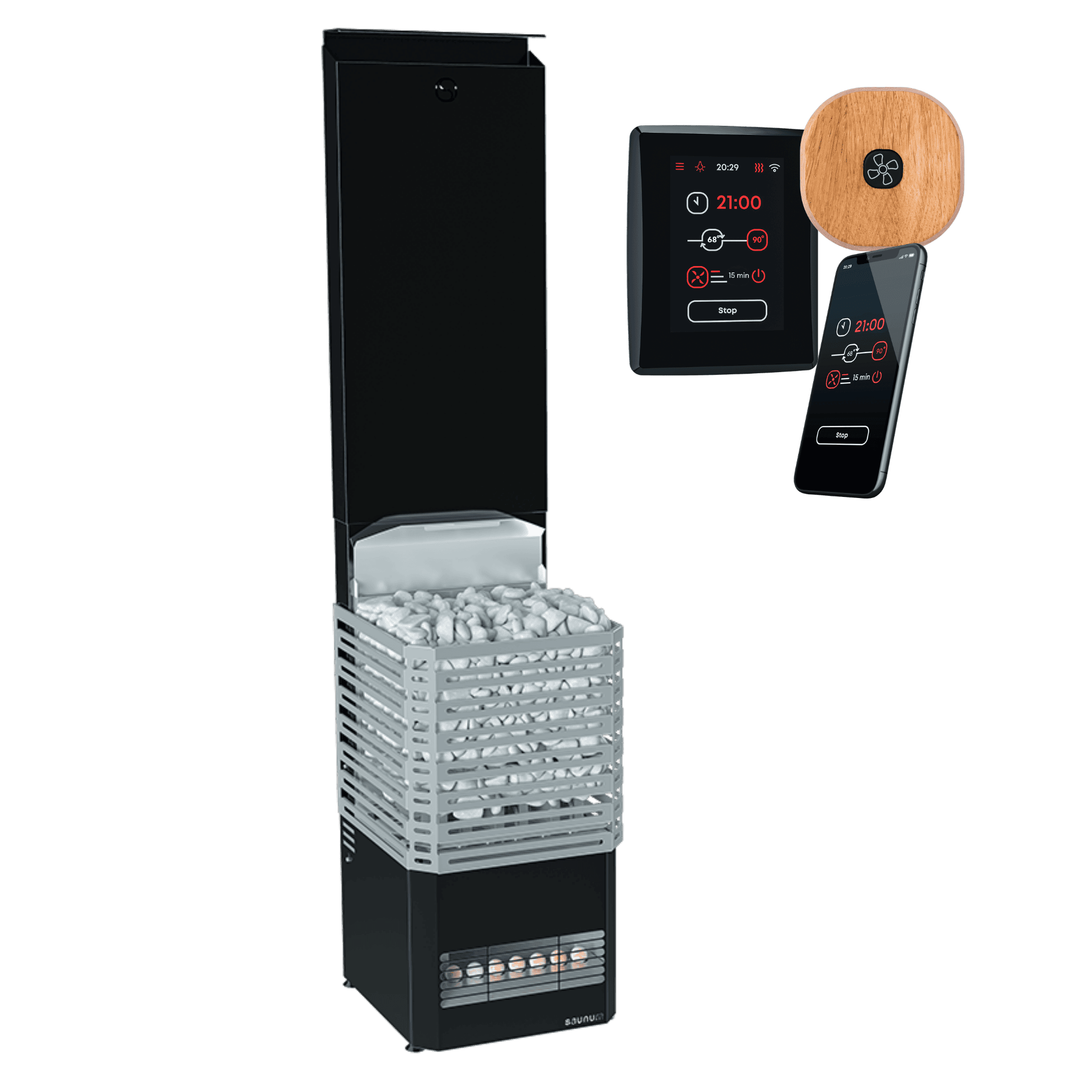
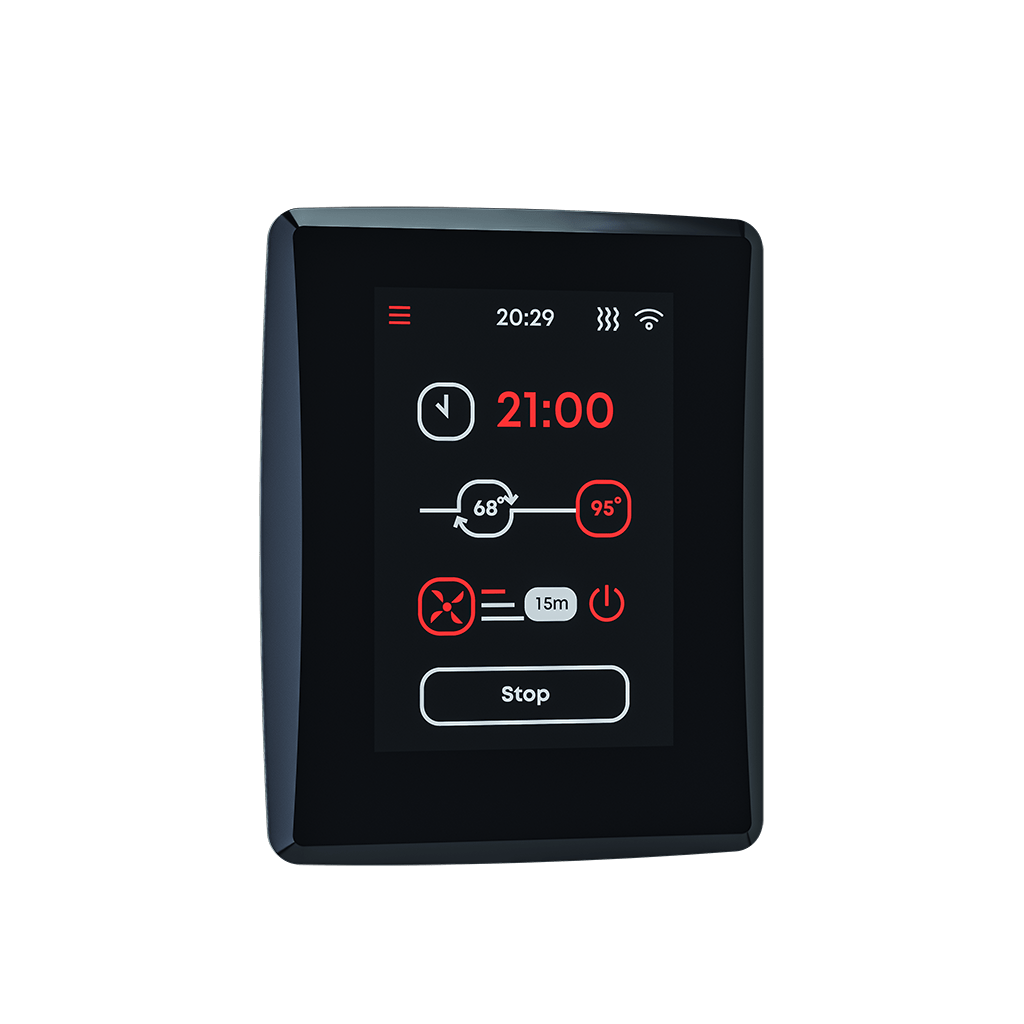
The control unit is the brain of the system. A basic controller uses fixed cycles, turning the heater on and off at set intervals regardless of actual conditions. A smart controller reads real-time data from the sauna and adjusts dynamically, which is both more efficient and more precise. For example, the Saunum Leil smart control unit optimizes heating time based on live sauna data, reducing energy consumption compared to conventional fixed-cycle systems.
Temperature range and timing
Most electric heater controllers allow you to set a target temperature anywhere from 40°C to 100°C. You can also set a timer so the sauna reaches your target temperature by a specific time, meaning you step into a ready sauna rather than waiting. Safety cutoffs are built into both the control unit and the heater itself to prevent overheating.
What’s the difference between a sauna thermostat and a climate control system?
A sauna thermostat controls only the heater’s temperature, switching elements on and off to maintain a set heat level. A sauna climate control system does significantly more: it actively manages air circulation, humidity, steam distribution, and sometimes salt ion levels, creating a complete sauna environment rather than just a heated room.
Think of a thermostat as a single-function tool and a climate control system as a full environmental manager. A thermostat tells you the room is 85°C. A climate control system ensures that 85°C is evenly distributed from floor to ceiling, that the steam is soft and breathable, and that humidity stays within a comfortable range throughout your session.
For a basic home sauna, a thermostat may be sufficient. But if you want consistent, comfortable sessions without the harsh temperature spikes and breathability issues that come with conventional setups, a dedicated climate control system addresses problems that a thermostat simply cannot.
How do you fix uneven heat from floor to ceiling in a sauna?
The most effective way to fix uneven heat distribution in an indoor sauna is to mechanically blend the air layers inside the room. An air-circulation device captures superheated steam near the ceiling and mixes it with cooler, oxygen-rich air near the floor, then redistributes the blended air evenly throughout the space.
Without mechanical blending, passive fixes like adjusting bench height or adding ventilation slots offer only partial improvement. They reduce the extremes slightly but don’t eliminate stratification. A dedicated climate device solves the problem at its source by continuously equalizing the temperature gradient.
The practical benefits of proper air blending go beyond comfort. When heat is evenly distributed, you can ladle water onto the stones more frequently because the steam disperses gently rather than hitting bathers as a concentrated blast. The air becomes easier to breathe because oxygen-rich lower air is circulated upward. Sweating becomes more intense and consistent, which is the whole point of a sauna session.
What sauna heater size do you need for proper temperature control?
Sauna heater size is determined primarily by the volume of the sauna room in cubic meters. As a general rule, you need roughly 1 kW of heater power per cubic meter of sauna volume for a well-insulated room. Rooms with uninsulated surfaces like glass doors, brick walls, or concrete require additional power to compensate for heat loss.
Undersizing a heater is one of the most common mistakes in home sauna installation. A heater that’s too small will struggle to reach the target temperature, run continuously, wear out faster, and never deliver the consistent heat needed for a proper session. Oversizing is less damaging but wastes energy and can make precise temperature control harder.
- For a glass door or window, add 1 to 1.2 m³ to your calculated room volume per square meter of uninsulated surface before selecting heater power.
- Always check the manufacturer’s minimum ceiling-height requirement, as some heater models require at least 2,150 mm of clearance to operate safely.
Getting the sizing right from the start saves significant cost and frustration. Many sauna technology brands, including Saunum, provide heater calculators and sizing guides to help builders and contractors match the right unit to specific room dimensions before purchasing. Contact us for expert sizing advice tailored to your specific sauna project.
How Saunum Helps You Control Temperature in Your Indoor Sauna
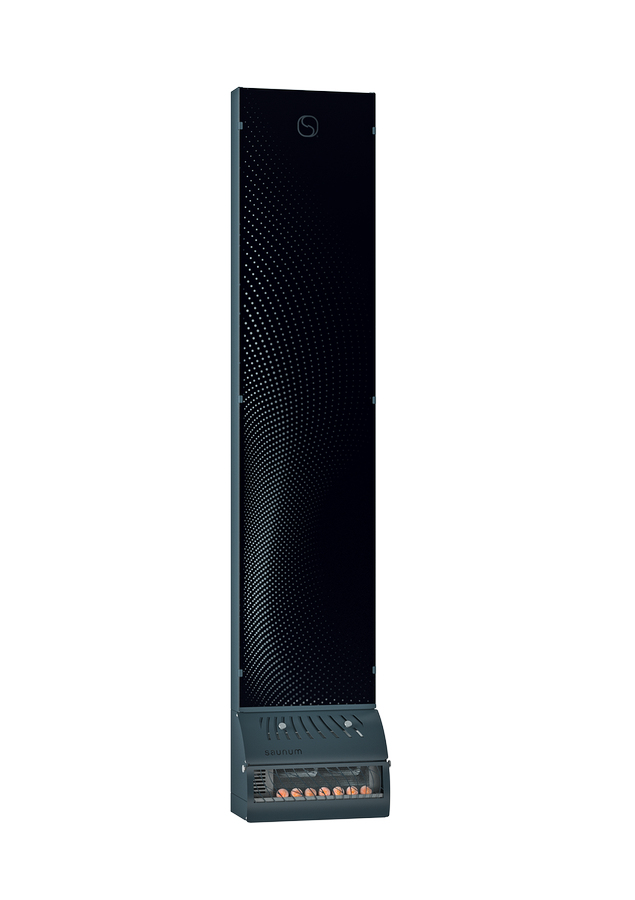
Saunum’s indoor sauna heating solutions were built specifically to solve the temperature-control problems that conventional sauna equipment leaves unresolved. The patented air-blending system is integrated into every heater and climate device, actively capturing hot steam from the ceiling, mixing it with cooler, floor-level air, and redistributing it evenly throughout the room. The result is a sauna where the temperature at bench level matches what the controller is set to—not a compromised reading skewed by ceiling heat.
Here is what that means in practice for your sauna build or installation:
- Even temperature from floor to ceiling, eliminating the harsh, face-level heat that cuts sessions short.
- Softer, longer-lasting steam that lets you ladle water more frequently without discomfort.
- Oxygen-enriched air throughout the room, making sessions easier to breathe and more enjoyable.
- Smart control via the Saunum Leil system, with programmable modes, scheduling, real-time smartphone notifications, and Modbus smart-home integration.
Whether you’re installing a compact home sauna with the Saunum Experience, a mid-range all-in-one unit with the Spa Session, or a larger commercial setup with the Saunum Luxury, every product in the lineup delivers the same core technology. The Saunum AutoLeil accessory adds automated water dispensing for hands-free humidity control, and the Saunum Base lets you add air blending to an existing heater without a full replacement.
If you’re interested in getting started with sauna, explore the full range of available models and sizing options today.
Related Articles
- Can sauna therapy help with muscle recovery after workouts?
- How do you know if your sauna indoor climate device is working properly?
- How often should you use a sauna for optimal health benefits?
- How long should you stay in a sauna for maximum benefits?
- What is the difference between a dry sauna and a steam room?