
A sauna that feels stuffy, uneven, or just plain uncomfortable is often suffering from one underlying problem: a failing ventilation system. Whether you are building a new sauna from scratch or troubleshooting an existing one, understanding how airflow works—and what can go wrong—is essential for a safe, enjoyable experience. The signs of poor sauna ventilation are not always obvious, but once you know what to look for, they are hard to miss.
This guide walks through every key question about sauna ventilation, from the basics of how the system works to practical steps for diagnosing and fixing problems. If you are a DIY builder, contractor, or sauna owner dealing with inconsistent heat, poor air quality, or excessive moisture damage, the answers below will help you get to the root of the issue quickly.
What does a sauna ventilation system actually do?
A sauna ventilation system controls the movement of fresh air into the sauna room, the circulation of air within it, and the exhaust of stale, humid air out of it. Its job is to maintain breathable oxygen levels, regulate humidity, prevent moisture buildup that causes structural damage, and distribute heat evenly throughout the room.
Without proper ventilation, the oxygen inside a sealed sauna room depletes quickly as bathers breathe and the heater runs. Fresh air must continuously enter near the floor, circulate through the room, and exit through an exhaust vent positioned low on the opposite wall or near the floor on the exit side. This creates a gentle, continuous airflow loop that keeps the environment safe and comfortable.
Ventilation also works hand in hand with the sauna heater and any climate-control device you have installed. In a well-designed system, air movement supports even heat distribution rather than allowing scorching steam to pool at ceiling level while the lower benches stay relatively cool. This is why ventilation is not just about fresh air supply, but about the entire indoor climate of the sauna. Learn more about the technology behind effective sauna climate control to understand how these systems work together.
What are the most common signs your sauna ventilation is failing?
The most common signs that your sauna ventilation system is failing include difficulty breathing or a stuffy feeling inside the sauna, extreme temperature differences between the ceiling and the floor, persistent condensation or mold on walls and benches, and a lingering damp or musty smell even after the sauna has cooled down.
Breathing discomfort is often the first thing bathers notice. When fresh oxygen cannot circulate properly, the air feels heavy and oppressive, and sessions become shorter and less enjoyable. This is a direct signal that the air-exchange rate inside the room is insufficient.
Structural warning signs are equally important to watch for. Warped wood panels, peeling finishes, black mold spots, and persistent moisture on the ceiling or upper walls all point to ventilation that is not removing humid air effectively. Left unaddressed, these issues can cause serious and costly damage to the sauna structure over time.
Why does sauna temperature vary so much from floor to ceiling?
Temperature varies dramatically from floor to ceiling in a sauna because hot steam and air naturally rise and accumulate near the ceiling, while cooler, denser air stays near the floor. In a conventional sauna without active air mixing, the ceiling zone can reach temperatures well above 90°C while the lower bench area remains significantly cooler.
This stratification effect is a fundamental physics issue, not just a ventilation design flaw. Steam thrown onto heater stones rises immediately, concentrating heat and moisture at the top of the room. Without a mechanism to mix this hot upper air back down toward the floor, the temperature gradient becomes extreme and uncomfortable.
Why stratification makes breathing harder
The hot, steam-dense air near the ceiling is also lower in oxygen than the cooler air near the floor. Bathers sitting on upper benches are therefore exposed to both the highest temperatures and the most oxygen-depleted air in the room. This combination can cause the familiar headache, dizziness, or shortness of breath that many people associate with saunas, even though a well-ventilated sauna should not produce those effects.
Active air circulation that blends the ceiling and floor zones solves both problems at once. By mechanically mixing the hot upper air with the cooler, oxygen-richer lower air, the entire room reaches a more consistent temperature, and the steam becomes softer and easier to breathe. This is the core principle behind the patented air-blending system we developed at Saunum, which captures scorching steam near the ceiling, mixes it with cooler floor-level air, and redistributes it evenly throughout the room.
How can you test if your sauna ventilation is working correctly?
You can test sauna ventilation by checking for consistent temperature distribution at different heights, confirming that fresh air enters near the floor and exits through a low exhaust vent, and observing whether the room dries out completely within a reasonable time after use. A well-ventilated sauna should feel comfortable to breathe in at all bench levels.
A simple practical test is to hold a piece of tissue or thin paper near the intake vent when the sauna is running. If the paper moves toward the vent, air is being drawn in correctly. You can repeat this near the exhaust vent to confirm that air is also leaving the room. No movement at either point indicates a blockage or an incorrectly positioned vent.
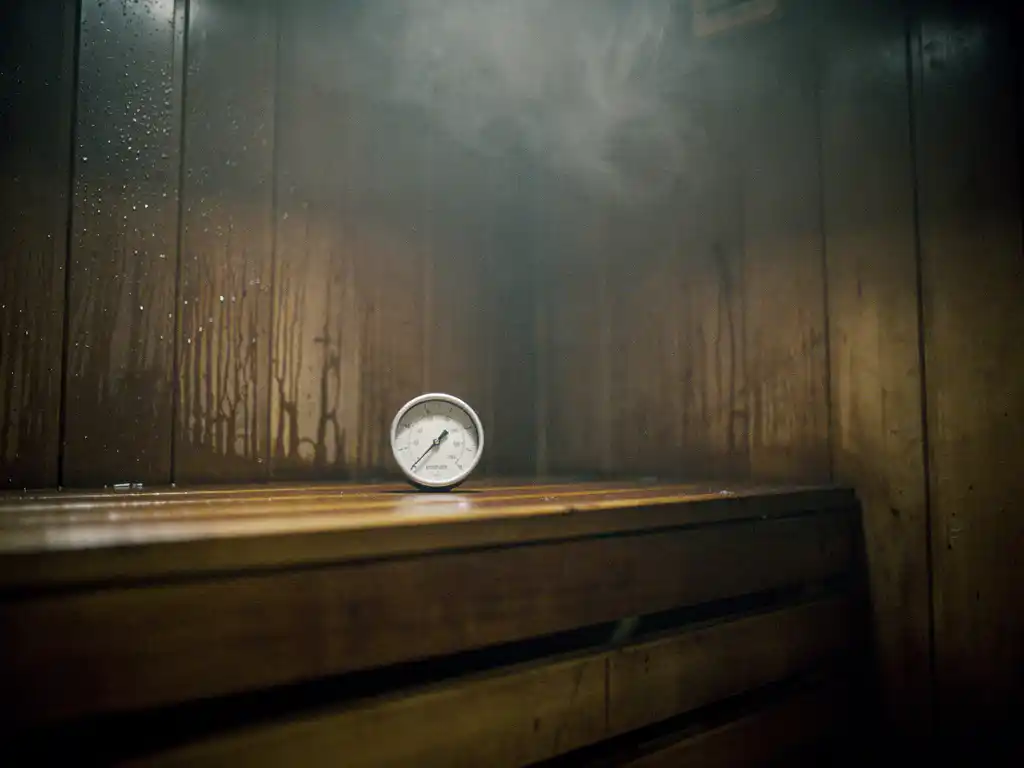
Temperature testing is equally straightforward. Use a thermometer at bench height and then hold it near the ceiling. In a sauna with good air circulation, the difference should be manageable and comfortable. A gap of 40°C or more between the ceiling and the seating level is a strong indicator that air is stratifying rather than circulating. After your session, check whether the wood surfaces dry within a few hours. Surfaces that stay damp for extended periods suggest that humid air is not being exhausted efficiently.
What causes sauna ventilation systems to fail?
Sauna ventilation systems most commonly fail due to incorrectly positioned vents, blocked or sealed intake and exhaust openings, undersized vent openings for the room volume, and the absence of any active air-circulation device. Poor initial design is the leading cause, but vents can also be accidentally blocked during renovations or by objects placed in front of them.
Vent placement is critical and often gets overlooked during installation. The fresh-air intake should be positioned low on the wall near the heater, ideally within 200 mm of the floor, so that incoming cool air is drawn across the heater and warmed before rising. The exhaust vent should sit on the opposite wall, also positioned low, to pull spent air out of the room at floor level rather than allowing it to linger. When both vents are placed high on the same wall, the air simply short-circuits across the ceiling without ever refreshing the lower zones where bathers sit.
In older saunas, vents can become blocked by insulation settling, paint, or deliberate sealing by previous owners who mistakenly believed a tighter sauna would heat faster. In reality, a sealed sauna becomes oxygen-depleted and structurally vulnerable to moisture damage far more quickly than one with proper airflow.
How do you fix poor airflow and ventilation in a sauna?
Fixing poor sauna ventilation starts with checking and repositioning intake and exhaust vents to the correct locations, clearing any blockages, and ensuring vent openings are appropriately sized for the room volume. In many cases, adding an active air-circulation device resolves persistent stratification and breathability problems that passive vents alone cannot solve.
For a passive ventilation fix, the general rule is that the intake vent area and the exhaust vent area should each be at least 25 to 30 square centimeters per cubic meter of sauna room volume. If your vents are smaller than this, enlarging them is a straightforward improvement that makes an immediate difference to air quality and drying time.
- Reposition the intake vent to within 200 mm of the floor, close to the heater.
- Move the exhaust vent to the opposite wall, also low, to create a cross-room airflow path.
- Clear any insulation, paint, or debris blocking either vent opening.
- Install an adjustable vent cover so you can regulate airflow without fully sealing the opening.
When passive fixes are not enough—particularly in saunas with persistent temperature stratification—an active climate device that mechanically blends the room air is the most effective long-term solution. This addresses the root cause of uneven heat and poor breathability rather than merely improving fresh air supply at the edges of the room. Browse the full range of sauna climate solutions to find the right fit for your setup.
How Saunum helps solve sauna ventilation and climate problems
Poor ventilation and temperature stratification are exactly the problems we built Saunum to solve. Our patented air-blending technology actively captures the scorching steam that accumulates near the ceiling and mixes it with the cooler, oxygen-rich air near the floor, redistributing it evenly throughout the sauna. The result is a consistent temperature from floor to ceiling, softer steam, and air that is genuinely comfortable to breathe at every bench level.
Here is what Saunum products bring to a failing or underperforming sauna ventilation setup:
- Active air blending that eliminates dangerous ceiling-to-floor temperature gaps without relying on passive airflow alone
- Adjustable fan speeds and vent valve positions that let you dial in the exact climate for a classic Nordic sauna, a humid steam session, or a relaxing low-temperature experience
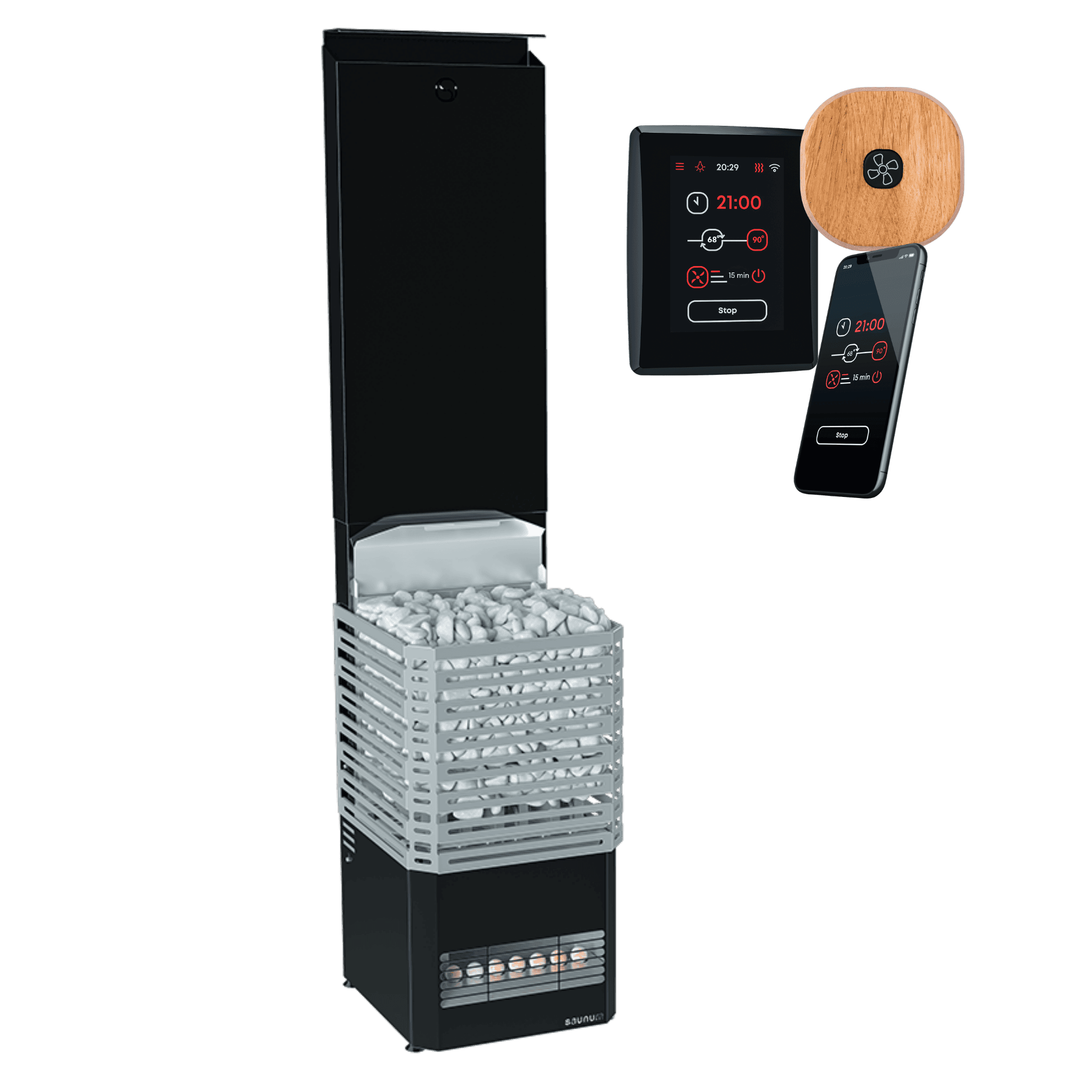
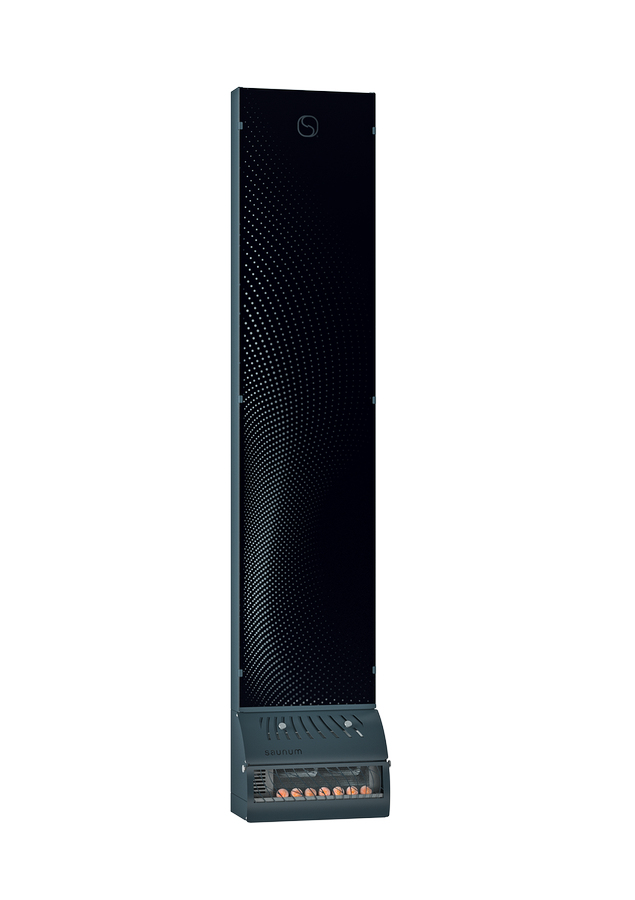
- The Saunum Base, a standalone sauna indoor climate device that works alongside your existing heater, so you do not need to replace the whole setup to get the benefits
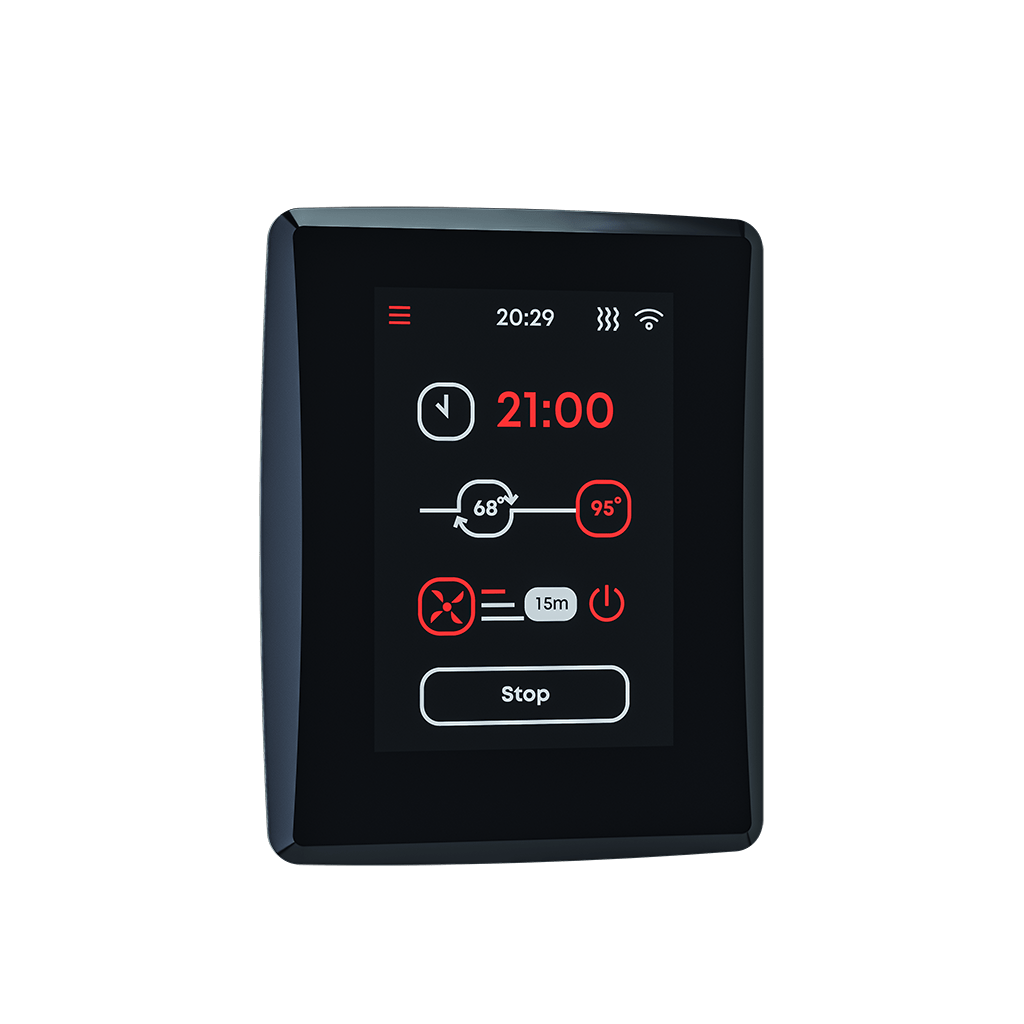
- Smart control via the Saunum Leil controller, which monitors real-time conditions and allows remote management so the sauna environment is always dialed in before you step inside
Whether you are retrofitting an existing sauna or specifying equipment for a new build, Saunum offers a solution that fits. Our professional installation service covers everything from transporting and mounting the equipment to making electrical connections and walking you through operation, so you get the full benefit of the technology from day one. Ready to stop guessing about your sauna climate and start enjoying consistent, breathable heat? Visit saunum.com to explore our product range or get in touch with our team to find the right solution for your sauna.