





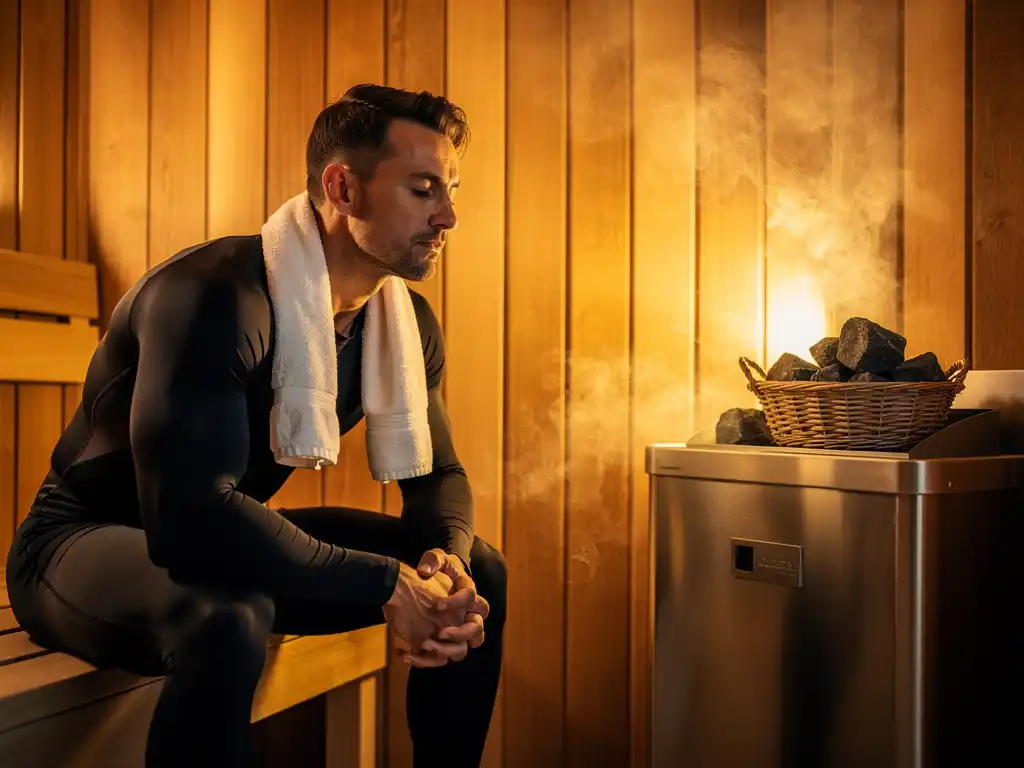
Regular sauna use can significantly improve athletic performance through enhanced cardiovascular function, faster recovery, and better heat tolerance. Heat therapy triggers physiological adaptations similar to exercise, including improved circulation, increased plasma volume, and enhanced thermoregulation. Athletes who incorporate sauna sessions into their training routines often experience better endurance, reduced muscle soreness, and improved performance in hot conditions.
What happens to your body during sauna sessions that could help athletic performance?
During sauna sessions, your body undergoes several physiological responses that directly benefit athletic performance:
- Cardiovascular stimulation – Your heart rate increases by 30–50%, mimicking moderate exercise intensity while improving cardiovascular efficiency without the mechanical stress of actual exercise
- Enhanced circulation – Blood vessels dilate to improve blood flow, delivering more oxygen and nutrients to muscles throughout your body
- Heat shock protein production – Heat exposure triggers the production of protective proteins that shield cells from stress and aid in muscle repair and recovery
- Increased plasma volume – Your body gradually increases blood plasma volume over time, allowing your heart to pump blood more efficiently during exercise
- Improved thermoregulation – Elevated core temperature activates your body’s cooling mechanisms, strengthening your ability to manage heat during intense training
These combined adaptations create a comprehensive training effect that mirrors endurance exercise benefits while enhancing your overall cardiovascular fitness. The strengthened thermoregulatory system becomes particularly valuable during competitions in warm environments, where maintaining optimal body temperature is crucial for sustained peak performance.
How does regular sauna use improve recovery after intense training?
Regular sauna use accelerates post-workout recovery through multiple physiological mechanisms:
- Enhanced muscle repair – Increased blood flow to damaged tissues delivers essential nutrients and removes metabolic waste products more efficiently than passive recovery
- Hormone optimization – Heat therapy triggers the release of growth hormone and endorphins, which support muscle repair while reducing pain perception
- Muscle relaxation – The heat helps relax tight muscles and reduces stiffness, allowing quicker return to training with improved mobility
- Improved sleep quality – The relaxation response induced by sauna use enhances sleep, which is when most muscle recovery and adaptation occur
- Stress management – Heat therapy helps manage cortisol levels, preventing the negative impact of chronic stress on recovery and performance
These recovery benefits work synergistically to help athletes feel more refreshed and prepared for subsequent training sessions. The combination of physical repair mechanisms and stress reduction creates an optimal environment for adaptation and performance improvement.
Can sauna sessions actually boost your cardiovascular endurance?
Sauna sessions can significantly boost cardiovascular endurance by creating specific physiological adaptations:
- Improved cardiac efficiency – Regular heat exposure increases your heart’s stroke volume, allowing it to pump more blood with each beat during exercise
- Expanded blood volume – Heat therapy increases plasma volume by up to 7%, enhancing oxygen delivery to working muscles during prolonged exercise
- Enhanced blood pressure regulation – The increased blood volume helps maintain optimal blood pressure during intense activity
- Cardiovascular conditioning – The stress of sauna use trains your heart to work more efficiently under challenging conditions
- Performance marker improvements – Regular sauna use often leads to improved VO2 max and better lactate threshold, key indicators of endurance capacity
These cardiovascular adaptations complement traditional training by providing additional stimulus without the mechanical stress of exercise. The result is a more robust cardiovascular system capable of supporting higher performance levels across various endurance activities.
What’s the best way for athletes to incorporate sauna into their training routine?
Strategic sauna integration requires careful timing and progressive implementation:
- Optimal timing – Schedule sessions immediately after training when muscles are warm and circulation is elevated for maximum benefit
- Progressive duration – Start with 10–15 minute sessions at 70–80°C, gradually increasing to 20–25 minutes as heat tolerance improves
- Consistent frequency – Aim for 3–4 sessions per week to experience optimal performance and recovery benefits
- Training periodization – Use longer sessions after easy training days for recovery, and shorter sessions after intense workouts to avoid additional stress
- Safety protocols – Stay well hydrated, allow adequate cooling time, and build heat tolerance gradually over several weeks
Modern sauna systems with advanced air circulation provide more comfortable and effective sessions by maintaining even temperatures throughout the room, making it easier to tolerate longer sessions for maximum benefit. Always listen to your body and consult medical professionals if you have cardiovascular conditions before beginning regular sauna use.
How does heat acclimation from sauna use help with performance in hot conditions?
Heat acclimation from regular sauna use provides significant advantages for competing in warm environments:
- Enhanced cooling efficiency – Regular heat exposure trains your sweat response to activate earlier and produce more dilute sweat, maintaining electrolyte balance
- Reduced perceived exertion – Improved thermoregulation allows you to maintain higher intensities when temperatures rise, with less subjective effort
- Optimized energy allocation – Less energy is diverted from performance to cooling, maintaining power output even in challenging conditions
- Improved fluid dynamics – Enhanced blood flow to the skin for cooling and better fluid retention support sustained sweating capacity
- Performance preservation – Acclimated athletes often maintain normal performance levels in temperatures that significantly impact non-adapted competitors
This comprehensive heat acclimation proves particularly valuable for athletes competing across different climates or during summer seasons when environmental heat stress can severely limit performance potential. The adaptations create a competitive advantage in conditions where temperature becomes a limiting factor for athletic success.
Regular sauna use offers athletes a practical way to enhance performance through improved cardiovascular function, faster recovery, and better heat tolerance. The physiological adaptations from heat therapy complement traditional training methods while providing unique benefits for athletic performance. At Saunum, we understand how proper heat therapy supports athletic goals, which is why our advanced sauna systems create optimal conditions for both performance enhancement and recovery through innovative air circulation technology that ensures consistent, comfortable heat exposure for maximum training benefits.
If you’re interested in getting started with Sauna, check out our full range today.