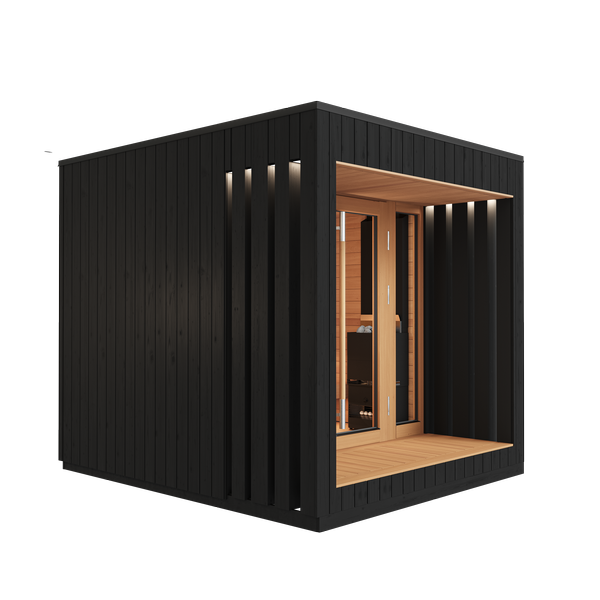



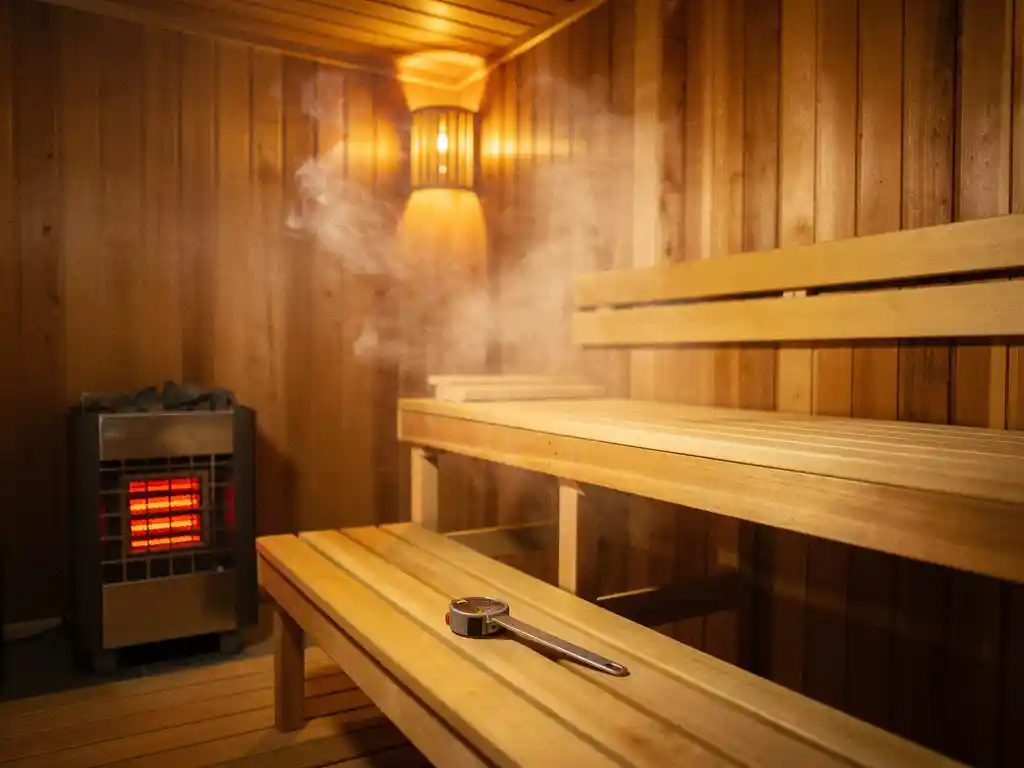
Building an indoor sauna is one of the most rewarding home improvement projects you can take on, but getting the sizing right from the start will save you from costly mistakes down the road. Whether you are converting a spare bathroom, finishing a basement corner, or building a dedicated sauna room from scratch, the dimensions of your space directly affect your comfort, your heating costs, and the quality of steam you experience in every session.
This guide answers the most common sizing questions we hear from DIY builders and contractors working on home and indoor sauna projects. From calculating cubic footage to matching your electric heater to your room volume, you will find clear, practical answers to every question below.
What size sauna do you actually need for your space?
The right sauna size depends on how many people will use it regularly and what type of sauna experience you want. For a single user, a room as compact as 4 feet by 4 feet works well. For two to four regular users, a room between 6 feet by 8 feet and 8 feet by 10 feet gives everyone comfortable bench space without wasting energy heating unused volume.
Beyond headcount, think honestly about how you plan to use your indoor sauna. A compact home sauna used for quick daily sessions after a workout calls for a different layout than a social sauna where friends and family gather on weekends. Larger rooms feel more relaxed and allow full-length benches for lying down, but they take longer to heat and require a more powerful heater. Smaller rooms heat faster and are more energy-efficient, making them ideal for frequent solo use or use by couples.
The most practical starting point is to sketch out your bench layout first. Each person needs roughly 18 to 24 inches of bench width when seated, and a full lying position requires about 72 inches of length. Once you know how many bench spots you need, you can work backward to determine the minimum floor area, then add clearance for the heater, entry, and movement.
How do you calculate the right cubic footage for an indoor sauna?
To calculate the correct cubic footage for an indoor sauna, multiply the room’s length by its width by its ceiling height. This gives you the total volume in cubic feet or cubic meters, which is the primary figure used to match your heater power to your room. As a general rule, you need roughly 1 kilowatt of heater power for every 50 cubic feet of well-insulated sauna volume.
However, raw volume is only part of the equation. The construction materials in your sauna room significantly affect how much heat is needed to bring the space up to temperature and keep it there. Uninsulated walls, glass panels, and exterior-facing walls all lose heat faster than properly insulated interior walls, so they require you to treat the room as effectively larger than it measures.
Adjusting for uninsulated surfaces
When your sauna room includes uninsulated wall surfaces or large glass elements, add extra volume to your baseline calculation before selecting a heater. For example, a sauna with a glass door should be treated as though it has an additional 1.2 to 1.5 cubic meters of volume beyond its actual measurement. This adjustment ensures your heater is not undersized for the room’s true thermal load.
Taking these adjustments seriously at the planning stage prevents the frustrating experience of a heater that struggles to reach temperature or takes far too long to heat the room. Getting the volume calculation right is the single most important step in any indoor sauna home improvement build.
What’s the difference between a 1-person and a 4-person indoor sauna?
The key difference between a 1-person and a 4-person indoor sauna is floor area, bench configuration, and heater power requirements. A 1-person sauna typically measures around 3 by 4 feet with a single bench tier, while a 4-person sauna generally requires at least 6 by 8 feet with upper and lower bench levels to seat everyone comfortably.
Beyond the physical dimensions, the two configurations create noticeably different sauna experiences. A compact 1-person sauna heats up quickly, often within 20 to 30 minutes, and is very cost-effective to run daily. A 4-person room takes longer to reach temperature and typically requires a heater in the 6 to 9 kilowatt range to handle the larger volume and the additional heat load from multiple users.
The bench layout also matters more in larger saunas. Upper benches in a multi-person room sit closer to the ceiling, where temperatures are highest, while lower benches offer a cooler, more relaxed position. This temperature stratification between the floor and ceiling is one of the most common comfort complaints in traditional saunas, and it becomes more pronounced as room size increases.
How does ceiling height affect indoor sauna performance?
Ceiling height directly affects both temperature distribution and the total volume your heater must heat. Standard indoor sauna ceiling height falls between 6.5 and 7.5 feet. Lower ceilings concentrate heat closer to the benches, which can feel intense, while ceilings above 8 feet increase room volume significantly and can push scorching steam farther from where users actually sit.
In a conventional sauna without air-circulation technology, heat and steam naturally rise and accumulate near the ceiling. This creates a wide temperature gap between the upper and lower zones of the room. The air at ceiling level can reach extreme temperatures while the floor area remains significantly cooler, making the lower bench uncomfortable and the upper bench potentially overwhelming.
Most heater manufacturers specify a minimum ceiling height for their products to ensure safe clearance between the heater stones and the ceiling above. For example, heaters in our Saunum lineup require ceiling heights starting at 1,960 mm for home models and 1,850 mm for commercial units. Always check the minimum ceiling-height specification for your chosen heater before finalizing your room dimensions, as installing a heater in a room with insufficient clearance creates a safety hazard.
What electric heater size do you need for an indoor sauna?
The correct electric heater size for an indoor sauna is determined by the room’s cubic volume, insulation quality, and intended use. As a starting benchmark, plan for approximately 1 kilowatt per 1 cubic meter of well-insulated sauna volume. A small home sauna of 6 to 8 cubic meters typically needs a 6-kilowatt heater, while a larger room of 12 to 16 cubic meters requires 9 kilowatts or more.
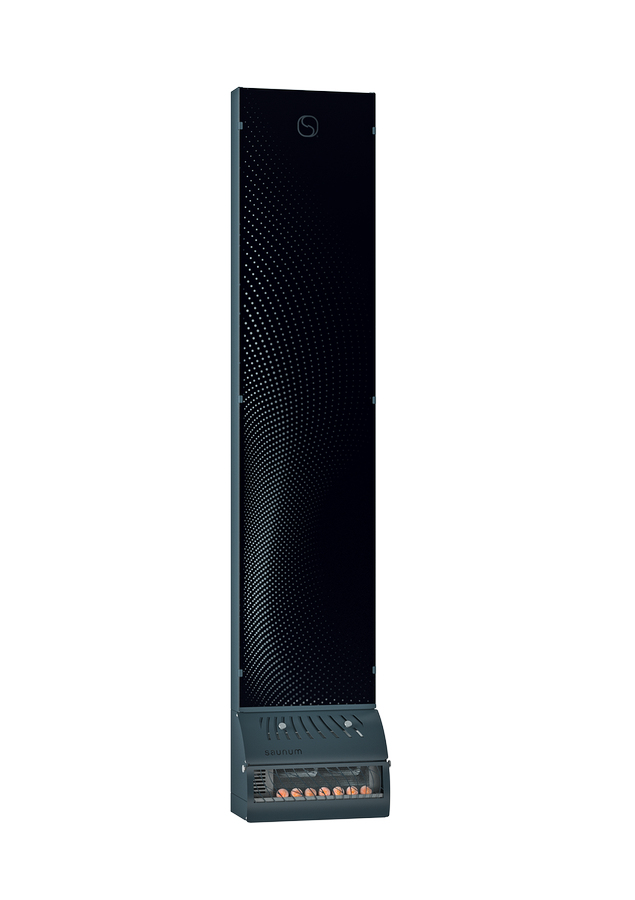
For home saunas, heaters in the 3 to 9 kilowatt range cover the vast majority of residential builds. Our Experience line handles home sauna rooms from the smallest apartment build up to larger house installations, while the Spa Session covers mid-range home spa rooms up to 16 cubic meters at 9 kilowatts. For boutique public saunas or heavily used commercial environments, the Pro Experience scales up to 15 kilowatts for rooms up to 23 cubic meters. Browse our full range of sauna heaters to find the right fit for your build.
Accounting for installation variables
Several installation-specific factors can push you toward a larger heater size than the basic volume calculation suggests. These include:
- Uninsulated or poorly insulated walls, which require adding extra volume to your calculation
- Glass doors or large glass panels, which lose heat faster than insulated walls
- Exterior-facing walls exposed to cold outdoor temperatures
- High ceilings that push the total room volume above the baseline range
When in doubt, sizing up by one power tier is a far better outcome than undersizing. An oversized heater reaches temperature faster and can be dialed back, while an undersized heater will run continuously and still fail to deliver a satisfying sauna experience.
What are the most common sizing mistakes when building an indoor sauna?
The most common sizing mistakes when building an indoor sauna are underestimating the impact of uninsulated surfaces, ignoring ceiling height requirements, and choosing a heater based on floor area alone rather than total cubic volume. Each of these errors leads to a sauna that either underperforms or creates safety concerns.
Building too large is a surprisingly frequent mistake among first-time builders who assume bigger is always better. A room that is oversized for your actual usage pattern takes much longer to heat, costs more to run, and often produces a less satisfying steam experience because the heater cannot efficiently saturate the larger air volume. Right-sizing your sauna to your realistic usage habits is always the smarter approach.
Another common error is failing to account for the materials on the room’s surfaces. Many builders calculate volume accurately but forget that a glass door, a tiled wall, or an uninsulated exterior wall behaves thermally like additional room volume. Skipping this adjustment leads to a heater that is technically correct on paper but undersized in practice.
Finally, neglecting the minimum safety clearances around the heater is a mistake that affects both performance and safety. Every heater requires specific clearance distances on the sides, front, and above the stones to the ceiling. Installing a heater too close to walls or benches restricts airflow, reduces efficiency, and creates a genuine fire and burn hazard.
How Saunum helps you size and heat your indoor sauna right
Getting the sizing right is only half the challenge. Even a perfectly sized indoor sauna can suffer from uneven heat distribution, brief, uncomfortable steam, and poor air quality if the heater technology does not address the fundamental problem of temperature stratification. This is exactly the problem we built Saunum to solve.
Our patented air-blending sauna technology captures the scorching steam that accumulates near the ceiling and mixes it with the cooler, oxygen-rich air near the floor. The result is an even temperature from floor to ceiling, softer and longer-lasting steam, and air that is genuinely easier to breathe throughout your session. Here is what that means in practical terms for your build:
- A more consistent bench experience at every level, not just the top bench
- The ability to ladle water more frequently for richer steam without discomfort
- Five selectable sauna modes, from classic Nordic to salt ion and aroma, all from one heater
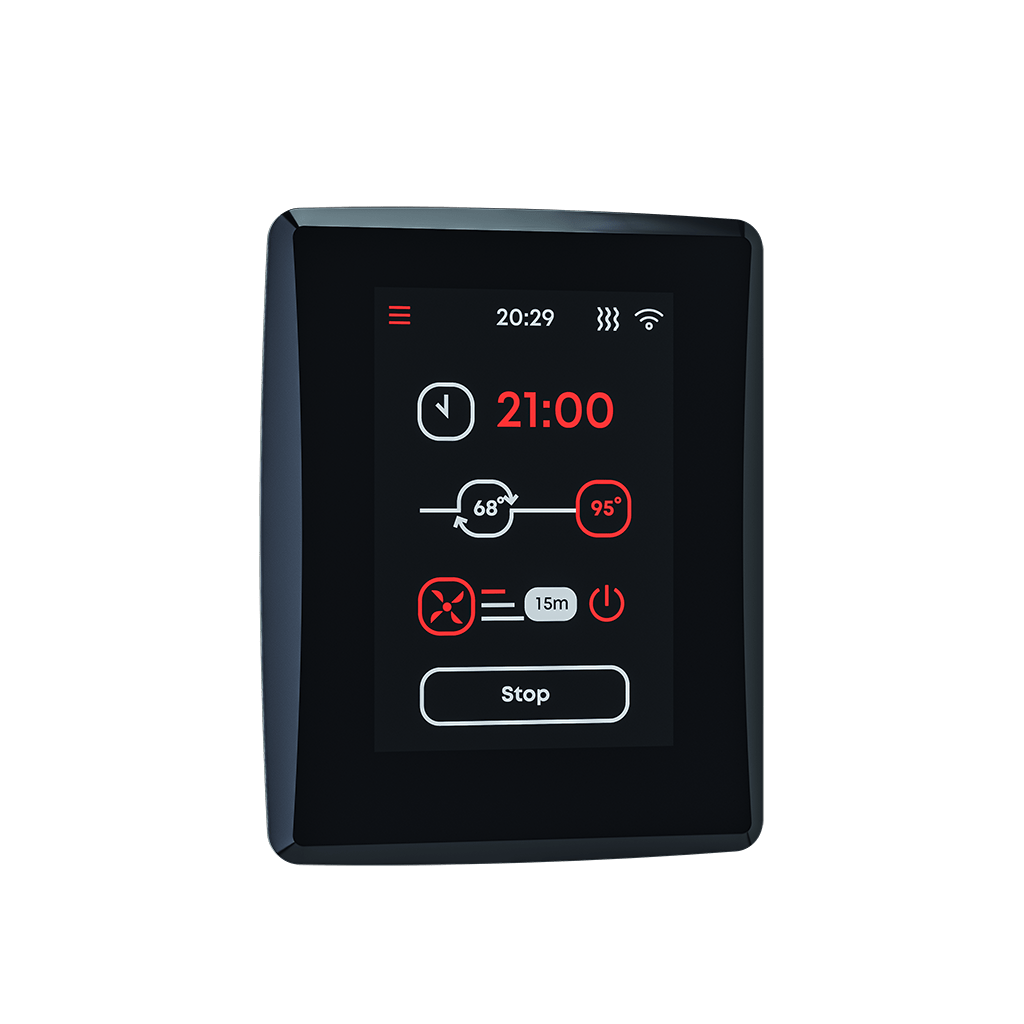
- Smart control via the Saunum Leil app, including scheduling, remote start, and real-time safety alerts
Whether you are building a compact apartment sauna and need a 3-kilowatt Experience unit, fitting out a home spa room with the integrated Spa Session, or retrofitting an existing heater with our standalone Base climate device, Saunum has a solution matched to your room volume and your goals. Contact us to find the right heater for your specific dimensions.