


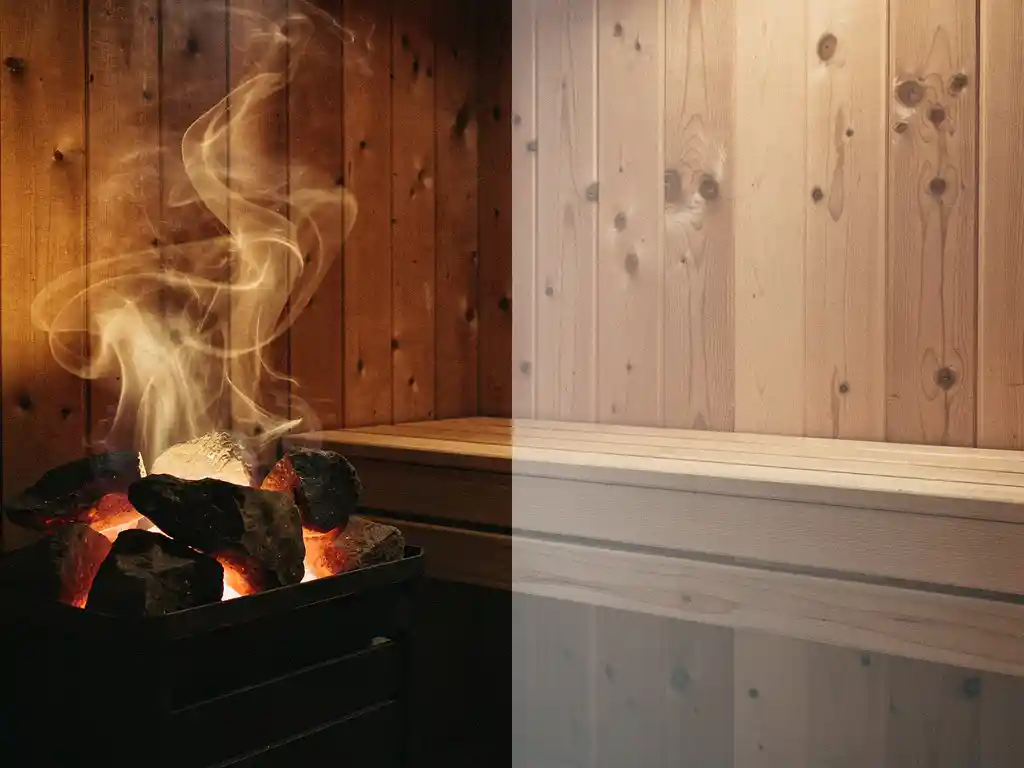
Neither infrared nor traditional saunas are inherently “better” – they’re different technologies that suit different preferences and needs. Traditional saunas heat the air around you to create an intense, steamy environment, while infrared saunas use light waves to warm your body directly at lower temperatures. Your choice depends on heat tolerance, space constraints, installation requirements, and personal wellness goals.
What’s the actual difference between infrared and traditional saunas?
The fundamental differences between infrared and traditional saunas lie in their heating methods, operating temperatures, and user experiences:
- Heating technology: Traditional saunas use electric heaters, wood-burning stoves, or steam generators to heat the surrounding air, while infrared saunas employ light panels that directly warm your body through penetrating heat waves
- Temperature ranges: Traditional saunas operate at intense 70–100°C with 10–20% humidity, whereas infrared units maintain gentler 45–65°C temperatures with minimal moisture
- Heat sensation: Traditional saunas deliver immediate, enveloping heat that intensifies when water hits hot stones, creating the classic “löyly” experience, while infrared heat builds gradually from within, similar to warm sunlight
- Preheating requirements: Traditional units need 30–45 minutes to reach optimal temperature, compared to infrared saunas that are ready within 10–15 minutes
- Installation complexity: Traditional saunas require professional electrical work and ventilation systems, while most infrared models plug into standard outlets
These technological differences create entirely distinct wellness experiences. Traditional saunas offer the authentic Finnish sauna ritual with controllable humidity and intense heat therapy, while infrared technology provides consistent, gentle warming that penetrates deeper into tissues. Understanding these core differences helps you align your choice with your comfort preferences and wellness objectives.
Which type of sauna gives you better health benefits?
Both sauna types provide similar cardiovascular benefits, improved circulation, stress relief, and muscle recovery support. The key difference lies in how your body responds to each heating method rather than one being superior to the other.
Traditional saunas create more intense sweating due to higher temperatures and humidity. This promotes cardiovascular conditioning as your heart works harder to cool your body. The extreme heat also triggers a stronger stress response, which can improve heat tolerance and resilience over time.
Infrared sauna users often report deeper muscle relaxation and joint pain relief. The penetrating heat may help with muscle recovery after exercise, and some people find the gentler environment more comfortable for longer sessions. The lower temperatures make infrared saunas accessible to those who struggle with traditional sauna heat.
Both types support stress reduction and improved sleep quality. The ritual of regular sauna use, regardless of type, contributes significantly to mental well-being. Traditional saunas offer the added benefit of humidity variation when you control steam levels, which some people find more satisfying.
Your individual response matters more than the sauna type. Some people thrive in intense heat and humidity, while others prefer the gentle warmth of infrared therapy.
How much does it cost to own an infrared versus traditional sauna?
The financial considerations for sauna ownership extend beyond initial purchase price to include installation, operation, and long-term maintenance costs:
- Initial investment: Infrared saunas typically range from £3,000–£15,000, while traditional saunas cost £5,000–£25,000 including professional installation and ventilation systems
- Installation expenses: Infrared units often arrive pre-assembled and plug into standard outlets, requiring minimal setup costs, whereas traditional saunas need dedicated electrical circuits, ventilation systems, and potential structural modifications
- Energy consumption: Infrared saunas use 1.5–3 kW during operation compared to traditional saunas’ 4–8 kW, though longer infrared sessions can balance overall electricity usage
- Maintenance requirements: Traditional saunas need regular wood cleaning, stone replacement, and ventilation upkeep, while infrared units require only surface cleaning and occasional panel inspection
- Longevity factors: Well-maintained traditional saunas can operate for decades, whereas infrared panels typically need replacement after 10–15 years of regular use
These cost variations reflect the different technologies and installation complexities involved. While infrared saunas offer lower entry costs and simpler maintenance, traditional saunas may provide better long-term value through durability and timeless appeal. Your budget should account for both immediate expenses and ongoing operational costs to make an informed investment decision.
What should you consider when choosing between sauna types?
Your decision should align with practical constraints, personal preferences, and long-term wellness goals:
- Space requirements: Traditional saunas need adequate room for ventilation and safety clearances, while infrared units adapt to smaller spaces and existing rooms more easily
- User accessibility: Traditional saunas may overwhelm children, elderly users, or those with heat sensitivity, whereas infrared technology provides gentler entry into sauna wellness for all comfort levels
- Installation flexibility: Rental properties and limited renovation scenarios favour infrared saunas, while permanent installations with proper infrastructure suit traditional saunas best
- Wellness objectives: Intense heat therapy and authentic steam experiences point toward traditional saunas, while regular therapeutic use and muscle recovery align with infrared technology
- Environmental factors: Humid climates require robust ventilation for traditional saunas, while infrared units produce minimal moisture, making them suitable for challenging humidity control areas
These considerations interweave to create your ideal sauna solution. The most important factor is choosing a sauna type that matches your lifestyle and encourages consistent use. Whether you prefer the ritualistic intensity of traditional heat or the gentle consistency of infrared therapy, regular sauna sessions provide the greatest wellness benefits when the technology aligns with your preferences and practical needs.
Both sauna types can transform your wellness routine when chosen thoughtfully. At Saunum, we understand that the best sauna is the one you’ll use consistently. Our advanced electric sauna heaters feature patented air circulation systems that create the perfect balance of heat and comfort, ensuring every traditional sauna session delivers optimal wellness benefits for years to come.
If you’re interested in getting started with Sauna, check out our full range today.