
Choosing the right electric heater is one of the most important decisions you will make when building or upgrading a home sauna. Get it right, and you’ll have a space that heats quickly, holds an even temperature, and delivers genuinely relaxing steam. Get it wrong, and you may end up with a heater that either struggles to warm the room or scorches the air near the ceiling while leaving your feet cold. This guide answers the most common questions DIY builders and contractors ask before buying an electric sauna heater for an indoor sauna or steam room.
Whether you are fitting out a compact apartment sauna or a full home spa, the answers below will help you size, select, and safely install the right unit for your specific space.
What is an electric sauna heater, and how does it work?
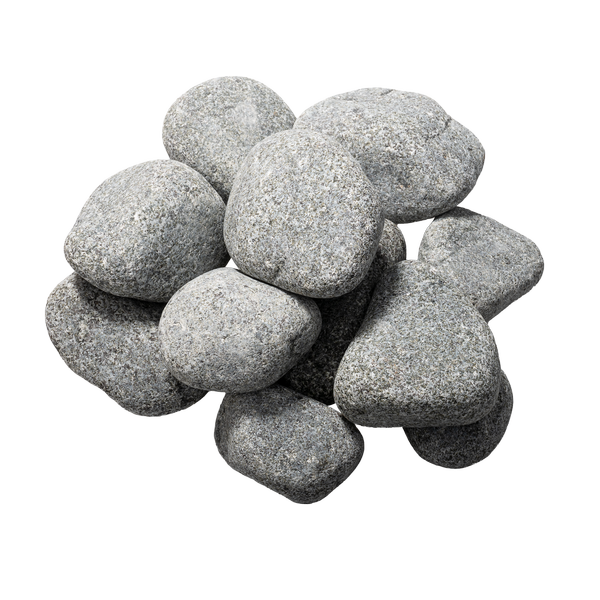
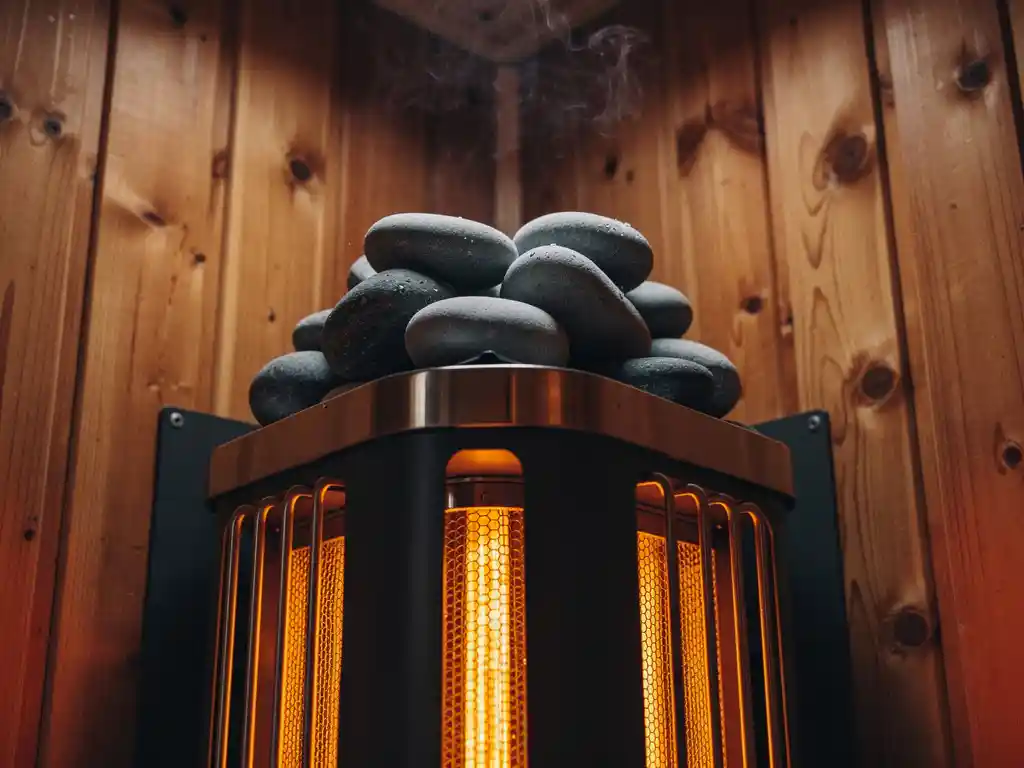
An electric sauna heater is a resistance-based heating unit that uses electrical heating elements to warm a bed of sauna stones. Those stones absorb and store heat, and when water is ladled over them, they produce steam. The heater maintains a target temperature inside the sauna room—typically between 70°C and 100°C—through a thermostat or smart control system.
The heating elements are usually made from corrosion-resistant steel because they are exposed to repeated cycles of heat and moisture. The stones sit in a basket above or around the elements and act as a thermal buffer, smoothing out temperature spikes and storing enough energy to produce consistent steam throughout a session. The larger the stone capacity, the more heat the basket can hold and the richer the steam experience.
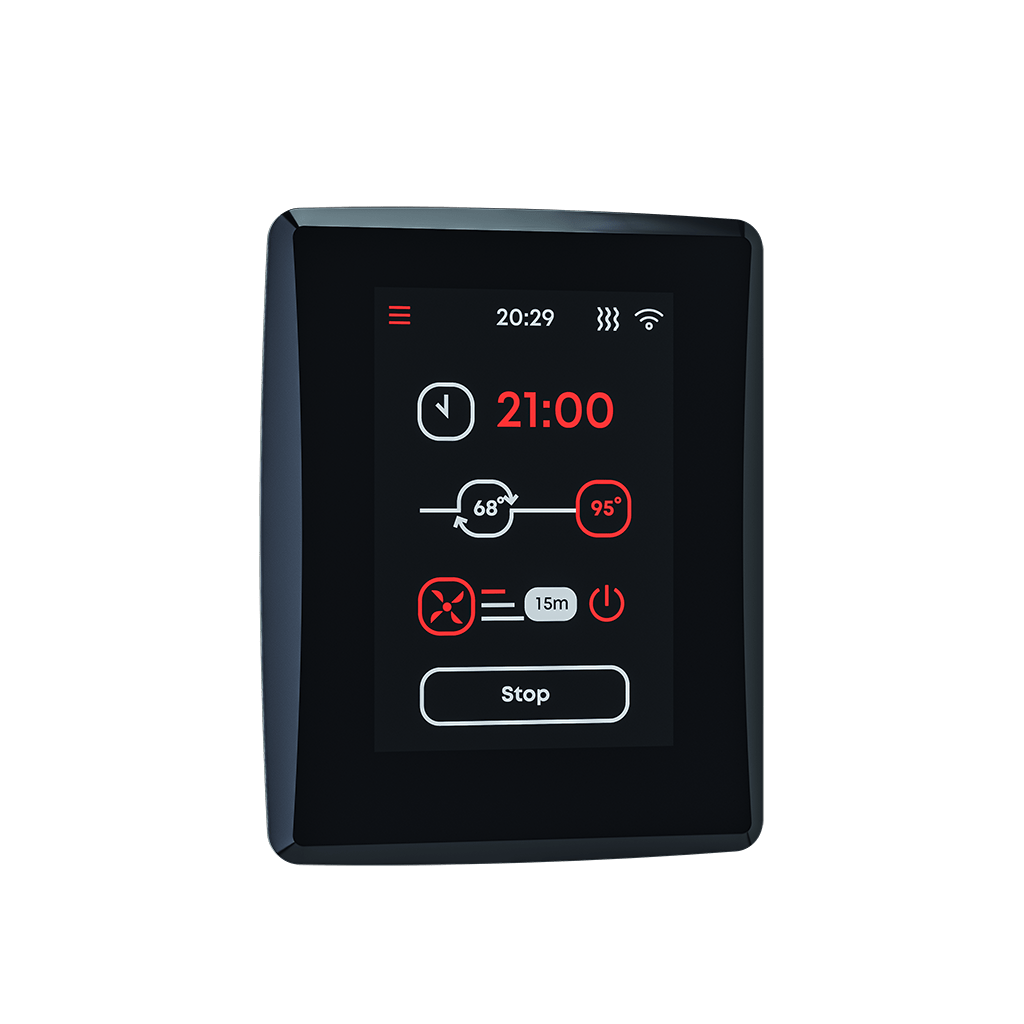
Modern electric heaters go well beyond simple on-off operation. Smart control units allow you to schedule sessions, monitor temperature remotely, and even automate water dispensing onto the stones. Some units integrate a climate device directly into the heater body, actively circulating air throughout the sauna room rather than relying on passive convection alone.
What size electric heater does a home sauna need?
The correct heater size for a home sauna is determined primarily by the volume of the sauna room in cubic metres. As a general rule, you need roughly 1 kW of heating power per cubic metre of sauna room volume, adjusted upward for non-insulated surfaces such as glass doors, concrete walls, or floor tiles.
Matching power to room volume
For a well-insulated home sauna, the sizing relationship is straightforward. Our Experience heater, for example, covers the following ranges:
- 3.6 kW for rooms up to 2.5 m³
- 4.5 kW for rooms up to 3.6 m³
- 6 kW for rooms up to 5.9 m³
- 9 kW for rooms up to 7–10 m³
For larger sauna rooms, higher-capacity units are needed. Our Luxury heater and full product range starts at 13.2 kW and handles rooms from 14 to 18 m³, scaling up to 19.8 kW for spaces of 22–28 m³.
Accounting for non-insulated surfaces
Non-insulated surfaces lose heat much faster than insulated timber walls, which means your heater has to work harder. For every square metre of uninsulated surface (glass, concrete, brick, or tile), add 1.0 m³ to the effective room volume before selecting your heater power. So, a 10 m³ sauna with a glass door and a glass panel should be treated as a 12 m³ room for sizing purposes. Getting this calculation right protects you from buying a heater that is underpowered for your actual conditions.
What’s the difference between wall-mounted and floor-standing sauna heaters?
Wall-mounted sauna heaters attach to the wall at a fixed height and are typically more compact, making them well suited to smaller home saunas where floor space is limited. Floor-standing heaters sit directly on the floor and generally accommodate a larger stone basket, which means more heat storage, richer steam, and faster recovery time between ladles of water.
For most indoor home saunas, a floor-standing combined heater and climate unit is the more practical choice because it integrates all the technology in one footprint. Wall-mounted units can work well in very compact rooms, but they often have smaller stone capacities, which limits steam quality. If you are building a home spa rather than a basic sweat room, the additional stone mass of a floor-standing unit makes a noticeable difference to the bathing experience.
Corner installation is another factor worth considering. Some floor-standing models, including our Luxury heater, can be installed either against a wall or in a corner, which gives you more flexibility when planning your sauna layout. Always check the required safety clearances for the specific model before finalising your floor plan.
Why does a home sauna have extreme temperature differences from floor to ceiling?
Temperature stratification in a sauna happens because hot air and steam naturally rise to the ceiling while cooler, denser air stays near the floor. In a conventional sauna, this can create a difference of 50°C or more between the ceiling zone and the floor, leaving bathers uncomfortable and making the steam feel harsh and short-lived rather than soft and enveloping.
The physics behind this are straightforward: hot steam produced when water hits the stones rises immediately due to its lower density. Without any mechanism to redistribute it, that steam accumulates near the ceiling, where it becomes uncomfortably intense, while the lower half of the room stays significantly cooler. Bathers sitting on the bench experience the worst of both worlds: hot, dry air above and cooler air below.
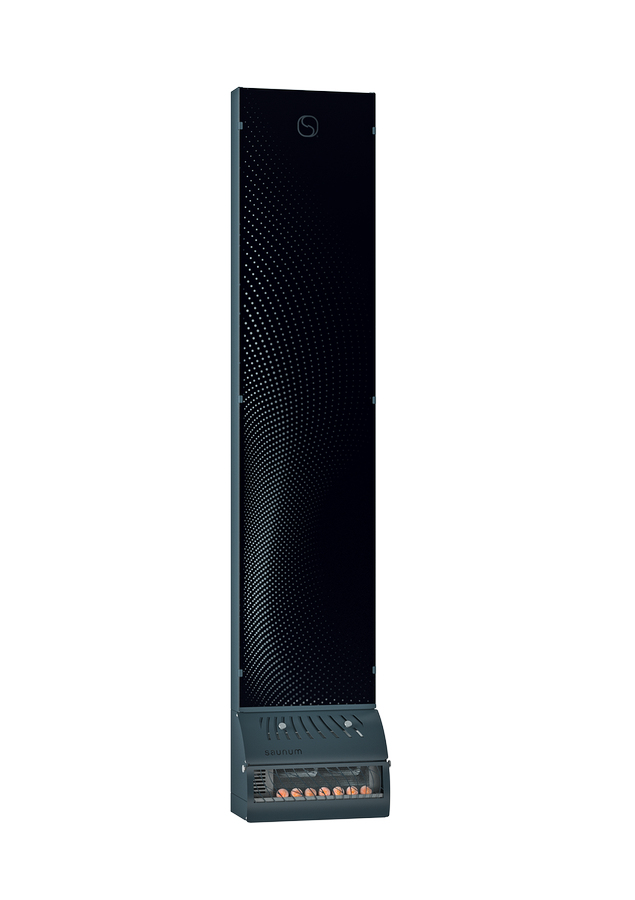
This is the core problem that Saunum’s patented air-blending system was designed to solve. By capturing the hot steam near the ceiling and mechanically mixing it with the cooler, oxygen-rich air near the floor, the system equalises temperature and steam distribution throughout the entire room. The result is softer, longer-lasting steam, more even warmth from floor to ceiling, and air that is genuinely easier to breathe because it retains more oxygen. To learn more about how this works, visit our patented sauna air-blending technology page. Bathers can ladle water more frequently without the usual discomfort, which leads to more intense sweating and a more satisfying session overall.
What features should you look for in a home sauna heater?
The most important features in a home sauna heater are appropriate power output for your room volume, a generous stone capacity for good steam quality, durable corrosion-resistant heating elements, and a reliable control system. Beyond these fundamentals, integrated climate technology and smart controls can significantly improve the bathing experience.
Build quality and materials
Heating elements should be made from corrosion-resistant steel, such as AISI 316, because they are exposed to repeated thermal cycling and moisture. The heater body should use materials that resist rust and warping over years of use. Magnelis and stainless-steel construction, as used in our Spa Session heater, are good indicators of long-term durability.
Smart controls and automation
A smart control unit transforms a home sauna from a manual appliance into a scheduled, app-connected wellness space. Features worth looking for include mobile app control, session scheduling, automatic water dispensing, and smart home integration via protocols such as Modbus. These are not luxury extras for a home sauna; they are practical tools that make regular use far more convenient.
Integrated air circulation
A heater with an integrated air-blending system eliminates the temperature stratification problem described above. Rather than relying on passive convection, the unit actively distributes heat and steam evenly throughout the room. This is especially valuable in an indoor home sauna, where the room dimensions may limit natural airflow.
How do you install an electric sauna heater safely?
Safe electric sauna heater installation requires the correct electrical supply, proper safety clearances around the unit, and compliance with the manufacturer’s wiring specifications. All electrical work should be carried out by a qualified electrician, as sauna heaters draw significant current and operate in a wet, high-temperature environment.
Before installation, confirm the following for your specific heater model:
- Supply voltage and phase requirements (most units require 230 V, single- or three-phase)
- Correct cable specification for the heater and any separate climate-device cable
- Fuse rating matching the heater’s power draw
- Minimum ceiling height, which affects both the safety clearance above the stones and the heater’s adjustable height range
Safety clearances around the heater are non-negotiable. For example, the Experience model requires a minimum of 150 mm clearance on the sides and front (200 mm and 250 mm, respectively, for the 9 kW variant), and at least 1,035 mm from the top of the stones to the ceiling. The Spa Session requires 80 mm on all sides and 800 mm from the stones to the ceiling. Always follow the clearances specified for your exact model and power rating.
Non-combustible wall surfaces are required adjacent to higher-capacity heaters. If your sauna walls are timber, ensure they are properly thermally insulated where they face the heater. Once installed, never place objects in front of the climate device or heater, and always follow the manufacturer’s guidance for the first heat-up cycle to cure the stones and settle the unit.
How Saunum helps with electric sauna heaters for your home
Saunum offers a complete range of electric sauna heaters designed specifically to solve the problems that frustrate home sauna builders most: uneven temperature, harsh steam, and complicated installation. Every heater in our lineup integrates the patented air-blending system, which means you get consistent warmth and soft, breathable steam from the moment you start your first session.
Here is how we make the process straightforward for DIY builders and contractors:
- Right-sized options for every room: From the compact Experience, starting at 3.6 kW for small apartment saunas, to the Luxury, at up to 19.8 kW for large home spa rooms, there is a model matched to your exact cubic metreage.
- All-in-one design: Combined heater and climate device units mean fewer components to source, fewer cables to run, and a cleaner finished installation.
- Smart control included: Saunum heaters come with the Leil control system, offering mobile app scheduling, AutoLeil automatic water dispensing, and Modbus smart home integration.
- Himalayan salt spheres included: Every combined unit ships with Himalayan salt spheres for immediate salt-ion enrichment without additional accessories.
If you already have an existing heater you are happy with, the Saunum Base climate device can be added as a retrofit to bring the same air-blending benefits to your current setup. If you are starting from scratch, Saunum’s product range, detailed technical specifications, and US-based support team are available to help you select and install the right heater with confidence. Visit saunum.com to explore the full lineup and find the right heater for your home sauna.