





Building an indoor sauna is one of the most rewarding home improvement projects you can take on, but getting the materials right from the start makes the difference between a sauna that performs beautifully for decades and one that warps, cracks, or fails to hold heat. Whether you are planning a compact home sauna or a full spa-style steam room, every material decision—from the walls to the floor—affects how comfortable, safe, and durable the finished space will be.
This guide walks through the most common questions DIY builders and contractors ask when sourcing materials for an indoor sauna. You will find direct, practical answers to each question, along with the reasoning behind each recommendation, so you can make confident choices for your specific build.
What type of wood is best for sauna walls and benches?
The best woods for sauna walls and benches are softwoods with low resin content, tight grain, and good heat resistance. Nordic spruce, clear western red cedar, and thermally modified aspen are among the most widely used options. These species stay cool to the touch even at high temperatures, resist moisture damage, and do not splinter or crack under repeated heating cycles.
Wall paneling and ceiling wood
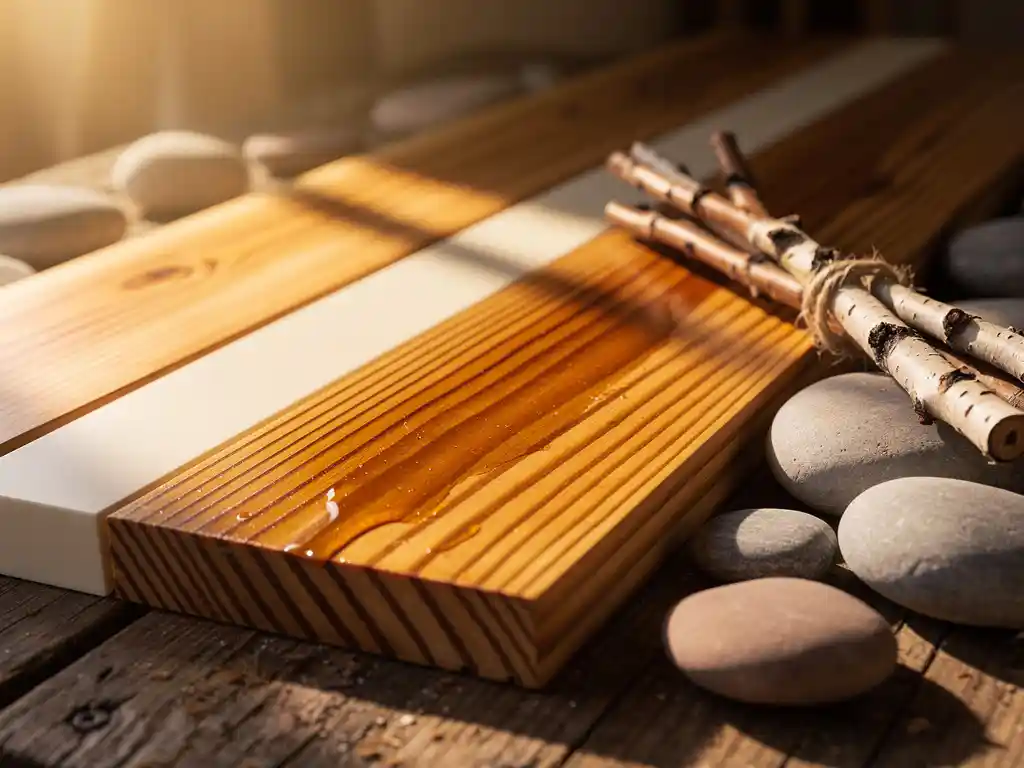
For interior wall and ceiling paneling, Nordic spruce and Finnish aspen are strong choices. Spruce is affordable, widely available, and has a clean, light appearance that suits the classic Nordic sauna aesthetic and tradition. Aspen is naturally low in resins and tannins, which means it will not produce sticky or discolored spots when it heats up. Cedar is also popular, particularly in North American markets, because its natural oils give it excellent moisture resistance and a pleasant aroma.
Avoid any wood that has been treated, stained, or painted. Coatings can release fumes at sauna temperatures, and the heat will cause them to peel quickly. The wood should be kiln-dried to reduce moisture content before installation, which minimizes shrinkage and warping once the sauna is in use.
Bench wood
Benches require even more careful selection because they are in direct contact with skin. Abachi, also known as African whitewood, has become a popular bench material because it is virtually resin-free, very light, and stays comfortable even at high temperatures. Thermally modified aspen and clear cedar are also excellent bench materials. The key requirement is that the wood conducts heat slowly so that sitting on it remains comfortable throughout a long session.
What insulation and vapor barrier materials does a sauna need?
A sauna needs mineral wool or rock wool insulation in the walls, ceiling, and floor cavity, combined with a continuous aluminum foil vapor barrier on the hot side of the insulation. The vapor barrier prevents moisture from penetrating the wall structure, while the insulation retains heat efficiently and reduces the energy needed to bring the room up to temperature.
The vapor barrier should be installed on the interior face of the insulation, between the insulation and the wood paneling. All seams must be overlapped and sealed with aluminum foil tape to create a continuous, moisture-proof layer. Any gaps or unsealed joints allow steam to reach the structural framing, which can lead to mold, rot, and eventual structural failure. This step is one of the most critical in the entire build, and it is worth taking extra time to do it properly.
For insulation thickness, a minimum of 100 mm in the walls and 150 mm in the ceiling is a common starting point for domestic indoor saunas. The ceiling receives the most intense heat and steam, so thicker insulation there reduces heat loss significantly. If any walls are exterior-facing or uninsulated concrete, the room’s effective thermal volume increases, which also affects heater-sizing calculations.
What flooring materials work best inside a sauna?
The best flooring materials for an indoor sauna are non-slip ceramic or porcelain tile, natural stone, and concrete. These materials are durable, easy to clean, and unaffected by moisture and heat. Wood is not recommended for sauna floors because it absorbs water, becomes slippery, and is difficult to keep hygienic over time.
Tile is the most practical choice for most builders. Choose a tile with a matte or textured surface rated for wet areas to prevent slipping. Natural stone such as slate or granite is also highly durable and adds a premium look, though it requires sealing to prevent staining. Concrete floors work well in custom builds and can be sealed with an appropriate waterproof coating.
Whatever hard flooring you choose, wooden duckboards or slatted floor mats placed on top of the tile are a practical addition. They provide a warmer, more comfortable surface underfoot, and they can be removed and cleaned easily between sessions. This combination of a hard, waterproof base with removable wooden slats gives you the best of both worlds in terms of hygiene and comfort.
How does the sauna heater affect material choices?
The sauna heater directly determines the required safety distances between the unit and surrounding materials, the non-combustibility requirements for adjacent walls, and the overall insulation standard needed to reach and hold operating temperature efficiently. Every material decision in the zone around the heater must comply with the manufacturer’s specified clearances.
Safety distances and non-combustible zones
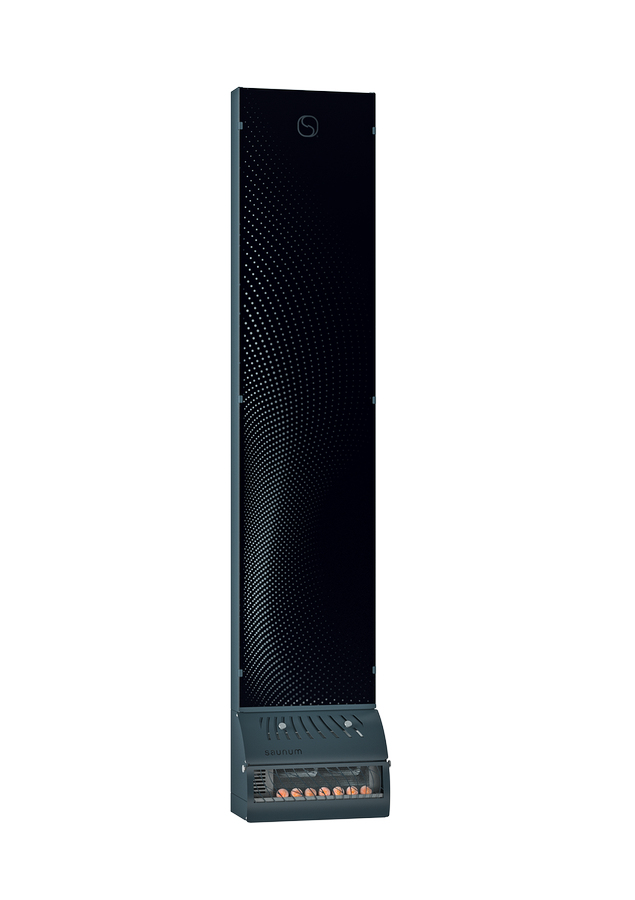
Most electric sauna heaters require a minimum clearance on all sides, and the materials within that zone must be non-combustible or thermally protected. For example, the Saunum Luxury, which is designed for larger sauna rooms, requires non-combustible walls on the sides of the heater, and the surrounding structure must also be non-combustible or fully thermally insulated. This means that if your wall framing is timber, you need to line the area immediately around the heater with cement board, tile, or another non-combustible material before installing the wood paneling.
Heater power and insulation standards
A well-insulated sauna room requires less heater power to reach operating temperature, which reduces running costs and extends the life of the heating elements. If your build includes uninsulated surfaces such as glass panels, concrete walls, or a glass door, the room’s effective thermal volume increases. Heater-sizing formulas account for this by adding extra volume per square meter of uninsulated surface, so the better your insulation, the smaller and more efficient the heater you need.
Choosing a heater with an integrated air-blending system and patented technology also changes how you think about ceiling height and room proportions. Because air-blending technology actively circulates heat from ceiling to floor, the temperature gradient in the room is much more even, which means materials at bench level are exposed to more consistent conditions rather than the dramatic swings common in conventional saunas.
What materials should you avoid when building an indoor sauna?
Avoid any materials that off-gas at high temperatures, absorb moisture without drying out, or conduct heat rapidly enough to cause burns. This includes resinous softwoods like pine, pressure-treated lumber, OSB or plywood panels, standard drywall, vinyl flooring, and any painted or varnished surfaces inside the steam room.
- Resinous woods such as pine and spruce with high resin content can ooze sticky sap at sauna temperatures, leaving dark stains and an unpleasant smell.
- OSB, plywood, and standard drywall absorb moisture and deteriorate rapidly in the humid sauna environment, even behind a vapor barrier.
- Vinyl and laminate flooring can emit fumes when heated and do not tolerate the moisture levels present in a functioning sauna.
- Metal surfaces, including exposed fasteners and brackets, heat up quickly and can cause burns on contact, so all hardware inside the steam room should be recessed or covered.
Standard household insulation materials such as fiberglass batts can work in some applications, but they must be fully encapsulated behind the vapor barrier and should never be exposed to the interior of the sauna. Rock wool or mineral wool is generally preferred because it handles moisture better and maintains its insulating properties even if some vapor does penetrate the barrier over time.
How Saunum helps with electric sauna heaters
Choosing the right electric sauna heater is one of the most consequential decisions in any indoor sauna build. The heater determines how quickly the room reaches temperature, how evenly heat is distributed, and how comfortable the steam experience actually feels. Saunum designs electric sauna heaters specifically to solve the problems that conventional electric heaters leave unresolved, particularly the steep temperature difference between the ceiling and the floor that makes traditional saunas uncomfortable and hard to breathe in.
Our patented air-blending system captures the scorching steam that accumulates near the ceiling, mixes it with the cooler, oxygen-rich air near the floor, and redistributes it evenly throughout the room. This directly affects material performance as well, because consistent temperatures reduce the stress on wood, insulation, and other materials caused by repeated extreme thermal cycles. Here is what Saunum brings to an indoor sauna build:
- A full product range, from the compact Experience for home apartments to the high-capacity Luxury for large private or public spa rooms, with clear power and volume-sizing guidelines to match your specific room dimensions.
- Integrated Himalayan salt spheres and a 5-in-1 spa mode system that lets you switch between a classic Nordic sauna, a steam-rich sauna, relaxing low-temperature sessions, salt-ion therapy, and an aroma sauna without additional equipment.
- The Saunum Base, a standalone climate device that adds the air-blending system to any existing heater, making it a practical upgrade option if you are retrofitting an existing sauna room rather than building from scratch.
If you are planning an indoor sauna build and want to make sure your heater choice matches your room volume, wall insulation standard, and ceiling height, Saunum provides detailed technical specifications and sizing guidance for every product in the lineup. Contact us to discuss your sauna project and find the right solution for your build.
If you’re interested in getting started with Sauna, check out our full range today.