

Ventilation is one of the most overlooked aspects of sauna design, yet it directly shapes every session. Whether you are building a private home sauna or outfitting a commercial facility, getting the airflow right determines how comfortable, safe, and effective the experience actually is. Understanding the difference between a sauna ventilation system designed for home use and one built for commercial demands can save you from costly mistakes and unhappy users.
The question of whether a commercial sauna needs a different ventilation approach than a home sauna comes up constantly among contractors, builders, and facility managers. The short answer is yes, and the reasons go well beyond simply scaling things up. Let’s work through the key questions so you can make informed decisions for any sauna project.
Why does sauna ventilation matter in the first place?
Sauna ventilation matters because it controls three critical variables simultaneously: oxygen levels, temperature distribution, and humidity. Without adequate airflow, a sauna can accumulate stale, oxygen-depleted air near the floor while scorching steam builds up near the ceiling. The result is a session that feels suffocating rather than restorative, and in extreme cases, it can become a safety concern.
In a traditional sauna without mechanical air circulation, heat stratification is a persistent problem. The air near the ceiling can reach dangerously high temperatures while the lower zone stays noticeably cooler. Users sitting at bench level experience a very different environment than the readings on a wall thermometer suggest. Good ventilation helps equalize conditions by moving air through the room in a controlled, continuous pattern.
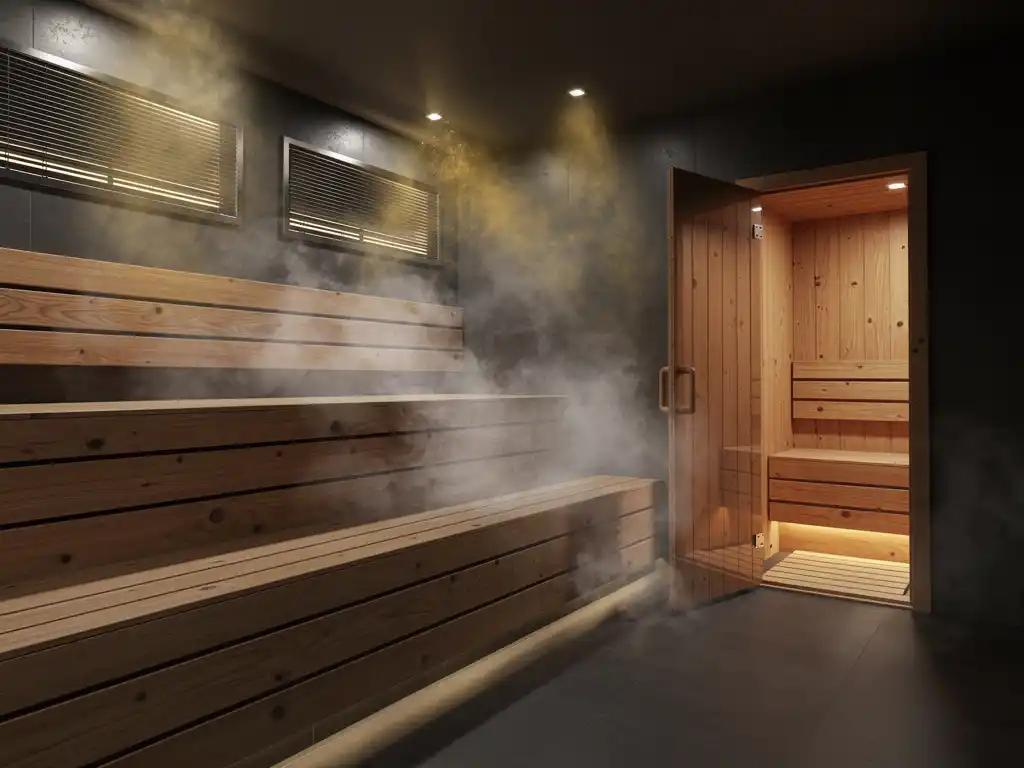
Ventilation also plays a direct role in steam quality. When hot steam rises and sits stagnant near the ceiling, it dissipates quickly and creates a brief, harsh burst of heat when you ladle water onto the stones. A well-designed sauna indoor climate device captures that rising steam and redistributes it gently throughout the room, producing softer, longer-lasting steam that is genuinely more enjoyable to breathe.
What’s the difference between commercial and home sauna ventilation?
The core difference between commercial and home sauna ventilation is scale, duty cycle, and regulatory obligations. A home sauna runs for a few hours at a time with a small, consistent group of users. A commercial sauna operates for extended periods—often continuously throughout a business day—with a rotating stream of users whose activity levels and body heat add significant load to the environment.
Duty cycle and recovery time
Home sauna heaters and ventilation systems are designed around intermittent use. They heat up, run a session, and then cool down. Commercial systems must maintain stable conditions across back-to-back sessions without meaningful recovery time. This demands heaters with higher power output and climate devices built for sustained operation rather than occasional use. Exploring the right sauna technology for your specific load requirements is a worthwhile first step before committing to any configuration.
User volume and air quality
More users means more carbon dioxide, more perspiration, and greater demand on the fresh-air supply. Commercial sauna ventilation must introduce fresh air at a rate that keeps oxygen levels comfortable even when the room is at full capacity. Home systems can often rely on simpler passive intake and exhaust arrangements because the occupancy load is predictable and low.
Building codes and health regulations add another layer of complexity to commercial installations. Many jurisdictions require mechanical ventilation with measurable air-exchange rates for public facilities, while home saunas typically fall under less stringent residential building standards.
What ventilation requirements do commercial saunas need to meet?
Commercial saunas generally need to meet requirements covering fresh-air intake rates, exhaust capacity, and, in many regions, specific air changes per hour as defined by local health and building codes. The exact figures vary by country and facility type, but the underlying principle is consistent: fresh air must enter the sauna room, circulate through the occupied zone, and exit efficiently without creating cold drafts or pressure imbalances.
A well-designed commercial sauna ventilation system typically addresses the following points:
- Fresh-air intake positioned low, near the heater, so incoming air warms before reaching occupants
- Exhaust positioned low on the opposite wall to draw air through the entire room rather than short-circuiting near the ceiling
- Mechanical support to ensure consistent airflow regardless of outdoor temperature or pressure differences
- Integration with the heating system so ventilation adjustments do not destabilize room temperature
Beyond regulatory compliance, commercial operators have a practical obligation to their customers. A poorly ventilated public sauna feels stuffy, smells stale, and drives people away. Investing in a proper ventilation setup is as much a business decision as a technical one.
How does poor ventilation affect sauna temperature and air quality?
Poor ventilation in a sauna leads directly to temperature stratification, reduced oxygen availability, and accelerated buildup of humidity and odors. The temperature gap between floor and ceiling can be dramatic in an unventilated room, with the upper zone becoming uncomfortably or dangerously hot while benches at lower levels stay well below the intended session temperature.
Oxygen depletion is a less visible but equally important consequence. As users breathe and perspire, oxygen levels in a sealed, poorly ventilated room drop gradually. This is why some sauna sessions leave people feeling drained or headachy rather than refreshed. The sensation is often blamed on the heat, but inadequate fresh-air circulation is frequently the real culprit.
In commercial settings, poor air quality compounds quickly. A high-traffic sauna that lacks sufficient fresh-air exchange will develop persistent odors and elevated humidity levels that no amount of cleaning fully resolves. This affects the perceived quality of the facility and can create hygiene concerns that are difficult to address without fixing the underlying ventilation system.
How does air-circulation technology solve common sauna ventilation problems?
Air-blending system sauna technology solves the core problem of temperature stratification by actively capturing hot steam near the ceiling and mixing it with cooler, oxygen-rich air near the floor before redistributing it evenly throughout the room. This mechanical blending eliminates the dramatic temperature gap between upper and lower zones without requiring additional fresh-air intake beyond standard levels.
The practical effect is significant. When the air throughout the sauna is at a consistent temperature, users at bench level experience the session as intended rather than sitting in a noticeably cooler zone. Steam quality improves because the distributed air carries moisture evenly rather than concentrating it in a hot, stagnant layer near the ceiling. Users can ladle water more frequently, producing richer steam, and breathe more comfortably because the circulating air retains more oxygen.
How this differs from conventional ventilation
Standard ventilation systems move air into and out of the sauna room. An air-blending or climate device works within the room itself, continuously recirculating and equalizing the existing air. The two systems complement each other rather than compete. Good fresh-air intake handles oxygen supply and humidity control, while the internal circulation device handles temperature distribution and steam quality. Together, they produce a noticeably superior environment compared to either system working alone.
What should you look for in a sauna heater for commercial use?
For commercial use, prioritize a sauna heater with sufficient power for your room volume, a duty cycle rated for continuous or near-continuous operation, robust electrical specifications, and an integrated or compatible climate device. A heater that performs well in a home sauna may not sustain the same quality across a full commercial operating day without overworking its components. Browsing the full range of available sauna heaters and climate devices can help you identify which specifications align with your facility’s demands.
Power sizing is particularly important. Commercial sauna rooms often feature glass panels, non-insulated walls, or architectural features that increase the effective thermal volume of the space. Always account for these factors when calculating the required kilowatt rating rather than relying on raw room dimensions alone. A heater that is undersized for the actual thermal load will struggle to maintain temperature during peak hours.
Smart control capability is another practical consideration for commercial operators. The ability to schedule heating cycles, monitor performance remotely, and integrate with building management systems reduces operating costs and simplifies day-to-day management. For facilities running multiple sauna rooms, centralized control is a genuine operational advantage.
How Saunum helps with commercial sauna ventilation and air quality
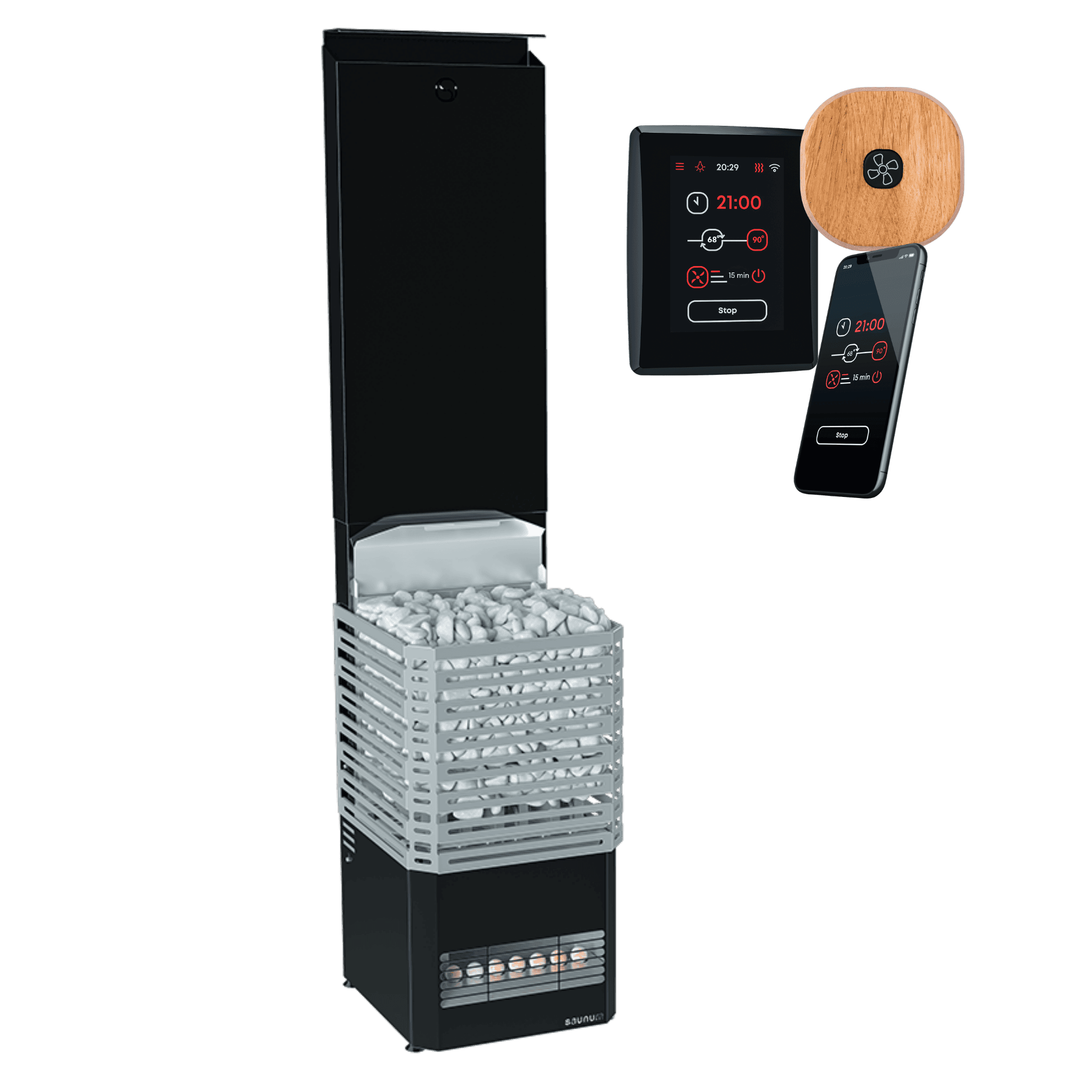
Saunum addresses the ventilation and air-quality challenges of both home and commercial saunas through our patented air-blending technology, which is built into every heater and climate device we produce. Rather than relying solely on fresh-air exchange, our systems actively blend the sauna’s internal air to eliminate temperature stratification and deliver consistently soft, breathable steam throughout the entire session.
For commercial environments specifically, our lineup offers concrete solutions at every scale:
- The Saunum Pro Experience is purpose-built for boutique public saunas, available in 9, 12, and 15 kW configurations and rated for intensive use in environments with a three-phase electrical supply
- The Saunum Luxury handles larger spa facilities with power options from 13.2 to 19.8 kW, a 120 kg stone capacity for extended heat retention, and flexible corner or wall installation
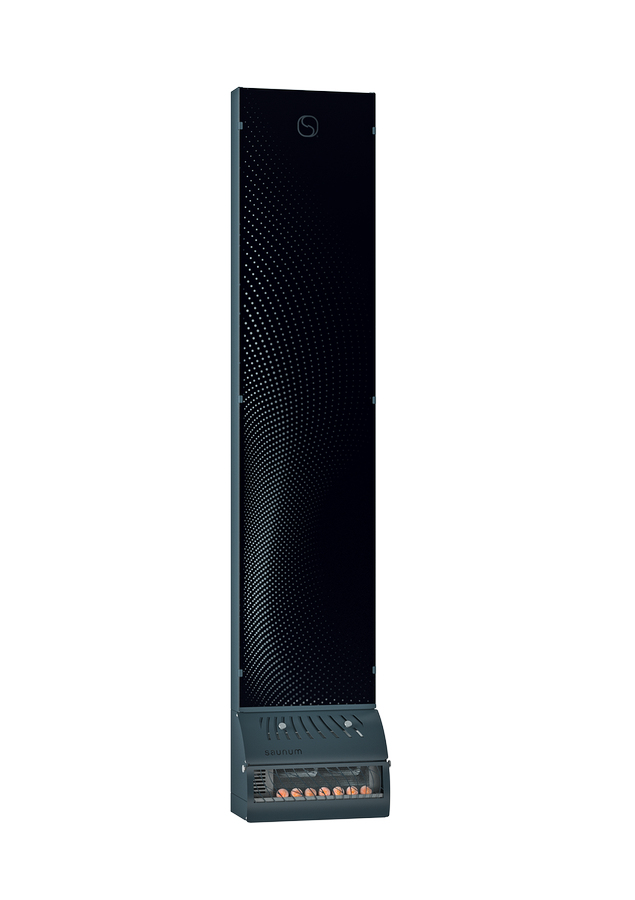
- The Saunum Base add-on climate device can retrofit any existing commercial heater with our air-blending technology without requiring a full heater replacement
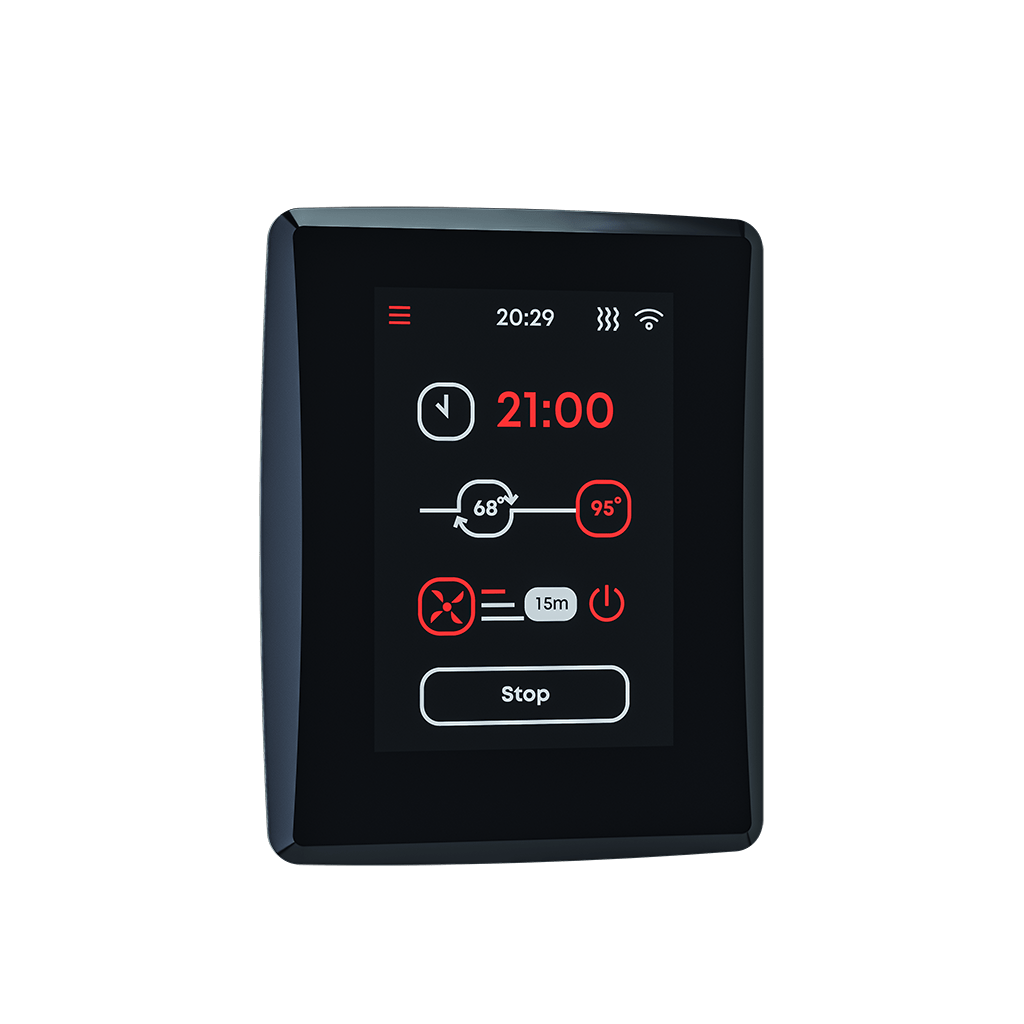
- The Saunum Leil smart control unit supports scheduling, remote monitoring, and Modbus integration for facilities that need centralized sauna management
Every Saunum product also supports our 5-in-1 spa solution, giving commercial operators the flexibility to offer a classic Nordic sauna, humid steam sessions, relaxing low-temperature sessions, salt-ion therapy, and an aroma sauna from a single unit. This versatility is a genuine differentiator for facilities looking to serve a broad range of guest preferences without investing in multiple separate installations.
If you are planning a commercial sauna project or upgrading an existing facility, Saunum offers professional installation services that cover transport, electrical connections, stone laying, and hands-on usage guidance. Reach out via our contact us page to discuss your project requirements and find the right configuration for your space, or visit Saunum to learn more about the full range of products and solutions available.