




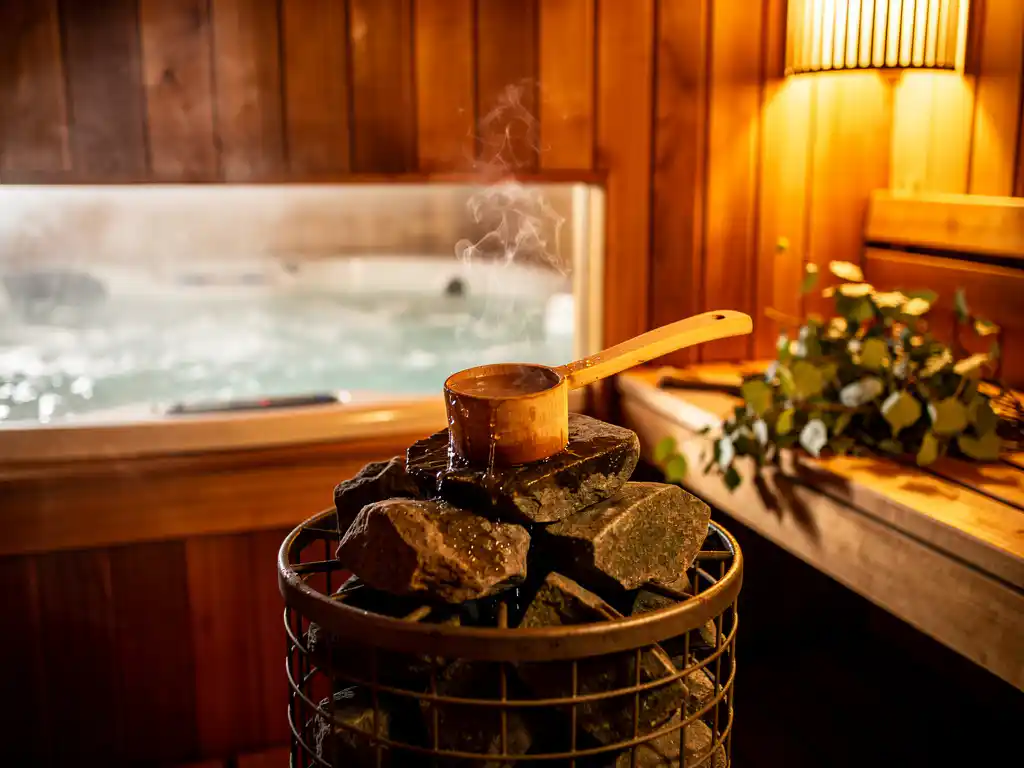
Both saunas and hot tubs offer effective relaxation through heat therapy, but they work differently on your body. Saunas use dry heat (typically 70–90°C with low humidity) that promotes deep sweating and stress relief, while hot tubs provide wet heat (around 38–40°C with high humidity) that soothes muscles through buoyancy and warmth. Your choice depends on whether you prefer intense heat for detoxification or gentle warmth for muscle recovery.
What’s the actual difference between sauna and hot tub relaxation?
Saunas and hot tubs create completely different thermal environments that affect your body in unique ways:
- Heat delivery method: Saunas deliver dry heat at temperatures between 70–90°C with humidity levels below 20%, while hot tubs provide wet heat at 38–40°C with nearly 100% humidity
- Physiological response: The dry heat in saunas triggers rapid perspiration and increases heart rate similarly to moderate exercise, while hot tubs create gentle circulation improvement through warm water immersion
- Toxin release mechanism: Saunas promote detoxification through intense sweating and reduced cortisol levels, whereas hot tubs focus on muscle relaxation through sustained heat penetration
- Endorphin production: Sauna heat stimulates significant endorphin release creating post-session euphoria, while hot tubs provide steady, gentle mood enhancement through prolonged comfort
- Joint and muscle impact: Hot tubs reduce pressure on joints through buoyancy and hydrostatic pressure, while saunas work primarily through heat-induced circulation changes
These fundamental differences mean that saunas excel at creating dramatic physiological responses and deep mental relaxation, while hot tubs specialize in gentle, sustained physical comfort and muscle recovery. Understanding these distinctions helps you choose the thermal therapy that best matches your wellness goals and heat tolerance preferences.
Which type of heat therapy works better for muscle recovery and stress relief?
The effectiveness of each therapy depends on your specific recovery and relaxation needs:
- Muscle penetration: Hot tubs provide superior muscle recovery because warm water penetrates tissues more effectively than dry air, delivering consistent heat directly to sore areas
- Joint decompression: The buoyancy in hot tubs reduces gravitational stress on recovering tissues, making them particularly effective after intense physical activity or for arthritis relief
- Mental stress relief: Saunas excel at psychological relaxation through intense heat that creates a meditative environment and triggers significant endorphin release
- Sleep quality improvement: Sauna sessions promote better sleep through the dramatic temperature drop your body experiences afterwards, helping regulate circadian rhythms
- Circulation enhancement: Saunas increase heart rate and dilate blood vessels throughout your entire body, while hot tubs provide targeted circulation improvement with hydrostatic pressure benefits
- Inflammation reduction: Hot tubs help reduce swelling through water pressure and sustained heat, while saunas address inflammation through improved overall circulation
Your personality and stress relief preferences often determine which therapy feels more effective. Those who enjoy intense, purifying experiences typically find saunas more satisfying for mental clarity, while people preferring gentle, nurturing relaxation usually respond better to hot tubs for both physical and emotional comfort.
How long should you spend in a sauna versus a hot tub for maximum relaxation?
Optimal session lengths vary significantly between these heat therapies due to temperature differences:
- Sauna duration for beginners: Start with 15–20 minute sessions to build heat tolerance safely, as the intense dry heat requires gradual adaptation
- Advanced sauna sessions: Experienced users can extend to 20–30 minutes, but should exit immediately if experiencing dizziness or discomfort
- Hot tub session length: 20–30 minutes works well for most people, with some comfortably enjoying 45–60 minute sessions depending on water temperature
- Frequency recommendations: Saunas benefit from 2–3 sessions per week with rest days between, while hot tubs can be used daily for most people
- Hydration requirements: Both therapies require drinking water before, during, and after sessions, with alcohol avoided due to impaired temperature regulation
- Safety monitoring: Listen to your body’s signals rather than following rigid time guidelines, starting shorter and gradually increasing duration
These timing guidelines ensure you receive maximum therapeutic benefits while avoiding heat-related complications. People with cardiovascular conditions should consult healthcare providers before establishing regular heat therapy routines, regardless of the duration or frequency planned.
What are the practical considerations when choosing between a sauna and hot tub?
Several practical factors significantly impact the feasibility and long-term satisfaction with your choice:
- Installation requirements: Saunas need proper ventilation, electrical connections, and moisture-resistant materials, while hot tubs require structural support, plumbing, and often concrete foundations
- Ongoing maintenance demands: Hot tubs require regular water testing, chemical balancing, and quarterly draining, whereas saunas need minimal maintenance beyond occasional cleaning
- Energy consumption patterns: Saunas favor occasional use with quick heating and no constant temperature maintenance, while hot tubs consume more electricity through continuous heating and filtration
- Space and placement flexibility: Saunas fit into smaller areas and work well indoors, while hot tubs need adequate clearance and often require outdoor placement or specially designed indoor spaces
- Climate considerations: Hot tubs perform consistently regardless of weather, while outdoor sauna use may be affected by extreme temperatures or humidity
- Long-term investment value: Both can add property value when properly installed, but consider your realistic usage frequency and local real estate preferences
These practical considerations often prove more decisive than therapeutic preferences when making your final choice. Evaluate your available space, budget for ongoing costs, and honestly assess your commitment to regular maintenance before investing in either option.
Whether you choose sauna or hot tub relaxation ultimately depends on your personal preferences, space constraints, and wellness goals. Both offer proven relaxation and therapeutic value through different approaches to heat therapy. At Saunum, we understand that the right thermal therapy choice transforms your daily wellness routine, which is why our advanced electric heaters create the perfect sauna environment for consistent, comfortable relaxation sessions.
If you’re interested in getting started with Sauna, check out our full range today.