
Building or upgrading a home sauna is one of the most rewarding investments you can make in your living space. Whether you are drawn to the deep relaxation of a classic Nordic session or the therapeutic benefits of steam and salt-ion therapy, understanding how a home sauna works gives you the confidence to choose, install, and enjoy it properly. This guide answers the most common questions about indoor saunas, from the basics through to getting the best possible experience from every session.
If you are a DIY builder, a contractor, or simply someone planning your first home sauna, the information here covers everything from heater sizing to climate-control technology, with practical guidance grounded in real sauna engineering principles.
What is a home sauna and what types are available?
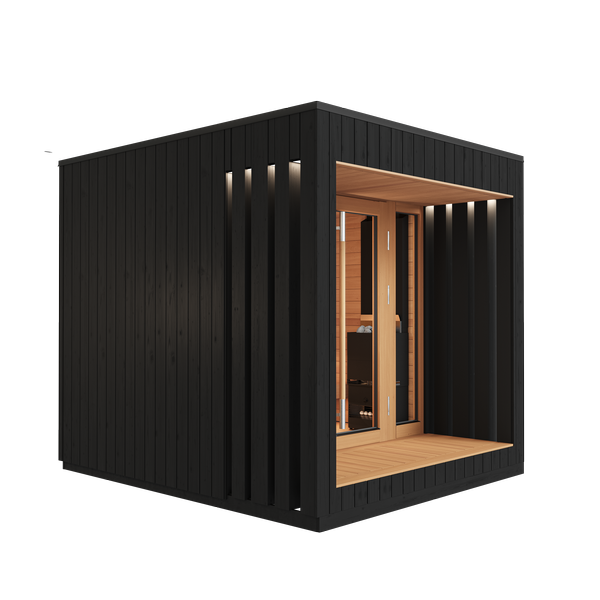
A home sauna is a private, insulated room or enclosure designed to produce dry or moist heat for bathing, relaxation, and health benefits. Home saunas range from compact indoor cabins installed in a bathroom or basement to purpose-built rooms with full electrical infrastructure. The most common types are the traditional Finnish dry sauna, the steam room, and the increasingly popular hybrid sauna that combines both experiences.
Understanding the differences between sauna types helps you match the right setup to your space, budget, and wellness goals. Here is a quick breakdown of the main options available to home sauna builders today:
- Classic Nordic dry sauna: Operates at 60 to 100°C with low humidity, using an electric or wood-burning heater with stones onto which water is ladled to produce brief bursts of steam.
- Steam room (wet sauna): Runs at lower temperatures, typically 45 to 60°C, with much higher humidity generated by continuous steam production.
- Infrared sauna: Uses infrared panels to heat the body directly rather than the surrounding air, operating at lower ambient temperatures.
- Hybrid or 5-in-1 sauna: Combines multiple modes in a single unit, allowing users to switch between classic Nordic, humid steam, relaxation, salt-ion, and aroma experiences.
For most home builders, an electric sauna heater with an integrated climate system offers the greatest flexibility. Modern all-in-one solutions make it possible to enjoy a full range of sauna experiences without needing multiple separate installations.
How does a home sauna actually work?
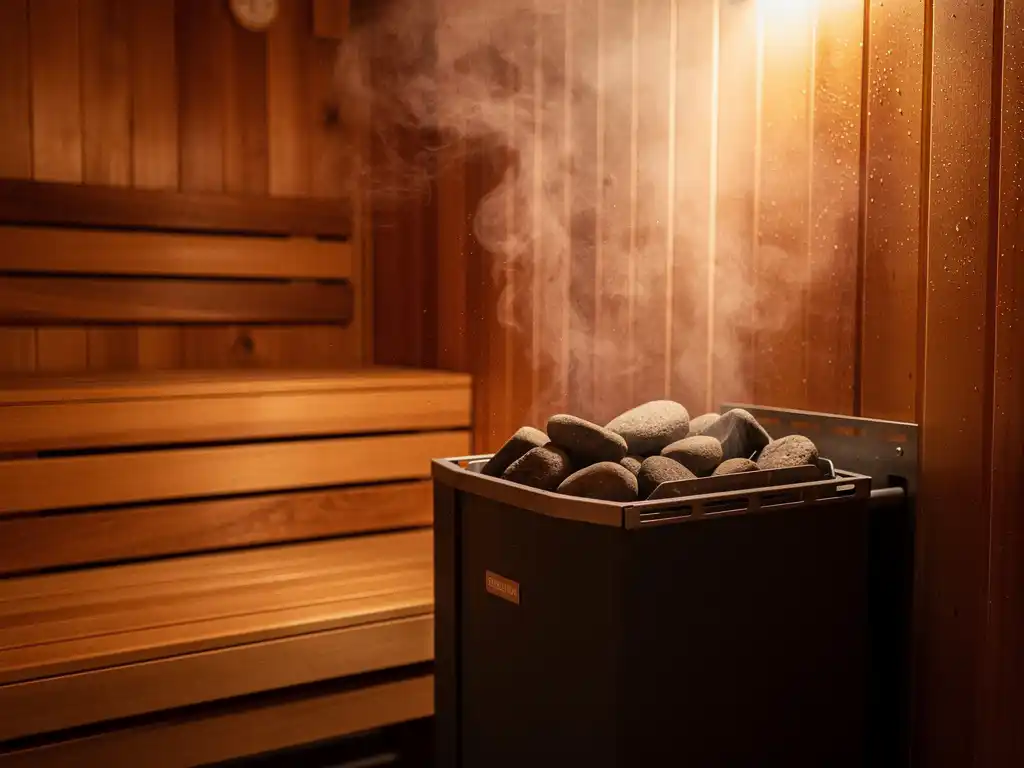
A home sauna works by heating a room to high temperatures using an electric heater loaded with stones. The stones absorb and store heat, and when water is ladled onto them, they produce steam known as löyly. The heat causes the body to sweat, which supports muscle relaxation, circulation, and recovery. The experience is controlled by adjusting temperature, humidity, and airflow.
The problem with traditional heat distribution
In a conventional sauna, heat and steam rise naturally and collect near the ceiling. This creates a significant temperature gap: the air near the ceiling can reach dangerously high levels while the lower zone where people actually sit remains much cooler. The steam is also short-lived and intensely concentrated, which can make breathing uncomfortable, particularly for those new to sauna bathing.
How air-blending technology improves the experience
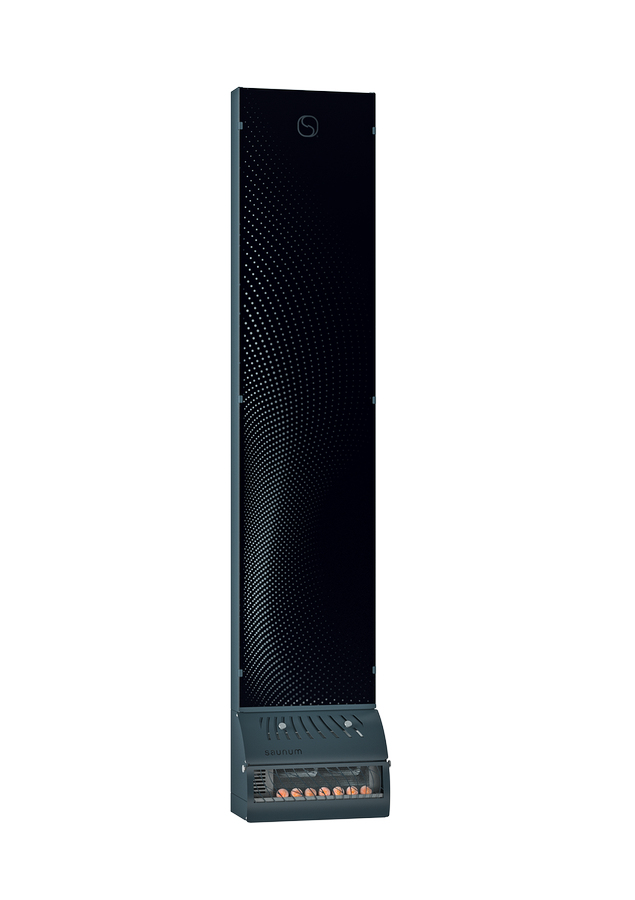
Modern climate-integrated sauna heaters address this stratification problem directly. Our patented air-blending sauna technology captures the scorching steam that accumulates near the ceiling and mechanically mixes it with the cooler, oxygen-rich air near the floor. The result is an even temperature distribution from floor to ceiling, softer and longer-lasting steam, and air that is noticeably easier to breathe. Because the steam is gentler and more evenly distributed, users can ladle water more frequently, producing a richer and more immersive session without the headaches or fatigue that can follow a traditional sauna.
What size sauna heater do I need for my home sauna?
The right sauna heater size is determined primarily by the volume of your sauna room in cubic metres. As a general rule, you need roughly 1 kilowatt of heating power per cubic metre of insulated sauna volume. For rooms with non-insulated surfaces such as glass doors, brick walls, or concrete, you need to add extra volume to your calculation to account for heat loss.
To give you a concrete sense of how this works in practice, here is how our Experience heater range maps to room volumes:
- 3.6 kW covers 2 to 5 m³
- 6 kW covers 5 to 9 m³
- 9 kW covers 7 to 10 m³ (requires a minimum ceiling height of 2,150 mm)
For larger home saunas or rooms with non-standard construction, the adjustment is straightforward: add 1 m³ to your effective sauna volume for every square metre of uninsulated surface. For example, a 10 m³ sauna room with a glass door should be treated as a 12 m³ room when selecting heater power. Getting this calculation right from the start prevents underpowered heating, longer warm-up times, and unnecessary energy consumption. Using a dedicated sauna heater calculator takes the guesswork out of this step entirely.
How do you install an electric sauna heater at home?
Installing an electric sauna heater involves four key steps: selecting the correct heater for your room volume, ensuring your electrical supply meets the heater’s requirements, maintaining all mandatory safety distances, and connecting the control unit. Most residential electric sauna heaters require a dedicated circuit, and larger units above 6 kW typically require a three-phase supply.
Electrical requirements
Electrical preparation is the most critical part of the installation. A 3.6 kW heater can often run on a single-phase 230 V supply with a 3 x 2.5 mm² cable, but a 9 kW unit on a single-phase circuit requires a 3 x 10 mm² cable. Three-phase installations use a 5-wire SIHF or H07RN-F cable, typically 5 x 2.5 mm² for mid-range heaters. Always use heat-resistant cabling rated for sauna environments, and have a qualified electrician complete the connection.
Safety distances and positioning
Every heater model has defined minimum clearance distances that must be respected to prevent fire risk and ensure safe operation. For most home heaters, this means at least 150 mm on the sides and front, and a minimum of 1,035 mm from the top of the stone basket to the ceiling. Corner installations are permitted for many models, which can be a practical advantage in smaller sauna rooms. The climate-device component, where present, requires 500 mm of clearance from its fan output to any surface or body part.
What’s the difference between a standard sauna and one with a climate-control system?
The key difference is how heat and steam are distributed throughout the room. A standard sauna relies on natural convection, which means hot steam rises and stays near the ceiling while cooler air remains at floor level. A sauna with an integrated climate-control system actively circulates and blends the air, eliminating temperature stratification and producing a more comfortable, breathable environment throughout the entire room.
In practical terms, this difference affects every aspect of the sauna experience. With a climate system running, the temperature at floor level and ceiling level is far more consistent, which means the heat feels gentler even at the same thermostat setting. Steam lasts longer after each ladling because it is distributed across the whole room rather than spiking and dissipating near the top. The oxygen-enriched air that results from the blending process makes breathing significantly more comfortable, which is particularly noticeable during longer sessions or when using the sauna at higher temperatures.
A standalone climate device like the Saunum Base can be added to an existing sauna with any brand of heater, making this upgrade accessible without replacing your current setup. For new builds, combined heater-and-climate units integrate both functions into a single streamlined appliance.
How do you get the most out of your home sauna sessions?
Getting the most from your indoor sauna comes down to three things: setting the right conditions for your chosen experience, understanding how to use water and steam effectively, and giving your body time to adapt between sessions. The specific temperature, fan speed, and vent position you choose will determine whether you are having a classic Nordic sauna, a humid steam session, or a gentle relaxation session.
A few practical habits make a real difference to the quality of your sessions. Preheating the sauna fully before entering ensures the stones are at the right temperature to produce good steam. Ladling water in small, regular amounts rather than large, infrequent ones produces a steadier and more comfortable steam environment. Cooling down between rounds, whether with a cold shower, a cool room, or simply fresh air, is a core part of the traditional sauna ritual and helps the body recover between heat exposures.
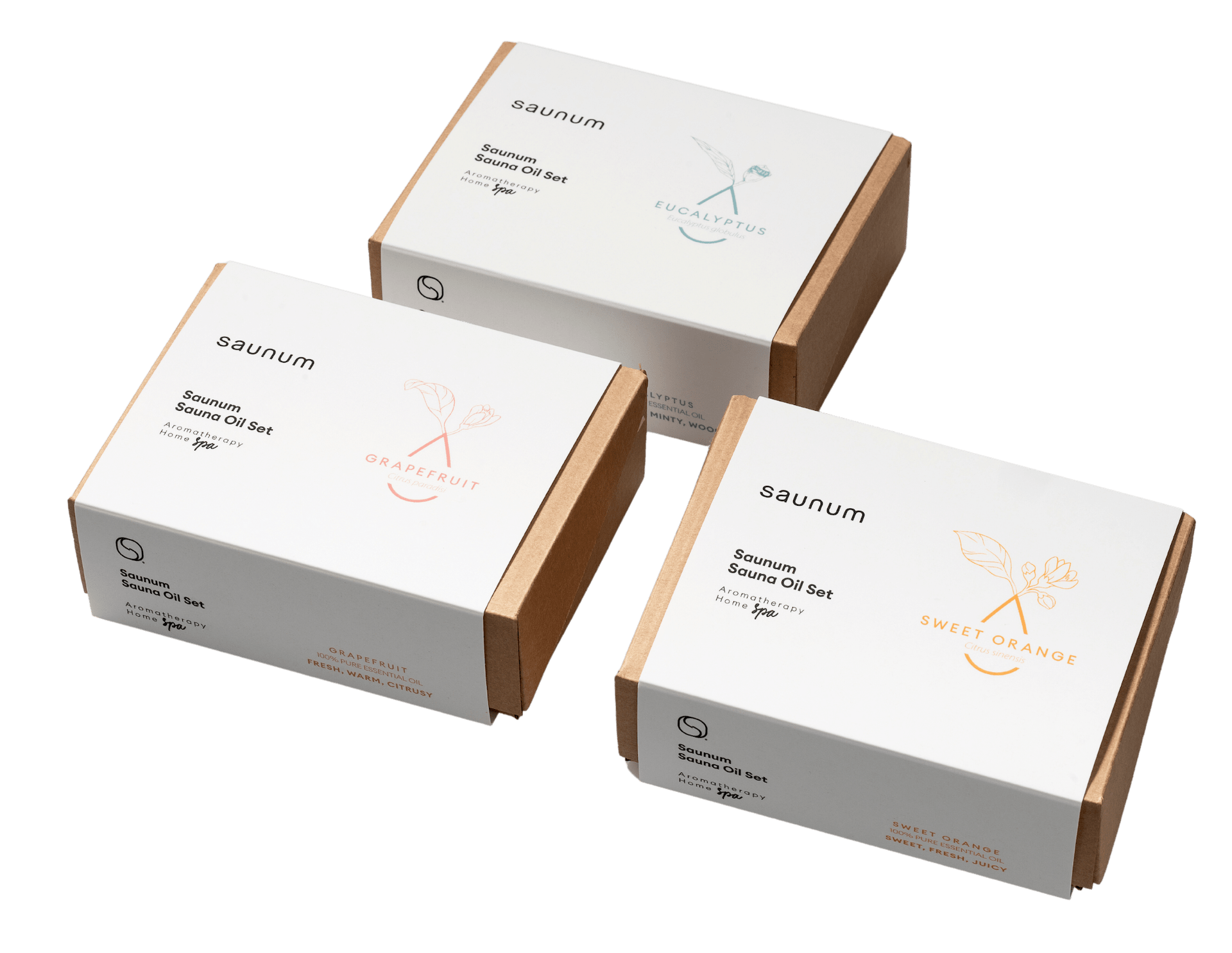
If your sauna includes a climate device with Himalayan salt spheres, running the air-blending system throughout your session adds salt ions to the circulating air. This form of halotherapy is associated with respiratory comfort and has been used as a supportive treatment for conditions including sinusitis and bronchitis. For aroma sessions, replacing one salt sphere with an aroma bowl filled with sauna oil allows the climate system to mix the fragrance directly into the steam, which is a safer and more effective method than placing aromatic oils directly on hot stones.
How Saunum helps with home electric saunas
We design and manufacture sauna technology specifically built to solve the most common frustrations with home electric saunas: uneven heat, uncomfortable steam, poor air quality, and complicated installation. Every Saunum home sauna product is built around our patented air-blending system, which means the benefits of consistent temperature, softer steam, and easier breathing are built into the hardware rather than being an afterthought.
Here is what sets our approach apart for home sauna builders and installers:
- Integrated 5-in-1 experience: One heater supports classic Nordic, humid steam, relaxation, salt-ion, and aroma sauna modes, selectable by adjusting temperature, fan speed, and vent position.
- Flexible sizing: The Experience range covers home saunas from 2 m³ to 10 m³, with power options from 3.6 kW to 9 kW to match virtually any domestic installation.
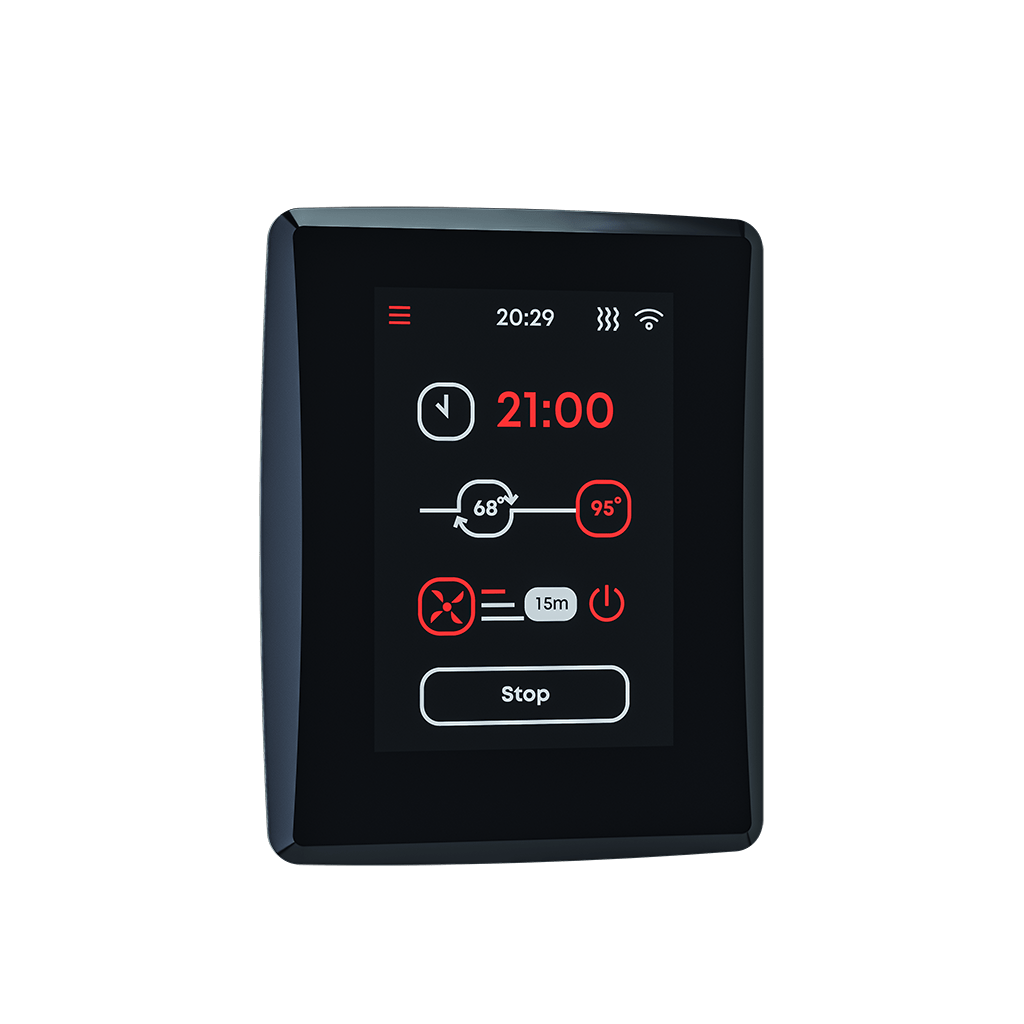
- Smart control with Saunum Leil: The Leil controller manages heater operation, climate device speed, scheduling, and remote smartphone control, with ModBus integration for smart home systems.
- Add-on upgrade path: If you already have a heater you are happy with, the Saunum Base climate device can be added to any existing sauna to deliver the air-blending benefits without a full replacement.
Whether you are building your first home sauna or upgrading an existing one, Saunum provides the technology, sizing guidance, and product range to make the process straightforward and the results genuinely outstanding. Contact us for expert sauna advice to explore the full product lineup and find the right solution for your sauna room.
If you’re interested in getting started with Sauna, check out our full range today.